Mobile Tire Repair: Safe DIY Road Fixes for Quick Travel
Learn safe mobile tire repair with our step-by-step guide. Essential tools, safety tips, and practical advice for homeowners on diagnosing, sealing, and replacing tires on the go.


Goal: perform a safe roadside mobile tire repair that gets you back on the road quickly. You’ll diagnose the issue, choose repair or replacement, and use a compact toolkit to safely lift, seal, or mount a temporary fix. This guide covers step-by-step actions, safety precautions, and when to seek professional service.
What mobile tire repair is and when it's appropriate
Mobile tire repair refers to on-scene repairs you can perform with a portable toolkit to safely restore a temporarily usable tire, often when a full shop visit isn't possible. This approach is most appropriate for minor punctures, slow leaks, or bead seating issues on roadways where immediate help is not available, and when you have the proper safety setup. According to Home Repair Guide, preparation and conservative judgment are essential to avoid making a minor problem worse. Always assess your surroundings and prioritize personal safety before proceeding. This guidance helps homeowners and renters understand that mobile tire repair is not a substitute for severe damage or structural tire failure, but a practical option for getting back on the road in a pinch. The Home Repair Guide Team emphasizes sticking to manufacturer-recommended procedures and keeping recovery gear visible and organized for quick access.
Safety first: roadside setup and personal protection
Roadside work demands heightened safety awareness. Start by pulling over to a flat, stable surface away from traffic. Turn on hazard lights, deploy reflective gear, and place wheel chocks to prevent movement. Wear protective gloves and eye protection, and avoid working under a vehicle supported only by a jack. If you can't safely access the wheel from the curb or if traffic is heavy, call for roadside assistance. The goal is to create a safe working zone where you can inspect the tire without risking your own safety or that of other drivers. By following these precautions, you reduce the likelihood of accidents and injury while performing a mobile tire repair.
Tools and materials you should carry
A well-stocked mobile tire repair kit turns a potential crisis into a manageable task. Essential items include a wheel chock, lug wrench, portable jack, tire repair plug kit, tire sealant, air compressor or 12V inflator, tire pressure gauge, gloves, flashlight, and reflective safety gear. Each item has a specific purpose: chocks stabilize the vehicle, a lug wrench and jack enable wheel removal, plug kits and sealants address punctures, and an inflator helps you reach the correct pressure. Home Repair Guide analysis shows that having a complete toolkit improves outcomes and reduces time stranded on the road. For renters, note where you park and ensure you can operate tools safely in your assigned space. Keep the kit organized in a sturdy bag or box for quick access.
Diagnosing the tire and assessing damage
Begin with a visual inspection: look for obvious punctures, nails, or cuts in the tread and sidewall. Check the valve stem for leaks and ensure the bead seat is intact. Use a tire pressure gauge to verify current pressure and listen for hissing around the tread. If you detect structural damage to the sidewall, cords showing, or a large puncture (>¼ inch) in the sidewall, do not attempt a repair; replace the tire or call for professional service. This step helps you decide whether a temporary fix will be sufficient or if you must pursue a full tire replacement.
Temporary repair options: sealants, plugs, and patches
Temporary repair options are designed to buy time, not to replace proper tire service. Cold-patch plugs can seal punctures in the tread, while tire sealants can seal small leaks from the inside or from punctures near the tread. For punctures in the tread, plugs combined with patches from the inside provide a stronger seal, but they require the wheel to be removed and the tire mounted on a machine for proper patching. If the damage is at the bead or sidewall, a permanent repair is not possible. Always follow the product instructions and, when in doubt, favor a safe route—replace the tire or seek professional help. Home Repair Guide's analysis suggests that clear limits exist for DIY fixes, and exceeding them can compromise safety.
Replacing a damaged tire: when to swap to a spare or call for help
If the tire cannot be repaired safely, swapping to a spare is the prudent choice. Use the lug wrench to loosen lug nuts slightly before lifting the car, then remove the wheel and mount the spare. Ensure the spare tire is within its recommended pressure and drive only to the nearest repair shop. If you do not have a spare, or if you fear losing control due to poor handling on the repaired tire, avoid driving and seek professional assistance. This section emphasizes the distinction between temporary roadside fixes and permanent tire replacement.
Inflate, reseat, and test: bringing it back to road readiness
After any repair or replacement, re-seat the wheel, lower the car, and tighten lug nuts in a star pattern to the manufacturer’s torque specification. Reinflate the tire to the correct pressure using a gauge, and test for leaks by applying soapy water around the bead and puncture areas. Check alignment indicators and drive slowly to verify stability before returning to normal speed. Fine-tuning tire pressure and ensuring a secure seat are critical to a safe return to the road.
Common mistakes and troubleshooting tips
Common mistakes include underestimating the damage, using an inappropriate repair method, or skipping safety steps under time pressure. Never attempt to repair a tire with visible sidewall damage or a major puncture. Avoid using the vehicle’s spare as the primary repair method for long trips; it’s intended as a temporary solution. Keep your tools organized, work with a helper if possible, and verify the repair using a pressure gauge after reassembly. If symptoms reappear, stop and seek professional advice promptly.
Authority sources and final checks
For tire repair guidance, consult authoritative sources to confirm best practices. The Home Repair Guide Team references federal safety resources to ensure procedures align with national standards. Always verify repair methods with reliable sources before proceeding. If you cannot find a safe, durable fix, do not risk driving on a compromised tire.
Aftercare and road readiness: maintenance and inspection reminders
Once you’ve completed a repair or replacement, perform a quick maintenance review: check tread depth, inspect for further damage, and schedule a professional inspection if the tire shows any signs of recurring issues. Maintain a regular maintenance routine, including periodic tire rotations and pressure checks. This habit reduces the likelihood of roadside tire failures and keeps your vehicle ready for everyday travel.
Tools & Materials
- Wheel chocks(Place under the wheel opposite the lifted one to prevent rolling)
- Lug wrench(Ensure you have the correct socket for your lug nuts)
- Portable jack (scissor or hydraulic)(Use a jack rated above your vehicle's weight on a firm surface)
- Tire repair plug kit(Includes rasp tool and plugs for tread punctures)
- Tire sealant(Temporary sealant for minor leaks; follow product directions)
- Air compressor or 12V inflator(Reinflate to recommended tire pressure)
- Tire pressure gauge(Accurate pressure measurement after repair)
- Safety gloves(Protect hands during handling and puncture cleanup)
- Flashlight or headlamp(Ensure good visibility in low light)
- Reflective vest or safety triangle(Increase visibility to other drivers)
- Torque wrench (optional)(Useful for proper lug-nut torque on a replacement)
Steps
Estimated time: 30-60 minutes
- 1
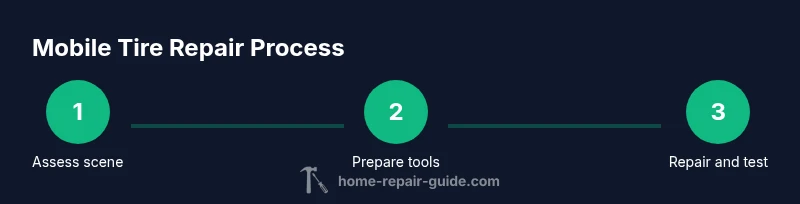
Prepare the scene and gather tools
Pull over to a flat, stable surface. Turn on hazards, set the brake, and gather your kit. Check for traffic and ensure you can work safely without stepping into harm’s way. This upfront check saves time and reduces risk.
Tip: Have a helper if possible to assist with securing equipment and guiding traffic. - 2
Secure the vehicle and loosen lug nuts
With the vehicle on the ground, apply parking brake and chocks. Use the lug wrench to loosen lug nuts slightly while the tire is still on the ground. Loosen them in a star pattern to avoid warping the wheel.
Tip: Do not fully remove lug nuts yet while the wheel is on the ground. - 3
Lift the vehicle safely
Position the jack under the recommended lift point and raise the car slowly until the wheel clears the ground. Use the jack stand if available and never place any body parts under the car during lifting.
Tip: Only lift on a hard, level surface; avoid soft ground. - 4
Remove the wheel and inspect the tire
Take off lug nuts and remove the wheel. Inspect the tire for punctures, treads, and structural damage. If you see sidewall damage or a large puncture, stop and consider replacement rather than repair.
Tip: If bead leaks are suspected, do not drive on the tire until properly fixed. - 5
Choose and apply a repair option
For tread punctures, consider a plug and patch or sealant as a temporary fix. Avoid repairs on sidewalls or large damage. If uncertain, replace the tire or call for assistance.
Tip: Sealant should be used only if the puncture is in the tread area and instructions permit. - 6
Reinstall wheel and lower the car
Place the wheel back on the hub, hand-tighten lug nuts, lower the vehicle, and then torque nuts in a star pattern if you have a torque wrench. Reinflate to the recommended pressure.
Tip: Double-check that the wheel is seated evenly before final tightening. - 7
Test the repair and check for leaks
Drive a short distance and re-check tire pressure. Listen for any unusual noises and inspect for leaks with soapy water around repaired areas.
Tip: If you notice wobble or vibration, stop and seek professional service. - 8
Document the repair and plan your next steps
Note the date, mileage, and repair performed. Schedule a full inspection or tire replacement as needed, especially if the puncture was severe or the tire shows wear.
Tip: Keep receipts and warranty information for future service. - 9
Return to road readiness and safety checks
Confirm all tools are cleared away, all lug nuts are secure, and the tire is properly inflated. Perform a final walk-around check before resuming travel.
Tip: Carry a basic spare kit for future incidents to reduce risk.
FAQ
Is mobile tire repair safe for highway use?
Only for minor punctures and when you can complete a proper temporary fix. If there is sidewall damage or a large puncture, do not drive long distances; seek professional assistance.
Use mobile tire repair only for small punctures if you can safely complete a temporary fix and avoid highway speeds if there is any doubt about tire integrity.
What should I include in a mobile tire repair kit?
A complete kit should include wheel chocks, a lug wrench, a portable jack, a tire plug kit, tire sealant, an inflator, a pressure gauge, gloves, a flashlight, and reflective safety gear.
Your kit should cover lifting, sealing, inflating, and safety gear to manage most roadside scenarios.
Can you fix a tire with a slow leak on the road?
Yes, for small punctures in tread areas you can apply a temporary sealant or plug and plan a full inspection later. Do not repair sidewall damage.
For slow leaks in the tread, a temporary fix can help you reach a shop, but sidewall damage needs professional care.
When should I replace instead of repairing a tire?
If there is bead damage, sidewall damage, or an large puncture that cannot be sealed safely, replacement is required for safe driving.
If the tire shows sidewall damage or a big puncture, replace rather than repair to stay safe on the road.
Do I need special torque for lug nuts after repair?
Use a torque wrench to tighten lug nuts to the manufacturer’s specification. If you don’t have one, tighten as firmly as possible in a star pattern and have the torque checked soon.
If you don’t have a torque wrench, tighten nuts in a star pattern and get them checked later.
What if I don’t have a spare tire?
If you don’t have a spare, call for roadside assistance or arrange a tow to a repair facility. Do not drive long distances on a damaged tire.
Without a spare, contact roadside help and avoid long drives on a compromised tire.
Watch Video
Key Takeaways
- Inspect damage before choosing a repair method
- Prioritize safety and visible hazards on the scene
- Carry a complete, organized mobile tire repair kit
- Know the limits of DIY fixes and when to replace
- Test tire pressure and fix integrity after any repair