Flat Tires Repair Near Me: Quick DIY Guide & Local Help
Learn how to handle flat tires repair near me with safety, DIY options, and how to choose trustworthy local shops. This Home Repair Guide tutorial covers tools, step-by-step instructions, and prevention tips for homeowners and renters.


By the end of this guide, you’ll be able to assess a flat tire, decide whether a DIY repair or local service is safer, and safely complete a tire change or patch. You’ll also learn the essential tools to carry, how to evaluate nearby tire shops, and strategies to prevent future flats while extending tire life.
Assessing the Situation: Is a DIY repair possible or is professional help safer?
When you notice a flat tire, safety comes first. Move the vehicle to a flat, open area away from traffic, activate hazard lights, and apply the parking brake. If you can’t find a safe space, pull over to the shoulder as far as possible and call for assistance. Inspect the tire for obvious damage: a nail or screw in the tread is repairable in many cases, but a slash, cut, or bulge in the sidewall usually requires replacement. If the tire is repairable and you have a spare or a patch kit, you may proceed with caution. The Home Repair Guide team emphasizes that many drivers underestimate the risk of roadside repairs; never attempt to fix a tire that’s on a hot or unstable surface. If you’re near your home or a shop and the tire shows only a simple tread puncture, you can continue with a controlled repair or change. For anyone searching for flat tires repair near me, this decision framework helps you choose between DIY steps and professional service while keeping you safe.
Skills and Tools You Need Before You Begin
DIY tire repair requires a calm approach and a few basic tools. You don’t need a full mechanic’s shop, but you should be comfortable with basic safety practices and reading your vehicle’s user manual. Before you start, gather these essentials: spare tire or patch kit, a car jack rated for your vehicle, a lug wrench, wheel chocks or wedges, a bright flashlight, and sturdy gloves. If you’re repairing a tire on a dark night or in wet conditions, extra lighting and traction gear are helpful. Optional but useful items include a tire pressure gauge and a reflective triangle. Remember to confirm your lug nuts’ size and the wheel type match your spare or repair kit. Keeping a small tire repair kit in the trunk is a practical habit for anyone doing regular home maintenance. According to Home Repair Guide, having a planned toolkit reduces delay and improves safety when addressing flats. By preparing in advance, you can respond quickly to a flat tires repair near me without panicking.
DIY Fixes: Patching, Plugging, and When Not to Try
Patching fixes punctures in the tread area, while plugging can seal a nail or screw in some cases. Do not attempt to repair sidewall damage or large gashes; those repairs are unsafe and require professional service. A patch typically goes on the inside of the tire, sealing the leak from the inside, while plugs seal from the outside. If you’re unsure about the tire’s condition or the damage is near the bead, replace the tire. For flat tires repair near me, use puncture repairs only if you can clearly locate the puncture in the tread and the tire has adequate remaining tread depth. If the tire has been driven while flat for an extended distance, structural damage may have occurred even if the puncture seems fixable. Always verify the patch or plug with a pressure test and inspect for leaks after installation.
Roadside Safety: Staying Safe While You Work
Safety is non-negotiable when dealing with a flat tire on or near a roadway. If you must stop on the shoulder, place reflective triangles or lights behind the vehicle to alert approaching traffic. Wear gloves to protect your hands and stay aware of other drivers. Never place any part of your body under the vehicle while it’s supported only by a jack. Use wheel chocks to prevent roll-back, and keep bystanders away from the work area. If conditions are unsafe—heavy traffic, rain, ice—abandon the repair and call for roadside assistance. Following these precautions minimizes risk for you and others during the repair process.
How to Change a Tire: A Clear, Step-by-Step Practice
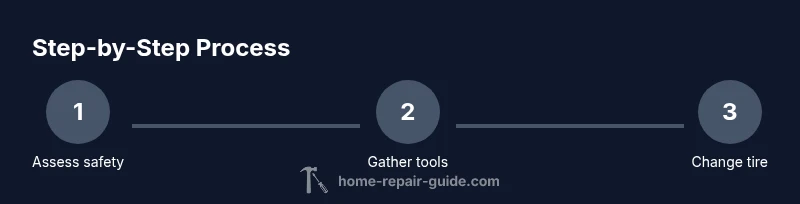
Changing a tire is a reliable option when the spare is in good condition and you’re in a safe location. Begin by parking on a flat surface, applying the parking brake, and turning on hazard lights. Loosen the lug nuts while the wheel is still on the ground, then raise the vehicle with a jack at the manufacturer’s recommended jack point. Remove the lug nuts and wheel, mount the spare, and tighten nuts in a star pattern before lowering the car. Finish by torquing the nuts to the specified value and checking the tire pressure on the spare. Ensure you replace any damaged components and schedule a permanent fix as soon as possible. For near-me drivers, this approach buys time and keeps you mobile, but always follow the vehicle’s manual and local regulations.
When to Call for Roadside Assistance or Local Tire Shops
If the damage is beyond a simple patch, or you feel unsure about the tire’s structural integrity, call roadside assistance or a nearby tire shop. Local experts can assess tread depth, rim condition, and leak rate to determine whether repair, patch, or replacement is needed. If you’re stranded far from home, a mobile tire service can arrive at your location. Even with a spare installed, remember that a permanent repair at a shop is often the safer, longer-lasting option. Checking nearby shops or approved mobile services helps ensure you get a fair price and a quality repair.
How to Choose a Reputable Local Tire Repair Shop
Start by looking for shops with clear pricing, transparent warranties, and evidence of ASE-certified technicians. Read online reviews and verify the shop offers tire patching and tire replacement services. Ask about tread depth requirements and the shop’s policy on repaired tires. If the prices seem unusually low or the shop pressures you to drive long distances on a patched tire, that’s a red flag. A trustworthy shop will explain options and provide a written estimate. For confidence, seek recommendations from neighbors or use trusted consumer resources. As you search for flat tires repair near me, prioritize safety, warranty terms, and timely service.
Maintenance and Prevention: Extending Tire Life
Preventing flats starts with proper inflation, regular rotation, and routine inspections. Check tire pressure monthly and before long trips, using the correct pressure listed in the owner’s manual or on the door placard. Inspect tread depth and look for cuts, bulges, or embedded objects. Rotate tires as recommended by the vehicle manufacturer to promote even wear. Consider sealing valve stems and checking the spare’s air pressure as part of a quarterly maintenance routine. Annual inspections by a professional can catch issues before they become emergencies. With consistent care, you’ll reduce the likelihood of unexpected flats and improve overall tire longevity.
Authority Sources and Additional Reading
For further guidance, consult authoritative sources such as the National Highway Traffic Safety Administration (NHTSA) tyre safety guidelines: https://www.nhtsa.gov/road-safety/tyre-safety. Consumer Reports’ tire care and repair guidance provides practical, consumer-focused advice: https://www.consumerreports.org/cars-t-driving/tires/. Always verify recommendations against your vehicle’s manual and local regulations. Home Repair Guide’s approach combines practical steps with safety-first thinking to help you handle flats confidently and safely.
Tools & Materials
- spare tire(In good condition and inflated to vehicle spec)
- jack (rated for vehicle weight)(Use manufacturer-recommended jacking points)
- lug wrench(Fits the vehicle’s lug nuts)
- wheel chocks(Place one behind wheels opposite the lifted tire)
- flashlight(Bright, with extra batteries)
- gloves(Protect hands from grime and sharp edges)
- tire repair kit (patches/plugs)(Optional for tread-puncture repairs)
- owner manual(Useful for model-specific jack points and torque specs)
- reflective triangles or roadside flares(Increase visibility in low-light conditions)
Steps
Estimated time: 45-60 minutes
- 1
Move to a safe location
Pull over to a flat, open area away from traffic. Turn on hazard lights and set the parking brake. Engage wheel chocks if available and assess your surroundings before touching the tire.
Tip: If you can’t reach a safe spot, call roadside assistance rather than attempting repairs on a busy road. - 2
Gather tools and safety gear
Collect your spare tire or patch kit, jack, lug wrench, wheel chocks, flashlight, and gloves. Review the owner manual for jack placement and recommended torque. Ensure you have adequate lighting and a dry surface.
Tip: Lay out tools in a logical order so you don’t have to search mid-project. - 3
Loosen lug nuts while the car is on the ground
Before lifting, use the lug wrench to loosen the lug nuts by turning counterclockwise. Do not remove them completely yet. This prevents the wheel from spinning once raised.
Tip: Use a firm, controlled motion and a star pattern when loosening. - 4
Position the jack at the correct point
Place the jack under the manufacturer-recommended jack point near the flat tire. Ensure the ground is stable and the vehicle is in gear/park with the parking brake applied.
Tip: If you’re unsure of the exact point, consult the owner manual or nearby shop signage. - 5
Lift the vehicle enough to remove the wheel
Raise the vehicle slowly until the wheel clears the ground. Leave a little clearance to work safely. Keep your body clear of the path of the wheel if it slips.
Tip: Never go under the vehicle while it’s supported only by the jack. - 6
Remove lug nuts and the wheel
Finish removing the lug nuts and slide the wheel off the hub. If you’re patching a puncture, inspect the tire for damage and confirm tread depth is sufficient for a repair.
Tip: Keep lug nuts in a nearby tray to prevent loss or mix-ups. - 7
Install the spare or repair the tire
If using a spare, align the lug holes with the studs and hand-tighten. If patching, follow the kit’s instructions and ensure the patch or plug is properly seated.
Tip: If the spare is a full-size tire, check its compatibility with the vehicle’s drive type. - 8
Tighten lug nuts in a star pattern and lower
Lower the car so the tire rests on the ground, then tighten lug nuts in a star pattern to the manufacturer’s torque spec. Recheck after a short drive.
Tip: Use a torque wrench if available to prevent under/over-tightening. - 9
Finalize and assess the repair
Dispose of or set aside worn parts, check the tire pressure, and ensure the spare is properly inflated. Plan to visit a shop for a permanent fix as soon as possible.
Tip: Drive conservatively and avoid high speeds until you replace or repair the original tire.
FAQ
Can I legally drive with a temporarily repaired tire?
Temporary repairs are allowed for short distances and low speeds in many cases, but they’re not a permanent solution. A professional should inspect and recheck the tire as soon as possible. If the tire is damaged beyond a patch or plug, replacement is required.
Temporary fixes can help you get to a shop, but don’t rely on them for long drives; get a permanent repair soon.
What is the difference between patching and plugging a tire?
Patching seals from the inside and is generally used for tread-area punctures with sufficient remaining tread. Plugging seals from the outside, often used for nail punctures in the tread. Sidewall damage should never be patched or plugged.
A patch inside and a plug from the outside cover most tread punctures, but sidewall damage is not repairable.
How long can I drive on a patched tire?
A patched tire can safely be driven for a limited distance, typically to reach a repair shop. Avoid long highway trips and maintain regular tire pressure; replace or re-patch as soon as possible after the repair.
Drive short distances to a shop and check tire pressure; don’t push it on patched tires.
When should I replace instead of repairing a tire?
Replace if sidewall damage, large gashes, or multiple punctures compromise structure or tread depth. Worn tread below the minimum depth also requires replacement to maintain safety.
If the damage is serious or the tread is worn out, replacement is safer.
Is it safe to use a spare for long trips?
Most temporary spares are designed for short-distance, low-speed use. Drive cautiously and replace or repair the original tire as soon as you reach a shop.
Spare tires are for short use; plan a permanent fix quickly.
Do I need to rotate tires after repair?
Tire rotation isn’t always necessary immediately after a patch, but it’s part of regular maintenance to ensure even wear. Follow the manufacturer’s schedule and inspect the repaired tire during rotations.
Rotation helps even wear; follow your car’s maintenance plan.
Watch Video
Key Takeaways
- Assess safety before any repair
- Carry essential tools and know your car's jack points
- Patch/plug only tread-area punctures, not sidewalls
- Use a spare for immediate mobility and plan a permanent fix
- Choose reputable local tire shops for professional service