Repair Flat Tire Near Me: Quick Guide and DIY Tips
Discover practical, safety-focused guidance to repair flat tire near me, including DIY steps, roadside help options, and essential maintenance tips from Home Repair Guide.


Whether you need to repair flat tire near me or arrange roadside help, this guide shows safe, practical steps you can take. You’ll learn quick roadside safety checks, how to use a spare, and when to seek professional service. Essential tools include a jack, lug wrench, spare tire, wheel chocks, and reflective safety gear.
What to do first when you notice a flat tire
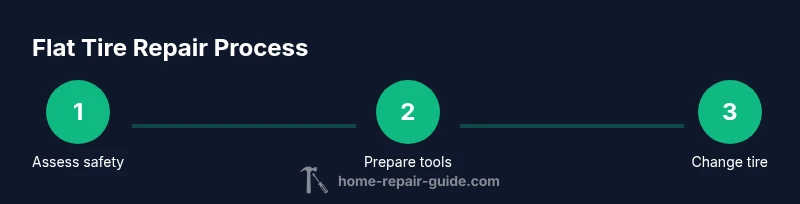
The moment you hear or feel a tire loss, your first move should be safety. Find a stable, level area away from traffic, activate your hazard lights, and slow to a controlled stop. If you’re on a highway or busy street, assess whether you can safely reach a widened shoulder or parking lot. According to Home Repair Guide, safety-first decisions reduce risk for you and other drivers and set the stage for effective repair or replacement. If the roadway is too hazardous, do not attempt to change the tire—call for roadside assistance or a towing service. Once you’ve stopped, take a quick visual on the tire’s condition, listen for any thumping sounds, and check for leaking fluid or a wheel that appears obviously damaged. If you’re alone, stay inside the vehicle with the seatbelt fastened until help arrives or it’s safe to exit on the opposite side away from traffic.
From a homeowner’s perspective, this moment is also about assessing the environment: is the surface solid and level? Is there enough space to use a jack without risking a fall? The Home Repair Guide team emphasizes that calm, methodical actions reduce risk and set up your next steps for either a DIY tire swap or a professional repair near you.
noteChannelShortDescription":"First safety-focused block, establishing environment and immediate decisions"},{
Tools & Materials
- Car jack(Ensure it's rated for your vehicle’s weight; use on solid, level ground)
- Lug wrench(Use the correct size socket for your lug nuts to avoid stripping)
- Spare tire(Condition: properly inflated and within tread depth limits)
- Wheel chocks(Place on the opposite side to prevent rolling)
- Reflective safety triangles/flares(Useful for visibility on road shoulders or curbs)
- Owner’s manual(Vehicle-specific jack points and torque specs)
- Tire repair kit (patch/plug)(Optional for temporary fixes where allowed by manufacturer guidelines)
- Portable air inflator(Useful to bring spare tire up to recommended pressure)
Steps
Estimated time: 30-60 minutes
- 1
Ensure safety and prepare the scene
Turn on hazard lights, move to a safe location if possible, and apply wheel chocks if available. This step minimizes risk to you and other drivers and sets the stage for any tool use or tire handling.
Tip: Hazard visibility is your first line of defense on busy roads. - 2
Loosen lug nuts while the car is on the ground
Use the lug wrench to break loose each nut a few turns counterclockwise. Do not completely remove them yet; the wheel should stay attached so it won’t fall when you lift the car.
Tip: Loosening while the tire is still touching the ground prevents the wheel from spinning. - 3
Position the jack and raise the vehicle
Consult your owner’s manual to locate the correct jack point. Place the jack on a solid surface and raise the vehicle until the wheel is slightly off the ground.
Tip: Never place any part of your body under the vehicle while it’s supported by a jack. - 4
Remove lug nuts and the tire
Finish loosening and remove the lug nuts, then carefully pull the tire straight off the hub. Keep the lug nuts in a safe spot as you work.
Tip: If the lug nuts are difficult to remove, use a breaker bar for extra leverage. - 5
Mount the spare tire
Line up the wheel holes with the lug bolts and hand-tighten the lug nuts in a criss-cross pattern to secure the wheel.
Tip: A criss-cross pattern ensures even seating of the wheel. - 6
Lower the vehicle and torque the lug nuts
Lower the car fully and tighten the lug nuts in a star pattern to the manufacturer’s recommended torque, if available.
Tip: Check torque with a torque wrench when possible for accuracy. - 7
Check tire pressure and inspect the old tire
Once on the ground, inflate the spare to the recommended pressure and inspect the removed tire for obvious damage or punctures.
Tip: If the spare looks underinflated or damaged, stop and seek assistance. - 8
Stow tools and the damaged tire
Place all tools back in the trunk and store the removed tire securely until you can have it repaired or replaced.
Tip: Keep the area clean and avoid leaving tools in traffic lanes. - 9
Test drive and plan next steps
Drive cautiously at reduced speeds and plan for a full tire replacement or professional repair as soon as possible.
Tip: Avoid high speeds and sharp turns until the tire is properly serviced. - 10
Document the repair for future reference
Note the date, tire type, and any observations about wheel condition for maintenance records.
Tip: A quick log helps with future maintenance and potential warranty discussions.
FAQ
What should I do first when I have a flat tire?
Safely pull over, turn on hazard lights, and assess surroundings before deciding to DIY or call for help.
Safely pull over, turn on hazard lights, and assess surroundings before deciding your next step.
Can I drive with a donut spare?
Donut spares are temporary and usually have speed and distance limits; replace with a full tire as soon as possible.
Donut spares are temporary and have limits; replace soon.
Patch or replace a tire after a puncture?
Patching or plugging can work for minor punctures on the tread, but sidewall damage usually requires replacement.
Patching can work for punctures in the tread; sidewall damage means replacement.
What if I have no spare?
If you lack a spare, contact roadside assistance or a mobile tire service; avoid driving on a flat.
Call roadside help if you don't have a spare.
Is it safe to drive after changing a tire?
Drive cautiously and have the wheel checked; ensure lug nuts are tightened in a criss-cross pattern.
Drive carefully and get the wheel checked.
Watch Video
Key Takeaways
- Safety first: secure vehicle before work.
- Know when to DIY vs call for help.
- Keep a well-stocked emergency kit in your trunk.
- Inspect wheel and tire for damage after repair.
- Maintain correct tire pressure regularly.