CV Axle Repair: Step-by-Step Guide
A practical, safe guide to cv axle repair: diagnose wear, replace worn joints, and test for smooth operation. Includes tools, safety tips, and cost considerations for a DIY approach.


Win back smooth performance with cv axle repair by following a clear, safety-focused plan: diagnose wear, remove the axle, replace worn joints or boots, and reassemble with correct torque. This DIY approach emphasizes practical tools, careful alignment, and testing on a short drive to confirm no vibrations. Ready to start?
What is CV Axle and Why It Fails
According to Home Repair Guide, the cv axle is a critical drive component that transmits torque from the transmission to the wheels through two CV joints connected by a splined shaft. The outer joint accommodates steering angle and suspension movement, while the inner joint handles axle displacement during acceleration. A shielded CV boot keeps grease in and contaminants out. When boots crack or tear, grease leaks and joints wear faster, leading to vibrations, clunks, and possible wheel play. Left unchecked, a failing CV axle can damage suspension components, rotors, and bearings. Diagnosing early helps you decide whether to replace a boot kit, an entire axle, or a combination of components, depending on boot condition, joint wear, and availability of parts. Understanding these parts also helps you assess your DIY options without underestimating the work involved.
Signs Your CV Axle Needs Repair
Classic symptoms include a rhythmic clicking when turning at low speeds, a vibration or shudder during acceleration, and grease leakage around the wheel area. A torn boot is often visible near the wheel hub and can spill grease onto the brake rotor or caliper area. If you hear grinding, feel play in the axle, or notice a persistent vibration that worsens with speed, inspect the joint and boot immediately. High mileage, rough road conditions, or prior impact damage increase the likelihood of joint wear and boot failure. Early detection saves money and reduces risk on the road.
Tools, Materials, and Safety Essentials
Before you begin cv axle repair, prepare a clean, flat workspace and gather the right tools. A hydraulic floor jack and sturdy jack stands provide safe support; wheel chocks prevent rolling. A metric socket set, breaker bar, and torque wrench are essential for removing fasteners and torquing the axle nut to the correct specification. Pliers, pry bars, and a rubber mallet help with stubborn joints. Replacement parts include a boot kit or a full CV axle, grease, and clamps. Safety gear such as gloves and eye protection is non negotiable. Have shop towels, penetrating oil, and a magnetic tray for fasteners. Always consult the vehicle service manual for exact torque specs and procedures.
Step-By-Step Repair Process Overview
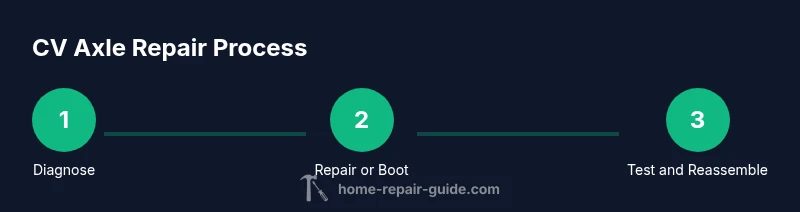
A successful cv axle repair follows a repeatable sequence from preparation through testing. Start with safety planning, then remove the wheel and axle components, inspect the boot and joint for wear, choose boot kit or axle replacement based on condition, reinstall the assembly, and finally perform a road test to confirm proper operation. This overview lays out the flow; the detailed steps appear in the Step-By-Step block below with specific actions and time estimates.
Maintenance to Extend CV Axle Life
After completing cv axle repair, implement simple maintenance habits to extend the life of the axle and joints. Regularly inspect boots for cracks or tears, keep grease clean and free of debris, and avoid exposing joints to water and salt for extended periods. If you drive in harsh conditions, consider a boot replacement proactively when you notice flexible material aging. Perform periodic checks during oil changes or brake service to catch wear early.
Safety and When to Seek Professional Help
CV axle work involves elevated safety risks including heavy lifting and suspension components under tension. If you lack proper jacking points, do not have the right tools, or the axle shows severe damage, seek a professional repair. Complex issues such as contaminated joints, torn inner boots that reach the axle shaft, or axle bearing damage warrant expert evaluation. A pro can confirm whether replacement or a full axle unit is the most cost effective solution.
AUTHORITY SOURCES
- CV axle maintenance and automotive repair basics are supported by industry safety guidelines from trusted sources. See the following references for further reading on vehicle maintenance and safety practices:
- https://www.nhtsa.gov/road-safety/vehicle-safety
- https://www.consumer.ftc.gov/articles/0247-repairs-and-warranty
- https://www.caranddriver.com/
Tools & Materials
- Jack and jack stands(Flat, solid surface; use wheel chocks)
- Hydraulic floor jack(Support vehicle safely while raised)
- Metric socket set(Tools for lug nuts and axle components)
- Breaker bar(Extra leverage for stubborn fasteners)
- Torque wrench(Accurate torque on hub and axle nut)
- Pliers and pry bar(Release clips and separate joints)
- Rubber mallet(Gently persuade components without damage)
- CV joint puller or axle nut socket(Vehicle specific; optional if not needed)
- Replacement CV axle or boot kit(Select boot kit if boot only; full axle if joints are worn)
- Grease for CV joints(High temperature, compatible with CV joints)
- Clamps and RTV sealant if required(Some kits require sealant and clamps)
- Shop towels(Clean up grease and spills)
- Penetrating oil(Loosen rusted fasteners)
- Gloves and eye protection(Personal safety gear)
Steps
Estimated time: 2-4 hours
- 1
Prepare workspace and vehicle
Park on level ground, engage parking brake, and chock the wheels. Loosen the lug nuts while the car is on the ground, then lift the vehicle with a floor jack and secure with jack stands. Ensure you have a clean area to lay out fasteners and replacement parts.
Tip: Never crawl under a car supported only by a jack; always use jack stands. - 2
Remove wheel and access axle
Loosen the axle nut while the wheel is still on the hub, then remove the wheel. Use penetrating oil on stubborn bolts, and keep track of which bolts came from where. Clear space around the axle to access the inner and outer joints.
Tip: Take a few photos as you go to help with reassembly. - 3
Disconnect axle from hub and inner joint
Unbolt the axle from the hub assembly and carefully slide the axle out of the transmission or differential, depending on your vehicle layout. If the joint is tight, use a pry bar gently to release clips without bending the shaft.
Tip: Support the axle end so the joint does not drop and cause damage. - 4
Inspect boot, joint, and splines
Check the outer CV boot for tears and grease leakage; inspect the inner boot and the joint for wear, rust, or excessive play. If the boot is torn or grease is contaminated, plan for boot kit replacement or axle replacement based on joint condition.
Tip: Corrosion on splines can require careful cleaning and sometimes replacement of the joint. - 5
Install new components and reassemble
If you are replacing a boot kit, install the new boot, clamps, and grease per the kit instructions. If replacing the axle, align the splines and slide the new axle into the transmission and hub, then torque fasteners to spec and secure clamps.
Tip: Always torque the axle nut to the manufacturer specification; under or over tightening can cause failure. - 6
Test, inspect, and road test
Reinstall the wheel, lower the vehicle, and perform a cautious road test. Listen for abnormal noises, feel for vibrations, and recheck for leaks. If any issue remains, re-inspect the assembly before driving longer distances.
Tip: Check for a clean, uncontaminated brake area after the test drive.
FAQ
What is a CV axle and what does it do?
A CV axle transfers power from the transaxle to the wheels via CV joints and a shaft. It also allows for steering and suspension movement. Worn joints can produce clicking and vibration.
The CV axle transfers power to the wheels and allows steering; worn joints cause noise and vibration.
Can I replace a CV axle myself, or should I go to a shop?
Yes, you can replace a CV axle yourself if you have the right tools and a service manual. Some models require special tools or alignment checks, in which case a professional repair is safer and faster.
You can DIY if you have the tools and manual; otherwise consider a professional.
How do you know which CV axle size you need?
Axle size depends on the vehicle year, make, model, and drivetrain configuration. Use the OEM part number or a verified parts catalog to select a compatible axle or boot kit.
Check the OEM part number or parts catalog to match the exact axle.
Is boot replacement cheaper than full axle replacement?
Boot replacement can be cheaper if the joint is still in good condition, but a worn joint usually requires axle replacement. Compare part costs and labor estimates for a final decision.
Boots cost less; if the joint is worn, replacing the axle is often the better long term choice.
What safety risks should I know before starting?
Lifting a vehicle, handling pressurized components, and working near brake systems pose risks. Always use jack stands, wear eye protection, and keep a clean workspace to avoid slips.
Wear safety gear and use jack stands; keep workspace organized.
How long does cv axle repair typically take?
For a typical boot replacement or axle swap with basic tools, plan for several hours. Complex issues or limited access on some models can take longer.
Most jobs take a few hours, depending on vehicle and access.
Watch Video
Key Takeaways
- Plan workspace and safety first
- Inspect boot and joint for wear
- Use correct torque on axle nuts
- Document steps to ensure accurate reassembly
- Decide boot kit versus axle replacement based on condition