Cost of CV Joint Repair in 2026: A Practical Guide
Explore the cost of cv joint repair, including boots, joints, and labor. Learn typical ranges, factors that raise price, regional differences, and how to get accurate quotes.


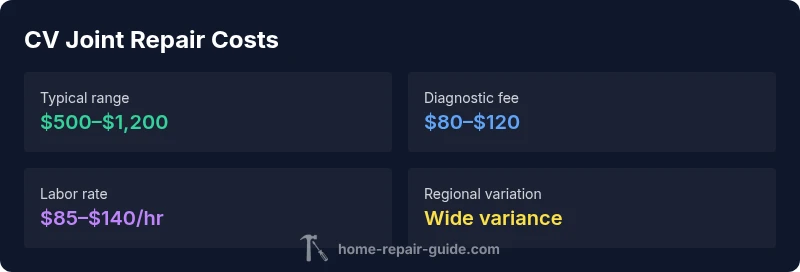
According to Home Repair Guide, CV joint repair costs vary by damage, parts, and labor. Most basic repairs fall in the $300–$1,200 range, with more complex scenarios reaching higher figures if the axle is damaged or multiple components are involved. Always ask for an itemized quote and note warranty terms before proceeding.
What drives the cost of cv joint repair
The cost of cv joint repair is not a fixed price; it hinges on several core drivers. First, the extent of damage determines whether you replace a boot, mend a joint, or swap a full axle. Second, the availability and price of genuine parts influence the bottom line, especially for older vehicles or models with limited aftermarket options. Third, labor time and shop overhead contribute significantly. Finally, regional competition and local wage levels affect quotes. In the language of budgeting, understanding the drivers helps you gauge risk and prepare for surprises. The cost of cv joint repair can be impacted by vehicle accessibility, the diagnostic process, and whether the repair touches related components like the driveshaft or wheel bearings. This is why obtaining an itemized estimate that separates parts from labor is crucial. The Home Repair Guide team emphasizes getting multiple quotes and asking about potential labor surcharges during busy seasons.
Typical price ranges by repair type
Not all cv joint work is the same. Boots that crack or deteriorate without joint wear are cheaper to fix than replacing a worn or damaged joint on an axle. A boot-only repair might stay in the lower hundreds, whereas a full CV joint replacement or axle replacement can push costs higher, especially if OEM parts are chosen or the vehicle requires extensive disassembly. When you see a range like $300 to $1,200, it reflects varying parts and labor requirements. For engineering clarity, expect the following ranges: boot replacement only, boot and clamp kit; CV joint repair on one axle; full CV axle replacement; and diagnostic fees that may or may not be waived if you proceed with a repair. Always confirm if taxes and shop supplies are included in the quoted price and whether disposal fees apply.
Labor vs parts: decoding the bill
Shops break the bill into two main components: parts and labor. Parts costs include the CV joint, boot kit, clamps, grease, and any replacement hardware. Labor covers the time a technician spends removing the wheel, accessing the joint, performing the replacement, and performing a test drive. In many cases, labor items are the most variable portion of the invoice; a compact car with a straightforward engine bay may require less time than a larger vehicle or a model with cramped access. It’s common to see labor hours ranging from one to several, depending on the complexity and the shop’s standard rates. When you receive a quote, ask for a line-by-line breakdown and a clear explanation of any “shop supplies” or disposal charges.
DIY considerations and safety
DIY CV joint work is not for everyone. Replacing boots or joints can reduce cost if you have the right tools and a stable workspace, but mistakes can lead to additional damage or safety risks. If you choose to DIY, factor in the cost of tools you might never use again, potential voiding of warranties, and the risk of improper installation that can compromise steering or driveline integrity. For most homeowners, a professional inspection and repair deliver a safer, more predictable outcome, with a warranty covering workmanship.
Regional variation and timing
Prices for cv joint repair vary by region due to labor markets, vehicle density, and competition among repair shops. In some areas, diagnostic and labor rates trend higher, while rural regions may offer lower hourly rates. Seasonal demand can also shift pricing; early spring and late fall often see more vehicle maintenance as people prepare for traveling seasons. When planning, consider obtaining quotes from local shops and asking for price-matching options or promotions that align with your budget.
How to get accurate estimates
To avoid sticker shock, request a written, itemized estimate before any work begins. Include a description of every part, the exact labor hours, and the expected timeline. Ask whether diagnostic fees apply and whether they’ll be credited toward the repair if you proceed. Provide your vehicle’s year, make, model, and any prior maintenance records to help technicians anticipate parts availability. If you can, obtain quotes from at least three independent shops to establish a fair market range. Finally, confirm whether the quote assumes new OEM parts or aftermarket alternatives and whether core charges apply.
Financing options and warranties
If the cost feels daunting, inquire about financing plans or deferred payment options offered by many repair shops. Warranties matter: a parts warranty and a workmanship warranty reassure you that the repair is protected if issues reappear. Read the fine print on coverage duration and what specifically is covered (parts, labor, or both). Warranties can also influence your decision between repairing an axle versus replacing it entirely, particularly if a limited warranty applies to refurbished parts.
Longevity and maintenance to reduce costs
Preventive maintenance can reduce the likelihood of premature CV joint failure. Regularly inspect the driveshaft area for signs of boot wear, cracks, or leaks and replace cracked boots promptly to prevent dirt and moisture from contaminating lubricants. Maintain proper wheel alignment and avoid aggressive driving that strains the drivetrain. A proactive maintenance schedule can minimize unexpected repairs and help you avoid a surge in CV joint repair costs over time.
Next steps: preparing for the shop visit
Armed with a solid plan, you’re ready to visit the shop. Bring maintenance records, notes about any symptoms (noise, vibration, grease smell), and a list of questions about parts options and warranties. Request a side-by-side comparison of OEM versus aftermarket parts, plus a recommended course of action with pros and cons. If you’re price-conscious, ask about a staged approach: boot replacement first, followed by diagnostic recheck, then a decision on joint replacement if needed. This approach keeps you in control of the final cost.
Structured overview of CV joint repair cost elements
| Cost Element | Typical Range (USD) | Notes |
|---|---|---|
| Boot replacement only (no joint damage) | $50–$200 | Lower end; depends on boot kit and clamps |
| CV joint repair on one axle | $300–$800 | Damages vary by joint wear and parts |
| Full CV axle replacement (one side) | $500–$1,200 | Includes axle and labor; OEM vs aftermarket affects price |
| Labor rate (hourly) | $80–$140 | Regional variation and shop level influence total |
FAQ
What factors influence the cost of cv joint repair?
The cost is driven by damage severity, parts availability, labor time, and regional pricing. Diagnostic complexity and vehicle access can add to the bill. Always seek an itemized quote that separates parts from labor.
Costs depend on damage, parts, and labor; get an itemized quote before proceeding.
Is DIY CV joint repair safe for a typical car?
DIY work can save money only if you have the right tools and experience. Improper installation can cause driveline issues or safety risks. For most, professional service offers safer, more reliable results and warranties.
DIY can save money but carries safety risks; consider professional service for reliability.
Should I replace the axle or just the joint?
If the axle shows severe wear or the joint is damaged beyond repair, replacing the axle may be more cost-effective in the long run. A professional should assess wear, torque specs, and alignment to decide the best course.
Axle replacement can be better if wear is extensive; get an expert assessment.
Do diagnostic fees apply, and are they waived if I repair?
Many shops charge a diagnostic fee, but some waive it if you proceed with the repair. Confirm this policy when requesting quotes to avoid surprises.
Diagnostic fees may be waived if you proceed with repair; ask upfront.
Are CV joint repairs covered by warranty or insurance?
Most repairs include a workmanship warranty; coverage varies by shop and part type. Insurance might cover certain failures if linked to an accident or extensive vehicle damage.
Warranties are common; insurance coverage depends on the situation.
How long does CV joint replacement typically take?
Typical repair timelines range from a few hours to a full day, depending on vehicle access, parts availability, and the shop’s workflow. Scheduling ahead helps avoid delays.
Most repairs take a few hours to a day, depending on access and parts.
“Costs for CV joint repair depend on the extent of damage and the parts required; a careful diagnostic is essential to avoid overspending.”
Key Takeaways
- Compare quotes from multiple shops to anchor price ranges
- Ask for a detailed parts and labor breakdown
- Consider DIY only if you have proper tools and expertise
- Check warranty terms and potential hidden fees
- Plan for regional price differences and seasonal promos