Repair RV Water Heater: A Practical Step-by-Step Guide
Learn to diagnose, repair, and safely service an RV water heater with practical, on-the-road guidance. This Home Repair Guide tutorial covers symptoms, tools, safety steps, common fixes, and maintenance tips to keep hot water flowing on the road.


Learn to diagnose and repair an RV water heater safely on the road. This guide covers common symptoms, essential safety steps, tool checks, and practical repairs you can perform yourself. You'll learn how to isolate the problem, replace failing components, and verify operation before hitting the road again. Home Repair Guide shares practical, durable fixes with clear instructions.
How RV water heaters differ from residential units
RV water heaters are compact, portable, and designed to run on propane, electrical shore power, or a combination. They heat through a small tank—usually 6 to 10 gallons—and share space with other living systems in a travel trailer or motorhome. Because of the limited space and the need to run on generator power, these units heat more quickly but cycle more often. The Home Repair Guide team notes that RV models often use a direct-ignition gas valve and a compact heating element, with controls integrated into the RV’s chassis panel. This means diagnosis often centers on fittings, seals, and control boards rather than large-scale heat exchangers. Understanding these differences helps you assess probable faults, choose appropriate parts, and avoid unnecessary repairs. According to Home Repair Guide, keeping a maintenance checklist specific to RV water heaters will save time on the road.
Diagnosing common RV water heater problems
Symptoms vary by system, but some issues recur across RV models. No hot water can indicate a failed thermostat, a blown heating element, or a blocked burner. Leaks at fittings or the relief valve point to worn seals or corroded connections. If the pilot won’t light, check the gas supply, thermocouple, and ignition system. Strange noises or intermittent heating may signal mineral buildup or a failing control module. As part of this guide, note any error codes from the RV's control panel and compare them to the manufacturer manual. Home Repair Guide analysis shows that most road-worthy repairs involve simple seal replacements, cleaning, or part swaps rather than a full heater replacement.
Safety first: electricity, gas, and ventilation
Before touching any RV appliance, shut off the power at the breaker and, for gas heaters, close the gas supply. Ventilate the area to avoid gas buildup and never work with the unit hot or pressurized. Use a non-contact voltage tester to confirm no 12V or 120V is live, and wear gloves and eye protection. If you smell propane or hear hissing, evacuate and call a professional. Keep a bucket and towels handy to capture condensate or leaks without slippery floors.
Tools, parts, and maintenance mindset
Gather basic tools and keep a small parts kit on hand. A simple toolkit can cover most on-site repairs: screwdrivers (Phillips and flat), adjustable wrench, needle-nose pliers, a multimeter, and a non-contact voltage tester. You may also need replacement thermostat, heating element, burner or igniter, and gas control components depending on your diagnosis. Documentation such as the model manual or wiring diagrams speeds up repairs. Regular checks—tank pressure relief valve operation, loose fittings, and mineral scale buildup—extend the heater’s life. This approach aligns with the Home Repair Guide emphasis on proactive maintenance and clear documentation.
Common fixes you can perform on the road
Many RV water heater faults respond to basic maintenance: clean mineral scale from the heat exchanger, tighten loose fittings, replace a faulty thermostat or heating element, and reseal connections with fresh gasket material. For gas units, ensure the burner orifice is clean and the igniter is functional. For electric units, test the heating element with a multimeter and replace if needed. After any repair, purge air from the lines by running hot water until steady flow returns. These practical fixes are the core of reliable on-the-road service, reducing delays and keeping showers hot.
Tools & Materials
- Safety gear (gloves, safety glasses)(Protect skin and eyes when handling hot components or sharp edges)
- Non-contact voltage tester(Verify no live circuits before touching wires)
- Multimeter(Test continuity for thermostat and heating element)
- Adjustable wrench(For fitting nuts on water lines and heater connections)
- Screwdrivers (Phillips and flathead)(Open panels and remove fasteners)
- Bucket and towels(Catch water and keep work area dry)
- RV water heater manual or model-specific parts(Helpful for wiring diagrams and part numbers)
- Replacement parts (thermostat, heating element, igniter, gas valve)(Use only after confirming faulty component)
- Caulking material or gasket kits(Seal joints after reassembly)
- Gas leak detector spray or soapy water(Check for leaks after reassembly)
Steps
Estimated time: 45-90 minutes
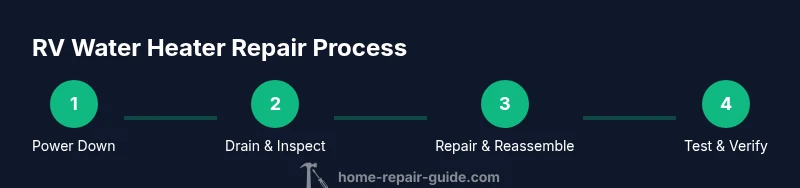
- 1
Power down and secure the system
Transition the RV to safe mode: shut off shore power, disconnect the battery if applicable, and close the gas supply for the heater. This prevents shocks or gas leaks while you work. Allow the unit to cool for at least 10 minutes.
Tip: Double-check that fridge, water pump, and heater circuits won’t energize during disassembly. - 2
Drain and depressurize the tank
Close the cold water inlet valve and open a hot water tap to let air in. Open the heater drain valve and drain the tank into a suitable container. This reduces the risk of scalding and makes fittings easier to handle.
Tip: Have a bucket ready; drips may be warm, not hot, but still avoid contact with skin. - 3
Inspect for visible leaks and corrosion
With the access panel removed, examine seals, fittings, relief valve, and the tank shell for signs of corrosion or wear. Document any damaged components before removing them for replacement.
Tip: Take photos to reference part placement during reassembly. - 4
Test electrical circuits and thermostat
Use the multimeter to test the thermostat circuit and verify 12V (electric unit) or correct control signals. Check for loose wires or burnt connectors and tighten or replace as needed.
Tip: Ensure the unit is completely disconnected from all power sources before testing. - 5
Test the heating element (electric) and igniter (gas)
For electric heaters, remove the access panel and test the heating element for continuity. For gas units, inspect the igniter or burner for cleanliness and proper flame. Replace faulty parts as required.
Tip: For gas components, use a gas-safe leak detector after reassembly. - 6
Reassemble, refill, and purge air
Reconnect fittings, reseal with fresh gaskets, and slowly refill the tank. Open hot taps to purge air until steady hot water flows. Close the tank valve when water runs clean.
Tip: Do not over-tighten fittings; overtightening can crack threads. - 7
Re-light pilot or re-activate power
For gas heaters, re-light the pilot or re-establish electronic ignition per the manual. For electric heaters, restore power and ensure the unit controls respond correctly.
Tip: Follow manufacturer sequence to avoid false error codes. - 8
Test the full system
Run hot water for a few minutes and observe for temperature consistency and leaks. If hot water is stable and no leaks appear, the repair is complete.
Tip: Observe the unit for at least 15 minutes after repair to ensure stability.
FAQ
Can I repair an RV water heater myself?
Yes, many basic issues can be addressed with careful safety steps, the right tools, and follow-up testing. Complex gas system work or uncertain parts should be handled by a professional.
You can, but for gas systems or if you’re unsure, consider professional help.
What are the most common failures in RV water heaters?
Thermostats, heating elements, ignition components, and corroded seals are typical failure points. Leaks around fittings are also common due to road vibrations and age.
Common issues include failed thermostats, heating elements, and leaks at fittings.
Is it safe to work on an RV water heater while connected to shore power?
Only after confirming the unit is fully de-energized. Use a multimeter to verify no voltage remains before touching any wiring.
Always verify there’s no live power before you touch wiring.
When should I replace instead of repair the unit?
If corrosion is extensive or repeated repairs fail to restore stable operation, replacement is safer and more cost-effective in the long run.
If it keeps failing or is heavily corroded, replace it.
What maintenance helps prevent RV water heater issues?
Regularly flush the tank, inspect fittings, test the relief valve, and winterize to reduce mineral buildup and rust.
Flush and inspect the heater regularly to prevent problems.
Do I need to winterize my RV water heater?
Winterizing helps prevent lines from freezing and reduces corrosion risk. Follow the manufacturer’s winterization procedure.
Winterize the system according to the manual to avoid froze lines.
Watch Video
Key Takeaways
- Identify the fault before replacing parts.
- Always shut power and gas before starting.
- Purge air and test for leaks after any repair.
- Use manufacturer guides and documentation for parts.
- Evaluate replacement vs repair based on long-term reliability.