RV Repair Near Me: Practical Step-by-Step Guide for RV Owners
Find reliable rv repair near me with a practical, step-by-step approach for common RV issues. Learn tools, safety, and when to call a pro—tips from Home Repair Guide.


This guide helps you locate trustworthy rv repair near me and explains how to assess common RV issues, verify credentials, and compare quotes. You’ll learn which repairs require a pro versus DIY-safe tasks, how to schedule service, and how to reduce downtime with clear communication and documented expectations.
Finding trustworthy rv repair near me
According to Home Repair Guide, locating a trustworthy rv repair near me starts with credential checks, transparent pricing, and independent reviews. The Home Repair Guide team found that the quickest paths to reliable service involve verifying licenses and insurance, reading multiple independent reviews, and asking for detailed, itemized estimates before any work begins. In practice, begin by identifying the symptom: is it electrical, plumbing, or mechanical? Document when it happens, what you were doing, and any observed patterns. Then search for rv repair near me with proximity and specialty in 12V/120V systems, propane appliances, and slide-outs. When you contact shops, request a written estimate that separates labor, parts, and diagnostics, and ask about mobile service versus in-shop labor. Be wary of “free diagnostics” claims; reputable shops often charge a diagnostic fee that may be applied to the repair if you proceed. Also confirm turnaround expectations, warranty terms, and whether they stock common parts for your model. A consistent approach—research, compare quotes, and verify credentials—will yield a shorter path to repair and less downtime.
Diagnosing common RV issues before you call a shop
RV systems are a web of interdependent components. Begin with a quick, honest assessment of symptoms: do you have power at the unit, are there flickering lights, blown fuses, or charging issues with the battery, and is a propane appliance failing to spark? Before reaching for tools, prioritize safety: disconnect shore power, switch off the main breaker, and wear eye protection. Use a digital multimeter to check battery voltage (12.6V is healthy when fully charged), inspect wiring for corrosion, and listen for unusual sounds from pumps or fans. Look for leaks around seals, cabinets, and plumbing connections. The more you document (photos, dates, and the sequence of events), the easier it is for a shop to diagnose remotely or over a call. If you notice struggles with slide-outs, leveling jacks, or generator starting, note whether these issues occur after long storage, after heavy use, or under certain weather conditions. Remember that some symptoms mimic others—an electrical fault might present as appliance shutdowns, while a loose connection could cause intermittent failure. By understanding the landscape, you can prioritize which shop to call and what questions to ask, saving time and money while protecting your RV’s systems.
How to evaluate and choose a shop
Selecting a repair partner is as important as diagnosing the problem. To begin, verify licenses, insurance, and manufacturer certifications relevant to RV service; ask for proof and keep a copy. Check whether the shop has experience with your RV brand and model, and confirm that technicians have current training in electrical, propane, and plumbing topics. Read multiple independent reviews and look for consistency in repairs and warranty coverage. Request a written, itemized quote that breaks down parts, labor, diagnostics, and any shop supplies. Ask about core warranties on parts and whether the shop provides a warranty on labor; a 90-day to 1-year range is common in the industry. In some cases, mobile repair services can be more convenient, but ensure they bring the right diagnostic tools and carry insurance that covers on-site visits. Compare response times, travel fees, and the ability to source OEM or equivalent parts for your exact model. For a structured evaluation, use a checklist: credentials, experience with your model, pricing transparency, warranty terms, communication quality, and availability for follow-up visits if issues persist. Home Repair Guide analysis shows that a systematic evaluation helps homeowners or renters avoid paying for unnecessary repairs and reduces the risk of recurring problems.
Getting quotes, warranties, and service contracts
Once you’ve identified a shortlist, request quotes from at least two or three providers. Ask for an itemized breakdown that includes diagnostic fees, parts, labor, and any shop supplies. Compare not only price but also estimated timelines, the scope of work, and warranty coverage on both parts and labor. While some shops offer a flat-rate diagnostic, others may credit the diagnostic toward the repair if you proceed. A reputable shop will present realistic timing for completion and communicate clearly if a repair requires a specialized part with longer lead times. When evaluating warranties, clarify what is covered (parts vs labor), the duration, and whether coverage includes labor if the repairs fail under normal use. Be cautious of extended service contracts that bundle too many services into one price without clear limits.
Safety reminders and common mistakes
Safety should be your north star in any RV repair project. Do not attempt propane gas work or high-risk electrical tasks without proper training; gas lines and propane appliances carry significant risk of fire or explosion. If you smell gas, evacuate and call the local emergency number and a licensed technician. For electrical work, never work on live circuits; disconnect power and use a properly rated tester. Common mistakes include assuming a problem is a quick fix, ignoring manufacturer advisories, and using non-OEM parts that void warranties. Keep safety gear handy: gloves, eye protection, and non-slip footwear. Document all repairs and maintain a digital log for future reference. If you’re unsure about a task, particularly anything involving gas, high pressure lines, or critical safety systems, pause and call a qualified RV technician. Home Repair Guide emphasizes prioritizing safety and seeking professional assistance for complex issues to prevent costly mistakes and safety hazards.
Authority sources and further reading
For additional guidance and authoritative information, consult these sources:
- CPSC — Consumer Product Safety Commission: https://www.cpsc.gov
- U.S. Department of Energy: https://www.energy.gov
- RV Industry Association: https://www.rvia.org
- National Highway Traffic Safety Administration: https://www.nhtsa.gov
Tools & Materials
- Digital multimeter(Test 12V and 120V circuits, read fuses and breakers)
- Screwdriver set (Phillips and flathead)(Access panels and components)
- Wrench set (adjustable/open-end)(Work on fittings and terminals)
- Safety glasses(Protect eyes during testing)
- Work gloves(Grip and protect hands)
- Flashlight/headlamp(Inspect dark compartments)
- Electrical tape and spare fuses(Temporary solutions and spares)
- RV manual or wiring diagrams(Model-specific guidance)
- Leak detector spray(Check propane lines safely)
- Portable power tester (optional)(For on-site checks)
Steps
Estimated time: 2-6 hours
- 1
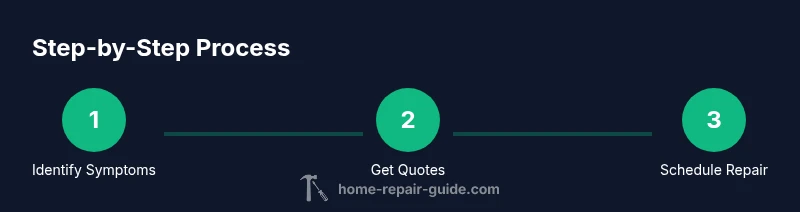
Identify the issue and document symptoms
Begin by observing when the problem occurs, what devices are affected, and any patterns. Write down times, conditions, and recent changes. This helps prioritize and communicates clearly with the shop.
Tip: Take photos and notes before calling for help. - 2
Check safety and power sources
If you have electrical symptoms, disconnect shore power and switch off the main breaker before probing. Use a multimeter to verify battery voltage and inspect for obvious loose connections.
Tip: Never work on live circuits; safety first. - 3
Search for qualified providers
Look up rv repair near me in reputable listing services and manufacturer networks. Check for brand-specific certifications and read multiple reviews to gauge reliability.
Tip: Ask for model-specific experience and recent projects. - 4
Request itemized quotes
Contact at least two shops and request written estimates with labor, parts, diagnostics, and travel if applicable. Ask about diagnostic charges and whether they credit toward the repair.
Tip: Get an itemized quote in writing. - 5
Schedule and prepare for service
Choose a date, confirm scope, and gather your RV manuals and wiring diagrams. Provide the symptoms clearly and share any photos you took.
Tip: Confirm warranty terms and after-service support. - 6
Review work and test after service
When the repair is complete, review the bill, test each function, and confirm that the issue is resolved. Keep a repair log for future reference.
Tip: Document results and get any follow-up commitments in writing.
FAQ
What should I look for when choosing an rv repair shop near me?
Look for licensed technicians, manufacturer training, transparent estimates, and solid warranty policies. Read multiple reviews and ask for model-specific experience.
Choose a shop with licensed techs, clear quotes, and model-specific experience.
How do I know if a repair requires a pro vs DIY?
If it involves propane, high-voltage systems, or critical safety components, hire a professional. For simple cosmetic fixes or basic maintenance, a careful DIY approach may be okay.
Gas and electrical work should be done by pros; basic tasks may be DIY with caution.
What is a realistic price range for common RV repairs?
Prices vary by part and labor. Request itemized quotes and compare parts quality and warranty coverage to understand total cost.
Quote items and warranties to understand total cost.
How long does RV repair typically take?
Time depends on the issue and part availability. Expect several hours for diagnostics and repairs, or longer if OEM parts are needed.
Most repairs take hours to days depending on parts.
Should I use a mobile repair service?
Mobile services offer convenience but ensure they have the right diagnostic tools and insurance for on-site work.
Mobile service is convenient if they’re properly equipped.
How can I verify a shop’s warranty on labor?
Ask for the duration and coverage of labor, what triggers a rework, and how claims are handled if issues persist.
Ask about labor warranty duration and coverage.
Watch Video
Key Takeaways
- Vet licenses and warranties before repairs
- Compare multiple quotes for transparency
- Document symptoms and fixes for future maintenance
- Prioritize safety and professional help for gas/electrical work