Pool Filter Repair: Step-by-Step Guide for Homeowners
Learn pool filter repair with a clear, step-by-step approach. Diagnose type, backwash or clean, replace seals or media, and prevent clogs with practical tips.


Pool filter repair involves diagnosing your filter type, cleaning or backwashing properly, and replacing worn seals or media. This quick answer highlights the essential steps, safety basics, and the right time to seek professional help to keep your pool circulating and crystal clear.
Understanding pool filter types
Pools use three common filter media: sand, cartridge, and DE. Each type provides different filtration efficiency, maintenance needs, and backwashing requirements. Sand filters trap particles by using a bed of silica sand; they are durable, relatively low maintenance, and backwash when pressure rises about 8-12 psi from baseline. Cartridge filters use pleated polyester elements, deliver cleaner water per square inch, but require periodic cartridge cleaning or replacement and can be more sensitive to chemical balance. DE filters use diatomaceous earth to coat a grid, delivering the finest filtration but with higher upfront cost and more involved cleaning.
If you’re unsure which you have, look at the filter tank label, count the number of ports, or check the backwash lever. The choice affects how you diagnose problems and which parts you’ll replace (O-rings, seals, or media). According to Home Repair Guide, starting with the right filter type makes every subsequent maintenance step faster and safer.
Common symptoms: low flow, cloudy water, or unexplained loss of pressure often point to blockages, leaks, or worn seals. Record baseline pressure with a gauge; compare before and after cleaning. Leaks around the lid or at seals indicate o-rings or gasket failure that must be addressed before operation.
Diagnosing common problems with pool filters
When your pool water looks off or the system behaves oddly, start with a structured diagnostic plan. Common signals include reduced return flow (low pressure on the gauge), unusually high pressure (pressure higher than baseline), loud noises, or visible leaks around the filter or pump. Each symptom points to different culprits: clogged media, failing O-rings, cracked housings, or misadjusted valves.
Create a baseline by recording the normal operating pressure and flow. A quick dye test can reveal in-leakage around seals. Inspect the lid, clamps, and bands for cracks. Check the O-rings at every connection point, especially where the lid meets the filter housing. If you have a sand filter, look for cracked lateral assemblies; for cartridge and DE filters, inspect seals and media as the first line of defense. If the pressure remains high after backwashing and cleaning, the media or gasket likely needs replacement, or the internal grid has a fault. Always verify electrical safety and power isolation before touching any equipment.
Safety and preparedness before you start
Safety comes first when working around a pool filter. Before any disassembly, turn off the pool pump at the breaker and lock out the switch if possible. Relieve any residual pressure by opening the air-relief valve (if equipped) and ensuring the system cannot start unexpectedly.
Wear protective gloves to shield hands from sharp edges and chemical residues. Keep children and pets away from the work area, and never stand directly in front of the filter when opening the lid in case of sudden releases. Have a clear plan: know which replacement parts you need (O-rings, seals, media) and confirm you have the correct tools for your specific filter model. If you smell chemical fumes or feel uncertain about handling DE media, pause and consult a professional. According to Home Repair Guide, proper safety planning lowers risk and speeds up successful repairs.
Step-by-step repair workflow (overview)
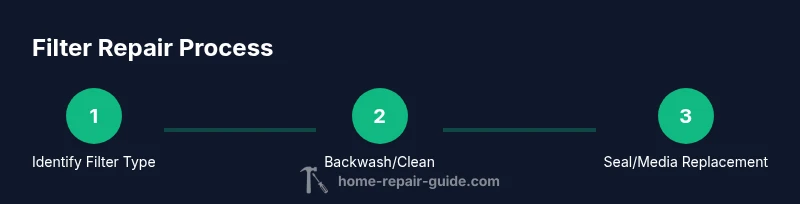
This section outlines the core workflow you’ll perform in the detailed STEP-BY-STEP block. Start by confirming the filter type, then disconnect power, relieve pressure, and prepare for disassembly. Clean or backwash the unit as appropriate, inspect seals and media, replace worn parts, reassemble, prime the system, and finally test water flow and pressure. Document the baseline conditions so you can track improvements over time.
If you encounter stubborn leaks or a damaged internal grid, replace parts in the order that minimizes rework. Always recheck o-rings after assembly to ensure a watertight seal. A methodical approach reduces guesswork and protects your equipment. For best results, keep spare O-rings, gaskets, and your chosen filter media on hand.
Maintenance and prevention to extend life
Prevention is cheaper than frequent repairs. Schedule regular backwashing or cartridge cleaning based on usage, water chemistry, and filter type. Keep the pump basket clean and verify balance: incorrect water chemistry, high total dissolved solids, or heavy bather loads accelerate clogging. Replace media on a realistic timeline: cartridge filters often need cleaning or replacement every year or two, sand filters can require media replacement every 5-7 years, and DE filters may need re-coating with fresh Diatomaceous Earth per manufacturer guidance.
Record keeping helps: log backwash frequency, pressure readings, and any part replacements. Lubricate O-rings during reassembly, avoid overtightening clamps, and store spare parts in a dry place. Routine maintenance minimizes downtime and keeps your pool water clear.
Authority sources and references
For further guidance on pool safety and water quality, consult authoritative sources:
- https://www.cdc.gov/healthywater/swimming/pools.html
- https://www.epa.gov/waterscience
- https://www.osha.gov
These sources provide general safety and water-quality best practices that complement hands-on repair work. Home Repair Guide emphasizes following manufacturer specifications for your filter model and exercising caution when handling pressurized systems.
Tools & Materials
- Pool filter wrench(Used to disassemble the filter housing without damaging parts)
- Screwdriver set(Phillips and flathead; needed for clamps and screws)
- Channel-lock pliers(Useful for clamps; avoid over-tightening)
- Replacement O-rings and gaskets(Match your filter model to ensure a watertight seal)
- Replacement filter media (sand, cartridge, or DE)(Only if your filter requires media replacement; confirm type before purchasing)
- Bucket and towels(Contain spills and keep area dry during maintenance)
- Garden hose(For rinsing media and flushing debris)
- Pool test kit(Check chemistry after filter work)
- Safety gloves and eye protection(Personal protective equipment)
- Wire brush(Clean stubborn deposits on metal components)
Steps
Estimated time: 60-120 minutes
- 1
Power down and prepare
Turn off the pool pump at the breaker and lock out the switch if possible. Remove any ladders or nearby hazards. Gather replacement parts and tools before you begin to minimize interruptions.
Tip: Verify power is off by testing the pump switch with a non-contact voltage tester before touching any wiring. - 2
Identify filter type
Check the filter label and note the media type (sand, cartridge, or DE). This determines the disassembly method, which O-rings to inspect, and what media to replace if needed.
Tip: If you’re unsure, photograph the filter label and port layout for later reference. - 3
Relieve pressure and open lid
Open the air-relief valve or backwash valve to release pressure gradually. Unfasten the lid clamps and set the lid aside carefully.
Tip: Have a bucket ready to catch any remaining water to avoid a spray of dirty liquid. - 4
Backwash/clean the filter
For sand and DE filters, perform a backwash until the discharge is clear. For cartridge filters, remove the cartridge and rinse with a hose.
Tip: Keep the backwash valve in the backwash position until the flow clears; don’t rush this step. - 5
Inspect and replace seals/o-rings
Check all O-rings and gaskets for cracks or flattening. Replace worn seals with the exact size and profile recommended by the manufacturer.
Tip: Apply a light silicone lubricant on O-rings if recommended by the manufacturer. - 6
Assess media needs
Cartridge filters: clean or replace the cartridge. Sand/DE: inspect media bed and grids; replace DE according to product specs and rinse sand as needed.
Tip: Don’t mix old and new media; fresh media improves filtration efficiency. - 7
Reassemble and reseal
Reassemble the filter housing in the reverse order, ensuring clamps are snug but not overtightened. Replace lid and secure clamps.
Tip: Double-check the alignment to prevent mis-seating and leaks. - 8
Prime and restore power
Fill the filter housing with water, reconnect the power, and start the pump. Watch for leaks and verify pressure returns to baseline.
Tip: Allow the system to run for a full cycle to confirm stability. - 9
Test, document, and adjust
Record post-repair pressure and flow. Re-check chemistry, and schedule follow-up maintenance if the reading remains out of range.
Tip: Keep a repair log to track performance over time.
FAQ
Do I need to hire a professional to repair a pool filter, or can I DIY?
Many pool filter repairs can be DIY, especially common issues like replacing O-rings or backwashing. More complex problems, such as cracked housings or damaged internal grids, may require a professional and replacement parts from the manufacturer.
Many fixes are DIY-friendly, but larger cracks or internal grid damage should be handled by a pro.
How do I know when to replace pool filter media?
Media replacement depends on type: cartridge elements may need replacement every 1-3 years with cleaning in between, sand filters often need media refresh every 5-7 years, and DE filters require DE re-coating per manufacturer guidance. Check water clarity and pressure trends to guide timing.
Watch for persistent cloudiness or rising pressure despite cleaning.
Can backwashing fix all filtration problems?
Backwashing resolves issues caused by trapped debris in sand or DE filters and restores flow. It won’t fix issues arising from leaky seals, cracked housings, or incorrect chemistry.
Backwash helps when debris blocks filtration but isn’t a cure for leaks.
How often should I backwash my pool filter?
Backwash frequency depends on usage, chemistry, and filter type. Start with weekly backwashing during peak season and adjust based on pressure readings and water clarity.
Gauge the pressure and adjust to keep baseline pressure stable.
What safety precautions should I follow during filter repair?
Turn off the power, relieve pressure, wear gloves and eye protection, and keep children away from the work area. Never open the lid while the pump is running.
Power off and relieve pressure before touching the filter.
Watch Video
Key Takeaways
- Identify filter type before you begin
- Backwash/clean appropriately to restore flow
- Inspect and replace worn seals or media
- Test flow and water chemistry after repair
- Maintain a repair log for future reference