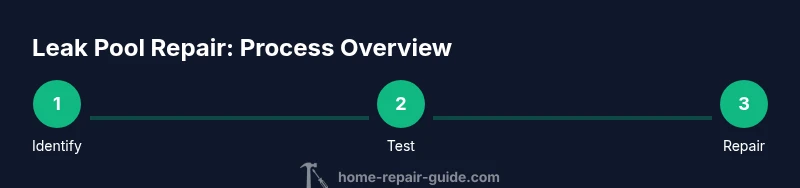
Leak Pool Repair: A Step-by-Step Home Guide for DIYers
Learn a practical, safe approach to locate and repair a pool leak with step-by-step guidance, from dye tests to patch kits, trusted by Home Repair Guide.


You will locate, verify, and seal a pool leak using safe, proven methods. Start with dye testing, pressure testing, and patch options, then choose a durable fix. Gather basic tools, sealants, and safety gear before you begin. Together, these steps help you stop water loss, extend pool life, and avoid costly professional fees.
Understanding why pools leak
Pools can leak from fittings, cracks in concrete or plaster, liner seams, or worn equipment. According to Home Repair Guide, most residential pool leaks originate at fittings and joints, with liners and cracks following closely. Recognizing the cause is the first step in a durable leak repair. This guide focuses on leak pool repair across common pool types (vinyl, fiberglass, concrete) and explains how to choose the right repair method without overpaying for unnecessary work. By understanding the failure mode, you can plan a fix that lasts for seasons rather than months, and you’ll reduce the risk of repeat leaks. The approach here balances practical DIY methods with safe precautions. The content also covers when to escalate to a professional if the leak is complex or requires structural work.
The Home Repair Guide team found that investing in proper diagnosis upfront often saves time and money later, especially for leaks behind pool walls or near equipment pads.
Leak-detection methods you can trust
Successful leak repair starts with accurate localization. You’ll use a combination of dye tests, bucket tests, hydrostatic or pressure tests, and visual inspections. A dye test helps confirm whether the water is exiting the pool or is lost to evaporation. A bucket test compares evaporation rates inside and outside the pool to quantify loss. For vinyl liners, you’ll inspect seams and patch options; for concrete or gunite, you’ll check for cracks and joint gaps. The goal is to narrow down to a finite area—the least invasive place to begin repairs. Remember to document water levels over several days to distinguish a leak from natural fluctuations.
Safety notes: turn off the pump and isolate power to equipment before any inspection near electrical components.
Planning and safety first
Before you touch tools, set up a clean, well-lit workspace around the pool’s edge. Put on the required PPE: safety goggles, gloves, and a mask if you’re sanding or blowing dust. Work outside, ideally on calm days to avoid water splashes and wind-driven debris. Decide in advance which method you’ll use depending on pool type: vinyl patches are common on vinyl liners, while epoxy patches suit plaster or fiberglass. Create a simple plan with a repair timeline, cure times, and contingency options. This upfront planning minimizes back-and-forth trips to the store and reduces the chance of selecting an unsuitable product.
Tools and materials you’ll need (overview)
You’ll use a mix of general hand tools and pool-specific repair products. The items listed below are a quick reference; you’ll find a detailed, itemized list in the Tools & Materials block. Common needs include a scraper or wire brush for prep, a putty knife, and a damp cloth for clean surfaces. For repairs, choose adhesives, patches, or sealants that are compatible with your pool’s material (vinyl, plaster, fiberglass). Always verify that products are rated for swimming pools and outdoor use. Storing a small kit with spare clamps or patches can save time if you spot a minor leak during routine maintenance.
Step 1: Confirm active leak and quantify water loss
Begin by determining whether water loss is due to a leak or evaporation. Record initial pool water level, then check again after 24 hours with no heavy use. If the level drops more than natural evaporation would account for, you’re likely facing a leak. Document the time of day, weather, and any pool usage that might affect readings. This step prevents unnecessary repairs on minor evaporation and gives you a baseline for measuring improvement after repairs. If you can, compare levels in a child-safe zone to rule out partial drainage for other reasons.
Tip: Use a marker or tape to track a stable water level so you can return to the exact point after testing.
Step 2: Localize the leak with dye testing
Dye testing helps identify the leak’s source. Drop dye near potential leak sites—plaster cracks, around fittings, and along the liner seam—and watch for dye movement toward the surface. If the dye is drawn toward a suspected area, you’ve pinpointed a likely fix location. Repeat multiple passes from different angles to confirm. For vinyl pools, leaks often originate at seam joints or around fittings; for concrete, look for cracks, spalling, or joint gaps. Record the exact location before removing material for repair.
Pro tip: Use a dye test at dawn or dusk when light is low to see dye movement more clearly.
Tools & Materials
- Safety goggles(Impact-rated if you’ll be grinding or chiseling; protect eyes from debris.)
- Latex or nitrile gloves(Keep hands clean and protect skin from sealants.)
- Pool dye test kit(Non-toxic dye to track leaks.)
- Two-part epoxy pool repair kit(Choose one compatible with pool material.)
- Vinyl patch kit(Essential if vinyl liner has seam or puncture.)
- Marine-grade silicone sealant(Use for edging, fittings, and small gaps.)
- Polyurethane pool sealant(Good for concrete/plaster surfaces in small areas.)
- Epoxy putty(Useful for filling gaps or embedding fittings.)
- Patch material (fiberglass/vinyl/plaster compatible)(Helps create durable coverage over patched areas.)
- Plastic putty knife(For smoothing patches and sealants.)
- Wire brush or scraper(Prep surface by removing loose coating and debris.)
- Rags and bucket(Clean surface and mix materials as directed.)
- Hose and water supply(Rinse area after repair; ensure no debris washes into the pool.)
Steps
Estimated time: 2-6 hours
- 1
Identify and quantify water loss
Record the pool water level at baseline, then re-check after 24 hours with no heavy use. Compare to expected evaporation to determine if a leak exists. Note weather, pool usage, and any splashing patterns that could affect readings.
Tip: Keep a small log with dates and measurements for accuracy. - 2
Localize the leak with dye testing
Perform dye tests near suspected areas: fittings, liner seams, and around the perimeter. Watch for dye uptake indicating the leak location. Validate by testing from multiple angles to confirm a single pinpoint.
Tip: If dye doesn’t move, expand search to adjacent fittings or joints. - 3
Choose the repair method by pool type
Vinyl liners often require patching over punctures; concrete or plaster surfaces may need epoxy patches or sealants. For leaking fittings, reseal with marine-grade silicone or thread sealant. Always select products compatible with your pool surface.
Tip: Avoid using solvent-based products on vinyl liners; patch kits work best. - 4
Prepare the surface for repair
Clean the area around the leak with a brush and solvent as needed. Dry thoroughly; moisture inhibits adhesion. Roughen the surface with a wire brush to improve patch grip.
Tip: A dry, clean surface greatly increases patch durability. - 5
Apply patch or sealant
Follow product directions: mix epoxies, apply patches, press firmly, and hold until set. For seams, apply patch material that covers the entire joint and surrounding area. Avoid over-applying sealant beyond the repair zone.
Tip: Work in thin layers; thick patches may crack during cure. - 6
Cure and inspect
Allow the patch or sealant to cure fully per manufacturer timelines. After curing, re-test the repaired area for leaks using dye or pressure methods. Ensure the surface is watertight before refilling.
Tip: Don’t rush cure time; premature testing risks re-leakage. - 7
Refill and re-test the pool
Slowly refill to normal levels and monitor for any renewed loss. Check nearby areas for signs of moisture on the surface or surrounding ground. If leaks persist, reassess the location and consider alternative repair approaches.
Tip: Consistency is key; re-test after 24–48 hours for reliability.
FAQ
Is pool leak repair a DIY job or should I hire a professional?
Many residential leaks can be fixed as a DIY project if you have basic tools and follow safety steps. Complex leaks behind walls or structural damage should be handled by a professional to avoid further issues.
Most homeowners can start with basic dye tests and patch kits, but call a pro for hard-to-find leaks or structural damage.
How can I tell if the leak is in the liner or plumbing?
If dye is drawn toward a surface, the leak is likely near the surface (liner seam or surface cracks). If dye stays around fittings and you don’t see surface staining, the issue may be plumbing. Verify with pressure tests and professional inspection if unsure.
Use dye tests near seams and fittings; if unsure, consult a pro.
What safety gear do I need for pool leak repair?
Wear safety goggles, gloves, and a mask if sanding or grinding. Keep the area well-ventilated and ensure kids/pets are away during repair and cure times.
Protective gear is essential for patching and sanding steps.
Are vinyl liner repairs different from concrete repairs?
Yes. Vinyl repairs focus on sealing punctures or seams with vinyl patches, while concrete or plaster repairs use epoxy patches and surface sealants. Always follow material-specific instructions.
Patch methods vary by material, so choose the right kit for your pool type.
How long does a typical pool leak repair take to cure?
Cure times depend on products used, weather, and surface. Most patches and sealants require at least several hours to cure, with full strength after 24–48 hours.
Cure time varies; plan for a day or two before full use.
Watch Video
Key Takeaways
- Identify the leak source with dye tests and measurements.
- Choose repair methods matched to pool material (vinyl, plaster, fiberglass).
- Ensure surface prep and cure times are respected for durable results.
- Test thoroughly after repair before returning to full use.
- The Home Repair Guide team recommends documenting maintenance to prevent future leaks.