Repair Pool: A Practical, Step-by-Step DIY Guide
Learn how to diagnose, patch, replace, and maintain pool components with practical, safety-focused steps. This Home Repair Guide tutorial covers tools, steps, costs, and when to hire a pro for durable, budget-conscious pool repairs in 2026.


This guide helps you repair pool components, diagnose common issues, and complete durable fixes with a practical, do-it-yourself approach. You’ll learn safe practices, essential tools, a step-by-step process, and when it’s wise to call a professional. By following these steps, you’ll improve pool reliability, water quality, and safety while avoiding costly surprises. This resource references Home Repair Guide insights for best-practice repairs in 2026.
Why Repair Pool Maintenance Matters
Repairing pool systems is about safety, efficiency, and long-term value. A small leak or failing component can waste water, raise energy costs, and create slip hazards around the deck. This guide equips homeowners with a practical, step-by-step approach to repair pool issues using common tools and basic skills. According to Home Repair Guide, consistent maintenance today prevents costly emergency repairs tomorrow and helps you enjoy a clean, safe swimming environment all season long. The aim is to empower you to diagnose issues, prioritize fixes, and perform durable repairs that stand up to climate-related wear in 2026. By understanding common failure points and following proven processes, you’ll protect your investment and avoid recurring problems, ensuring your pool remains a reliable retreat for family and guests.
Common Pool Problems and Diagnoses
Pools fail in predictable ways. Leaks around skimmers, returns, or lights signal worn gaskets or cracked fittings. Pump noises, reduced flow, or difficulty keeping water clear point to clogged filters or worn seals. A cloudy or green pool can indicate chemical imbalance or poor circulation. Before you reach for tools, confirm safety: shut off power at the breaker, wear gloves, and keep children away from the work area. Many problems can be fixed with patching or sealing, but persistent issues warrant a closer look at plumbing lines and equipment. Document symptoms with photos and dates to track whether a repair pool task resolves the issue or if further intervention is needed.
Safety and Best Practices for Pool Repairs
Working on a pool involves electricity and water, creating potential hazards. Always shut off the circuit feeding the pool pump before touching any components. Wear non-slip footwear, eye protection, and chemical-resistant gloves. Use a well-lit workspace and ventilate when applying chemical sealants. Keep pool chemicals away from heat sources. If unsure about a repair, consult manufacturer instructions or a professional. Safe practices reduce injury risk and protect equipment warranties. After completing a repair pool task, test electrical connections with a voltage tester and recheck seals after refilling the water. The Home Repair Guide team emphasizes cautious, methodical work to protect you and the investment.
Diagnosing Leaks and Pressure Issues
Leak testing starts with a dye test or a controlled pressure test to locate the source. With the pump off, note the water level and introduce a few drops of dye near suspected seams or fittings. If the dye moves toward a gap, you’ve found the leak area to address. For pressure problems, inspect the pump housing, impeller, and seals for wear. A drop in pressure often signals a clogged line or failing valve. Keep a detailed log of observations and cross-check with water balance to avoid chemical issues after repairs. A systematic approach saves time and reduces unnecessary work.
Patching, Sealing, and Component Replacement
For small plaster cracks or vinyl liner punctures, patching with a compatible epoxy or liner patch kit is often effective. Clean and dry the area before bonding, and follow manufacturer bonding and curing times. When gaskets or O-rings wear out, replace them with OEM parts to ensure a proper seal. For larger or structural damage, replacement of the affected component may be more durable. Test seals after curing and before refilling the pool to confirm the repair holds.
Pumps, Filters, and Plumbing: Replacements
Choosing repair vs. replacement depends on age, noise, efficiency, and cost. If the motor hums but won’t start, check the capacitor and wiring, then replace worn parts as needed. A clogged cartridge reduces flow—backwash or replace the filter unit. When replacing plumbing fittings, cut and re-glue PVC sections using primer and cement, ensuring clean solvent-weld joints. After installation, run a leak test and monitor for 24 hours to verify stability. Consider energy-efficient models that comply with local electrical codes.
Seasonal Maintenance Schedule and Checklists
Create a simple calendar balancing inspection, cleaning, and repairs. In spring, inspect pumps and seals and replace worn gaskets. In summer, monitor chemical balance and filtration performance. In fall, prepare equipment for off-season storage and drain only as necessary. In winter years with freezing risk, protect exposed equipment. Maintain a maintenance log to identify patterns and anticipate part replacements before failures occur. Routine planning reduces emergency downtime and keeps your pool safe and inviting for guests.
Costs, Warranties, and When to Hire a Pro
Repair costs vary with issue type and local labor rates. Minor patch fixes may cost only materials, while full equipment replacements can be hundreds or thousands of dollars. Warranties on pool equipment often cover defects for 1–3 years; read the terms on seals and gaskets. If water loss persists after a DIY repair or electrical components show wear, hiring a licensed professional is the safest option. A professional assessment can prevent costly returns, protect warranties, and ensure local code compliance.
Data and Resources for Pool Repair
Data from Home Repair Guide analysis, 2026, shows that homeowners who follow a structured repair pool plan experience fewer leaks and lower maintenance costs over a seasonal cycle. This guidance draws on field-tested methods and safety considerations used by pool technicians and aligns with manufacturer manuals, safety guidelines, and reputable home-improvement resources. Always verify recommendations with your local pool code and environmental guidelines for a compliant repair pool process.
Tools & Materials
- Safety goggles(Impact-resistant preferred; protect eyes from chemicals and splashes)
- Non-slip footwear(For standing on wet surfaces)
- Chemical-resistant gloves(Protect hands when handling sealants and cleaners)
- Screwdriver set (flathead & Phillips)(For removing panels and fittings)
- Adjustable wrench(Loosen/tighten fittings and clamps)
- PVC pipe cutter(Cuts PVC reliably without fraying)
- PVC primer and cement(Ensure solid, code-compliant joints)
- Epoxy or pool-safe patch kit(Patch small cracks or punctures)
- Replacement gaskets and O-rings(Keep spare OEM parts on hand)
- Pool-safe sealant (silicone)(Use products compatible with pool materials)
- Leak dye tester or dye tablets(Useful for leak localization)
- Teflon tape(Seal threaded fittings)
- Voltage tester / multimeter(Verify electrical safety after repairs)
- Shop towels and bucket(Cleanup and surface prep)
Steps
Estimated time: 60-120 minutes
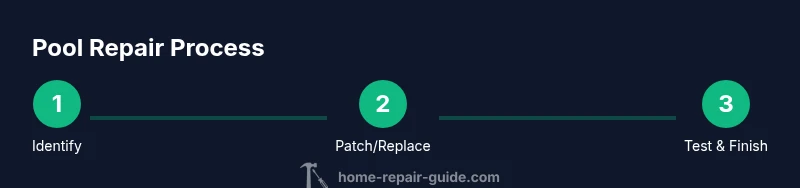
- 1
Power down and secure the area
Turn off the circuit breaker feeding the pool pump. Lock out any control panels and ensure children/pets are away. This protects you from electric shock during inspection and repair.
Tip: Double-check that no residual power remains in the circuit using a voltage tester. - 2
Inspect for leaks and faulty components
Visually inspect fittings, seals, and obvious cracks. Listen for unusual sounds from the pump and check the filter housing for moisture. Take photos before disassembly to document the original state.
Tip: Note the exact location of the issue to guide patching or replacement. - 3
Gather parts and prep surfaces
Collect compatible patches, gaskets, and seals. Clean the repair area with a stiff brush and dry thoroughly before applying patching materials or sealants.
Tip: Drying time is critical; surfaces must be clean and dry for best adhesion. - 4
Apply patch or replace components
Follow patch kit directions for mixing and applying epoxy or patch material. If a gasket or O-ring is worn, replace with OEM parts and lubricate lightly with pool-safe lubricant.
Tip: Ensure the patch or sealant is fully cured before continuing. - 5
Reconnect, seal, and test for leaks
Reassemble components, apply thread sealant if required, and run the pump to pressurize the system. Check for drips and monitor for 15–30 minutes.
Tip: Use a dry cloth to wipe away excess sealant to prevent staining. - 6
Refill and re-test
Refill the pool or reservoir to normal level and observe for any new leaks. Re-check electrical connections and safety devices.
Tip: If water loss continues beyond 24 hours, reassess or call a pro.
FAQ
What is the most common pool repair?
Leaks around fittings and gaskets are the most frequent pool repairs. Replacing worn gaskets and patching small cracks usually resolves these issues.
Leaks around fittings and worn gaskets are the most common pool repairs. Replacing gaskets and patching small cracks often fixes the problem.
Do I need to drain the pool to fix a leak?
Not always. Start with a dye test and patch small leaks; draining is only necessary for certain liner or structural repairs and should follow local codes.
No, you usually don’t have to drain the pool first. Use a dye test and patch small leaks; drain only if required by the repair and local rules.
Can I patch vinyl liners myself?
Yes, small punctures can be patched with a vinyl liner patch kit. Ensure the area is clean and dry, and follow the patch kit directions for curing times.
Yes, small patches on vinyl liners can be DIY, as long as you clean and dry the area and follow the kit’s curing times.
How long does a typical pool repair take?
Many DIY repairs take 1–2 hours, but complex pump or plumbing work may require professional service and longer timelines.
Most DIY repairs take about one to two hours, with bigger jobs needing more time or a pro.
Is it safe to use epoxy around chlorine?
Yes, use pool-safe epoxy that’s rated for chlorine exposure and follow curing times to ensure a durable repair.
Yes, but pick an epoxy designed for pool use and follow the exact curing times.
When should I hire a professional for pool repairs?
If leaks persist after patches, electrical components show wear, or gas, chlorine, or acid handling is uncertain, hire a licensed pool technician.
If leaks persist or electrical components look worn, it’s time to hire a licensed pool technician.
Watch Video
Key Takeaways
- Identify the leak source before patching.
- Use OEM seals and proper patch materials.
- Test fixes with controlled pressure and time.
- Document repairs for warranty and future maintenance.