HVAC Repair Near Me: Finding Trusted Local Technicians in 2026
Learn how to locate reliable hvac repair near me services, evaluate contractors, compare costs, and decide between repair or replacement with expert guidance from Home Repair Guide.


HVAC repair near me describes locating licensed, insured technicians who service heating and cooling systems in your area. To ensure a safe, durable fix, verify credentials, compare written estimates, and check warranties. Start by identifying nearby providers, then request a diagnostic visit to understand the problem and available repair options. Look for clear communication, upfront pricing, and a plan to remedy the issue with minimal disruption.
What 'HVAC repair near me' means in practice
When homeowners search for hvac repair near me, they are looking for local professionals who can diagnose and fix furnaces, air conditioners, heat pumps, and related equipment. Proximity matters for scheduling, but reliability matters more for a durable fix and long-term comfort. Local options vary in licensing, insurance, and response windows, so the best decision blends speed with credibility. According to Home Repair Guide analysis, the most successful repairs begin with an accurate diagnosis, a detailed written estimate, and a clear warranty for both parts and labor. The team found that homeowners who choose providers with upfront pricing and documented warranties report higher satisfaction and fewer follow-up visits. In 2026, the most trusted local HVAC pros combine a solid technical background with good communication and a transparent plan for repairs. They also explain why a given fix is the right approach, what might go wrong, and how long it will take.
When you search, include terms like 'hvac repair near me' and 'licensed HVAC contractor' to narrow the field to those who serve your city or neighborhood. Proximity reduces travel time, which is especially valuable during hot spells or cold snaps. Also check whether the provider offers 24/7 service for emergencies, because heat-related or freezing issues can demand rapid response. Finally, verify basic business legitimacy before a single dollar changes hands: ask for current licensing numbers, proof of insurance, and a written contract. A quick phone screen can reveal whether the technician understands your system’s make and model, whether they can provide a rough time estimate, and whether they will document the diagnostic steps. By balancing reliability and proximity, you increase the odds of a first-time fix that lasts.
How to evaluate a local HVAC repair technician
Evaluating a technician begins before any visit. Confirm the contractor is licensed to service your specific equipment in your jurisdiction, and that they carry liability and workers’ compensation insurance. Request proof of both certificates and verify them with the issuing bodies. A strong candidate will also hold recognized industry certifications (such as NATE or equivalent) and be part of an association that promotes ongoing training. Credentials tell you they understand safety standards and current technology, but they don’t guarantee outcome. Next, read multiple recent, independent reviews and look for consistent remarks about responsiveness, workmanship, and post-service follow-up. Ask for references from recent repairs and contact them to confirm satisfaction.
Request a written estimate detailing parts, labor, and any diagnostic fees, plus a warranty on parts and labor. Confirm the start date, anticipated duration, and a plan for how the contractor will communicate changes if timelines shift. Finally, discuss safety practices—especially during refrigerant handling or electrical work—and whether the service plan includes a post-service checklist to prevent repeat failures. This combination of credentials, reviews, and transparent pricing significantly lowers risk and improves the odds of a reliable fix.
Services you should expect during a repair
A reputable hvac repair near me should cover a comprehensive diagnostic and safety-oriented service. Expect a thorough system inspection that includes refrigerant pressures and temperature differentials, electrical component checks, safety switch tests, and thermostat calibration. Technicians should inspect ducts for leaks, verify airflow, and clean essential components if needed. Reputable providers also discuss refrigerant handling according to environmental standards and ensure proper recovery if leakage is detected. In addition, they should offer protective measures such as air filter replacement, furnace or condenser coil cleaning, and a post-repair performance test to confirm the system runs within factory specifications. A modern service plan may include a recommended maintenance schedule to prevent recurrent issues and sustain efficiency. The Home Repair Guide team emphasizes asking for a written summary of findings, recommended fixes, and a step-by-step plan with a clear price quotation before any work begins. Clear documentation helps homeowners compare options across providers and reduces the likelihood of unnecessary parts replacement or up-charges.
Finally, expect a summary of potential upgrades that could improve efficiency or reliability, along with any rebates or incentives that might apply to your system. This information helps you weigh the short-term costs against long-term savings.
Costs and budgeting for hvac repair
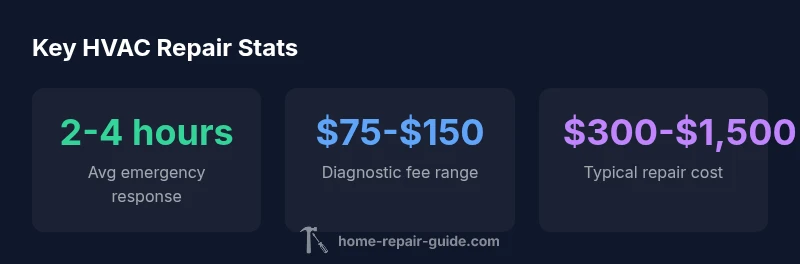
Costs for hvac repair near me vary widely based on system type, the complexity of the problem, and regional labor rates. A typical diagnostic visit with an on-site assessment is commonly quoted in a range, often between $75 and $150, with some providers offering a diagnostic credit if you proceed with repairs. After diagnosing the issue, the repair price can range widely—from a few hundred dollars for simple component replacements to well over a thousand dollars for major compressor work or refrigerant handling. It’s essential to obtain a written, itemized estimate that separates parts, labor, and any travel or diagnostic fees, and to confirm whether the price includes a warranty on parts and workmanship. The Home Repair Guide analysis indicates that, in many cases, reasonable preventive maintenance during a repair can mitigate future breakdowns and reduce overall costs. Budget for potential follow-up visits or minor adjustments, and consider whether a maintenance plan with a flat annual fee offers better long-term value than episodic repairs. Finally, compare estimates not just on price, but on scope of work, manufacturer recommendations, and the contractor’s safety and warranty commitments. A higher upfront cost may reflect better parts, longer warranties, and more thorough testing, which can save money over time.
Repair vs replacement: decision guidelines
If your HVAC system is older or requires frequent repairs, it may be time to weigh replacement against continued repairs. A general rule of thumb is to evaluate repair costs relative to the cost of a comparable new unit, factoring in efficiency gains and energy savings. In many cases, repair costs that approach or exceed 50-70% of replacement cost suggest replacement might be the more economical choice, especially if the equipment is more than 10-15 years old and energy efficiency has declined substantially. Consider the reliability of the current unit, the availability and cost of parts, and potential rebates for new equipment. The Home Repair Guide team notes that newer systems bring improved efficiency, better environmental performance, and longer manufacturer warranties, which can offset higher upfront costs over the life of the system. If you decide to replace, get multiple written quotes for installation and ensure the contractor supports proper zoning, refrigerant handling, and code compliance. A well-timed replacement can yield comfort, cost savings, and peace of mind for years to come.
Steps to take before the technician arrives
Prepare your space to avoid delays and miscommunications. Gather your system’s make, model, and age and provide a concise history of issues, including when the problem started, any noises or odors, and recent thermostat changes. Clear access to the outdoor condenser, indoor air handler, and electrical panel, and ensure there is a safe path for the technician to work. Remove clutter and valuables from the work area, and record any existing damage to the equipment or surrounding surfaces. Have your service plan, warranties, and any permits ready for review. If your system is under an annual maintenance contract, confirm coverage and any required pre-visit steps. Finally, discuss safety with the technician: turn off power as advised, and verify that the technician uses appropriate PPE and follows environmental guidelines for refrigerant handling. These preparations help the technician diagnose faster and protect your home during the repair process.
Maintenance tips to keep your system efficient after repair
Once the repair is complete, follow a simple maintenance routine to extend system life and reduce the likelihood of future breakdowns. Change or clean air filters on schedule, typically every 1-3 months depending on usage and indoor air quality. Schedule professional inspections at least once a year to catch developing issues before they become costly repairs. Keep outdoor units clear of debris, trim vegetation, and ensure the coil area remains free of obstructions. Check insulation around refrigerant lines and ducts to minimize energy waste. Finally, program a smart thermostat or optimize your existing settings to maintain consistent comfort levels without overworking the system. The Home Repair Guide team emphasizes documenting maintenance activities and keeping a written record of service visits, part replacements, and warranty durations for future reference. A proactive maintenance habit saves energy, reduces costs, and improves reliability over time.
HVAC repair service benchmarks
| Aspect | Typical range | Notes |
|---|---|---|
| Emergency response time | 1-3 hours | Depends on area and availability |
| Diagnostic fee | $75-$150 | Often credit toward repair if you proceed |
| Repair cost range | $300-$1,500 | Includes parts and labor; complexity varies |
| System replacement age | 10-15 years | Energy efficiency and condition matter more than age |
FAQ
How do I find a reliable hvac repair near me?
Start by checking licenses, insurance, and certifications. Read multiple independent reviews and ask for references. Always request a written estimate and a warranty on parts and labor before work begins.
Check licenses and insurance, read reviews, and get a written estimate with a warranty.
What should I ask before agreeing to service?
Ask for the exact scope of work, the price breakdown, and whether the diagnostic fee is credited if you proceed. Confirm start dates, expected duration, and post-service follow-up. Request safety and compliance details for refrigerant handling and electrical work.
Get a written scope, price breakdown, and safety details before services start.
Are diagnostic fees refundable if I proceed with repairs?
Diagnostic fees are often credited toward the repair if you proceed with the suggested work. If you do not hire the same company, the fee may be non-refundable. Always confirm the policy in writing before the visit.
The diagnostic fee is sometimes credited if you proceed; verify in writing.
When is repair not worth it and replacement is recommended?
If repair costs approach or exceed a substantial portion of replacement cost, or the unit is older with declining efficiency, replacement may be more economical over time. Consider energy savings, warranty length, and reliability when deciding.
If repairs cost too much or the unit is old, replacement can be the smarter choice.
Do I need permits for HVAC work in my area?
Most small repairs do not require permits, but major replacements or alterations can. Your contractor should verify permit requirements with local authorities and handle the paperwork if needed. Check with your city or county building department for specifics.
Major work may require permits; your contractor should handle it.
How can I reduce repair costs?
Ask for a maintenance plan to prevent frequent issues, compare multiple written estimates, and consider negotiating bundled services. Simple steps like changing filters regularly and scheduling preventive checkups can cut long-term costs. Ensure you understand what is included in the price and avoid unnecessary upgrades.
Get multiple quotes and maintain your system to lower costs over time.
“Regular maintenance and upfront transparency are the best safeguards against expensive HVAC failures. Clear communication from your technician helps ensure a durable fix.”
Key Takeaways
- Start with licensed pros and clear estimates
- Ask for warranties and written contracts
- Understand diagnostic fees and what they cover
- Balance repair costs with potential replacement savings
- Prepare your home and system before service