Emergency AC Repair Near Me: Fast, Trusted Help for Homeowners
Learn how to respond to a sudden AC failure, evaluate emergency needs, and locate trusted technicians nearby. This guide covers safety steps, what to expect from professionals, and maintenance tips to prevent future emergencies.


By reading this guide, you’ll learn how to respond to a sudden air conditioning failure, determine if you must seek urgent service, and quickly locate trustworthy emergency AC repair near me. You’ll also know what information to have ready for a technician, safety steps to take, and what to expect from a 24/7 HVAC professional during a heating or cooling emergency.
Understanding Emergency AC Issues
Cooling emergencies come in several forms, from a complete loss of both cooling and heating to alarming noises, smells, or electrical flickers around the outdoor condenser. When temperatures soar or the climate grows uncomfortable, what starts as a small issue can escalate quickly. According to Home Repair Guide, early identification and rapid action reduce downtime and protect your equipment from further damage. Common red flags include a frozen evaporator coil, warm air from vents when the thermostat calls for cooling, and tripped breakers that repeatedly reset the system. Understanding these symptoms helps you decide whether to call an emergency service or schedule a non-urgent visit. In any case, avoid attempting complex repairs yourself; these systems involve high voltage, pressure, and refrigerants that require trained technicians with proper tools and safety precautions.
Immediate Safety Steps to Take
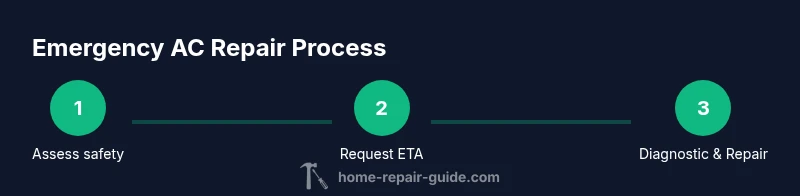
Safety should be your first concern during an AC system failure. If you suspect a hazard, turn off the unit at the disconnect switch or the main breaker to stop power to the outdoor condenser and indoor air handler. Then lower the thermostat to a comfortable setting while you arrange professional help; avoid opening the outdoor cabinet or touching electrical components. Keep children and pets away from the equipment. If there is any burning smell, smoke, or unusual sizzling sounds, evacuate the area and contact emergency services. While you wait, document what you observe, including any error codes on the thermostat display, and prepare your address and unit information for the technician. This approach minimizes risk and speeds up diagnostics once the pro arrives.
How to Decide If It's an Emergency
Not every AC issue requires an urgent trip to the service window, but certain situations demand immediate attention. If the home becomes dangerously hot or cold, if there is a strong electrical odor, or if water pooling around the indoor unit creates a slip hazard, treat it as an emergency. In heat waves, failures can worsen quickly and leave occupants uncomfortable or unsafe, especially children, seniors, or people with medical conditions. For guidance, the Home Repair Guide team notes that customers who call early and provide precise details typically receive faster ETA and a clearer diagnostic path. When in doubt, contact a licensed 24/7 HVAC technician to assess risk and plan next steps.
How to Find an Emergency AC Repair Near Me
Start with trusted search terms like “emergency a c repair near me” or “24/7 HVAC service” and check that the company has current state licensing and insurance. Read recent customer feedback and look for clear ETA estimates, not vague promises. Verify that the technician can respond within your required window and has experience with your unit type and refrigerant type. The Home Repair Guide analysis, 2026, highlights the value of transparent pricing, written estimates, and trip charges explained up front. Have your unit's brand and model number handy, plus any warranty information.
What to Expect from a Technician Arrival
When the technician arrives, expect identification, a brief safety assessment, and a focused diagnostic. They should explain the problem in plain language, show any failing components, and outline recommended fixes with a cost estimate and timeline. A typical emergency visit includes a safety check, circuit and capacitor tests, refrigerant system assessment (without charging or handling refrigerant without authorization), and the proposed repair plan. Ask about guarantees on workmanship and availability of parts. If the visit requires a refrigerant recharge or compressor replacement, the technician should discuss warranty terms and potential follow-up service requirements.
What Services Are Typically Included
Emergency calls usually include a rapid diagnosis, fault isolation, and immediate repairs to restore operation when possible. Expect the technician to inspect electrical connections, sensors, contactors, capacitors, and the blower motor; evaluate the outdoor condenser for airflow restrictions; and verify refrigerant lines for leaks. The job may also involve replacing a failed capacitor, loose wire, or a failed contactor, or addressing a failed contactor. If a refrigerant leak is found, the technician will determine the best course, often requiring a controlled repair by a licensed professional. Based on Home Repair Guide’s 2026 research, service quality hinges on transparent communication and a detailed repair plan.
Costs, Warranties, and Payment Considerations
Emergency repairs typically cost more than standard visits due to rapid response, after-hours labor, and the complexity of urgent diagnostics. Always request a written estimate before any work begins, including labor, parts, and any after-hours charges. Reputable contractors provide warranty terms on workmanship and parts—verify coverage for the specific repair and confirm how long it lasts. If your system is under a manufacturer or extended warranty, check if emergency service qualifies for warranty-related cost coverage. Discuss payment methods and potential financing options in advance to avoid surprises.
DIY Interim Cooling Tips While Waiting
While waiting for the technician, you can take safe steps to stay comfortable without risking injury. Keep doors and windows closed to preserve cooler air, limit the use of heat-generating appliances, and use fans to circulate air. Close blinds or drapes to reduce solar gain, and keep your thermostat set to a reasonable temperature to avoid overworking the system. Replace or clean air filters if easy to reach, and document any changes you notice in temperature or airflow to share with the technician.
Post-Service Maintenance to Prevent Recurrence
After the repair, schedule a quick checkup to confirm system performance, refrigerant charge (if applicable), and airflow from supply and returns. Establish a simple maintenance plan: replace air filters regularly, clean coils, ensure outdoor unit has clear space for airflow, and test thermostat accuracy. Consider a preventive maintenance visit from Home Repair Guide to catch issues early and extend equipment life. The goal is durable comfort and lower risk of future emergencies. As noted by Home Repair Guide, regular maintenance reduces risk of emergencies.
How Home Repair Guide Can Help
In addition to step-by-step guidance, Home Repair Guide provides practical, safety-focused advice to homeowners and renters dealing with urgent AC problems. We offer checklists, maintenance templates, and referral guidance to licensed, insured technicians in your area. By using our guide, you’ll understand the process, communicate clearly with professionals, and reduce downtime during an emergency. The Home Repair Guide team emphasizes trust, reliability, and thorough aftercare to keep your home comfortable throughout the year.
Tools & Materials
- Digital multimeter(Test electrical components safely before touching exposed wiring)
- Non-contact voltage tester(Quickly verify power at disconnects)
- Screwdriver set (Phillips and flat-head)(To open service panels and access components)
- Adjustable wrench / socket set(For connections on condenser and indoor units)
- Protective gloves and safety goggles(Personal protective equipment)
- Flashlight or headlamp(For dark spaces and panels)
- Owner’s manual or model number access(Helpful for matching parts and settings)
- Refrigerant leak detector or spray (optional)(Assists locating leaks without disassembly)
Steps
Estimated time: 60-120 minutes
- 1
Assess safety and shut off power
Begin by turning off power to the outdoor and indoor units at the main breaker or disconnect switch. This reduces the risk of electric shock while you inspect symptoms and prepare for a service call. Do not remove panels or touch live wires.
Tip: Use the non-contact voltage tester to confirm there is no live voltage before touching equipment. - 2
Document symptoms and conditions
Note any odd noises, smells, ice buildup, or temperature changes. Take photos if safe to do so and record the time and thermostat readings. This information helps technicians diagnose quickly.
Tip: A concise symptom log saves time and clarifies the problem for the technician. - 3
Prepare access and safety for arrival
Clear a path to the outdoor condenser and indoor air handler. Ensure pets and children are away from equipment and space is well-ventilated. Have your address, unit model, and warranty details ready.
Tip: Provide gate codes or building access details in advance to avoid delays. - 4
Gather critical information for the pro
Compile the unit’s brand, model, serial number, age, and the last service date. Also note any prior refrigerant charged repairs. This helps the technician carry appropriate parts and avoid unnecessary trips.
Tip: A ready checklist speeds up the diagnostic process. - 5
Contact an emergency AC repair near me
Call or message a licensed 24/7 HVAC service with your details and requested ETA. Confirm they operate in your area during after-hours and whether a diagnostic fee applies.
Tip: Ask for an estimated arrival window and a written estimate before work begins. - 6
Provide access and observation during visit
Once the technician arrives, grant access to the equipment and explain observed symptoms. Stay nearby to answer questions, but avoid interfering with repairs.
Tip: Ask the technician to show failed components and explain the fix. - 7
Review the proposed repair plan
Read the proposed fixes, parts needed, and timeline. Ensure the quote includes labor, parts, and any after-hours charges; request warranty terms for workmanship and parts.
Tip: Don’t sign off on a repair plan you don’t understand. - 8
Permit safe interim cooling measures
While waiting, use fans, close blinds, and minimize heat-producing activities. Do not use heat sources or attempt refrigerant handling.
Tip: Keep the home safe and comfortable without compromising safety. - 9
Verify completion and test performance
After service, test the system for cooling/heating, listen for unusual noises, and verify temperature matches the thermostat setting. Ensure proper airflow and confirm there are no leaks.
Tip: Ask for a brief demonstration of normal operation. - 10
Schedule follow-up and maintenance
Set a maintenance reminder and plan a future preventive check to avoid recurrence. Keep a copy of the service report and warranty details.
Tip: Regular maintenance is your best defense against emergencies.
FAQ
What counts as an emergency AC repair near me?
An emergency involves a critical cooling or heating failure, electrical hazards, or a safety risk. In these situations, contact a licensed 24/7 HVAC professional immediately. If there is imminent danger, call local emergency services.
If you have a critical cooling or heating failure or a real safety risk, call a licensed 24/7 HVAC pro now.
Can I attempt a DIY fix during an emergency?
For safety and liability, avoid major repairs yourself. You can perform simple, safe steps like turning off power, changing filters, and documenting symptoms, but complex repairs should be left to professionals.
You can do safe interim steps, but leave the big repairs to pros.
How soon will a technician arrive after you call?
Arrival times vary by location and urgency. Ask for an estimated arrival window and whether the technician can provide a rough time frame for planning.
Ask for an estimated arrival time when you call.
Will emergency AC repairs include parts replacement?
Yes, some repairs require replacement parts like capacitors or relays. The technician should provide a clear estimate and explain whether parts are needed.
Parts may be needed; get a written estimate before proceeding.
Are there warranties on emergency repairs?
Most reputable contractors offer limited warranties on workmanship and parts. Confirm coverage terms before service and ensure the invoice lists them.
Check for warranty terms before agreeing to the repair.
What should I do if I detect a refrigerant leak?
A refrigerant leak is serious. Do not seal or repair it yourself. Evacuate if needed, ventilate the area, and call a professional immediately.
If you suspect a leak, leave the area and call a pro.
Watch Video
Key Takeaways
- Act quickly to minimize damage
- Prioritize safety and power shutoff
- Verify licensing and ETA before work
- Get written estimates and warranties
- Plan maintenance to prevent recurrence