AC Repair for Home: A Complete Step-by-Step DIY Guide
Learn a safe, practical approach to a c repair for home. This step-by-step guide covers diagnostics, common fixes, and when to call a licensed tech.


By the end of this guide, you will be able to perform a safe, basic AC repair at home. It covers initial diagnostics, common fixes, and when to contact a professional. Gather a basic toolkit, a digital multimeter, and your unit’s manual. Follow the steps to restore cooling and protect the system from further damage.
What a c repair for home involves
A typical a c repair for home begins with safety-first diagnostics and ends with a test run of the system. Homeowners do not need to master every refrigerant calculation, but understanding common failure modes and safe ways to verify symptoms makes repairs more effective and less risky. In many households, practical repairs start with low-risk steps that improve airflow and efficiency, before moving to more complex tasks that require specialized tools or professional service. According to Home Repair Guide, staying within safety limits and following the unit's manual reduces the chance of accidental shocks or refrigerant exposure. The goal is to restore cooling, protect components from damage, and avoid creating additional issues such as frozen coils or blocked drainage. By evaluating the most likely culprits—airflow restrictions, dirty filters, thermostat misreads, and loose electrical connections—you can often identify the root cause without expensive diagnostics. If performance does not improve after these steps, or if you notice refrigerant smells, signs of oil residue, freezing on the coils, or audible clicks from the compressor, it's time to escalate to a licensed HVAC technician. This approach keeps you in control, increases safety, and minimizes unnecessary downtime during hot weather.
Tools and safety essentials for DIY AC repair
To tackle a c repair for home safely, assemble a basic set of tools and protective gear before you begin. A well-prepared workspace reduces risk and speeds up troubleshooting. Start with: a digital multimeter for electrical checks, insulated screwdrivers for panel work, a non-contact voltage tester to confirm power status, and a standard socket/nut driver to access components. Wear safety gloves and goggles to protect hands and eyes from sharp edges and refrigerant exposure. Keep a copy of your unit’s owner’s manual for model-specific cautions and steps. While some tasks are DIY-friendly, never bypass manufacturer warnings or work on sealed refrigerant lines without proper training. Regularly inspect the condensate drain for clogs, and check that outdoor coils are clear of debris. According to Home Repair Guide, maintaining clean filters and unobstructed airflow is one of the most impactful, low-risk improvements you can make. If you encounter refrigerant odors or oily residues near fittings, pause and contact a pro. Documenting each step helps you track what you’ve tried and informs a future service visit.
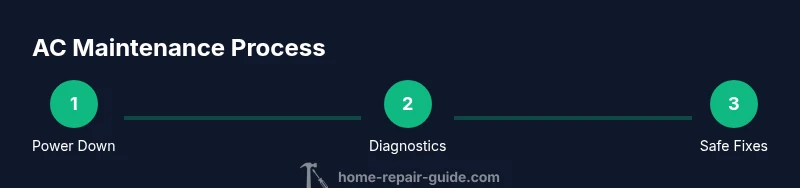
Diagnostics workflow: symptoms to cause
A systematic diagnostic approach helps you translate symptoms into probable causes without guesswork. Start by validating basic inputs: thermostat settings, fan operation, and indoor airflow. If airflow is weak or inconsistent, inspect air filters and ducts for blockages, then verify that the blower is functioning. If the outdoors unit runs but indoor air is not cooling, check for refrigerant-related clues such as rapid cycling, ice on coils, or warm air despite a running compressor. Use your multimeter to safely test voltage at control boards and switch circuits, and identify loose or burnt connections. Record observations and correlate them with common failure modes: dirty coils, faulty capacitors, thermostat misreads, or blower motor issues. For refrigerant concerns, signs are more subtle and often require a licensed technician. Based on Home Repair Guide analysis, a careful, documented diagnostic flow reduces unnecessary service calls and helps you communicate clearly with an HVAC pro when needed.
Safe fixes you can perform to restore cooling
Many a c repair for home success stories start with straightforward fixes that don’t require expensive equipment. Replace a dirty air filter with a new one of the correct size and MERV rating for your system. Clean accessible condenser coils or remove debris from the outdoor unit using a soft brush and a hose with gentle spray. Verify thermostat accuracy by bumping the setting by a few degrees and observing the response, ensuring the fan runs as expected. Check for obvious loose wires or corrosion at the electrical connections on the control board and at the outdoor condenser. If you notice a muddy or oily residue near fittings, do not disassemble sealed components; instead, seal any minor leaks with manufacturer-approved sealants and prepare to call a professional. Remember, never charge refrigerant or disassemble sealed compressors yourself. These steps can restore operation in many cases and delay a costly service call.
Tools & Materials
- Digital multimeter(Measure voltage, resistance, and continuity safely.)
- Insulated screwdriver set(Phillips and flathead for panel access.)
- Non-contact voltage tester(Verify power status before touching wires.)
- Nut driver / socket set(Open access panels and secure fittings.)
- Safety gloves (non-conductive)(Protect hands during electrical work.)
- Safety goggles(Protect eyes from debris and refrigerant exposure.)
- Owner's manual for the AC unit(Model-specific cautions and steps.)
- Cleaning brush and mild coil-safe cleaner(Clean accessible outdoor coils safely.)
- Flashlight(Inspect dark corners and panel interiors.)
Steps
Estimated time: 60-120 minutes
- 1
Power down and secure the unit
Shut off power at the main breaker and, if available, lock out the disconnect near the outdoor unit. This prevents electrical shock while you inspect components. Confirm no voltage with your non-contact tester before touching any wiring.
Tip: Double-check that both indoor and outdoor power sources are off before starting. - 2
Check air filter and airflow
Remove and inspect the indoor air filter. Replace if dirty or clogged. Ensure air can flow freely through the return grille and that supply vents are unobstructed by furniture or debris.
Tip: A clean filter can restore 5-15°F of cooling efficiency in many homes. - 3
Verify thermostat settings and calibration
Ensure the thermostat is set to cool, at a comfortable temperature, and not in a mode like “auto fan” that hides a problem. If possible, test a basic calibration and observe whether the system responds to temperature changes.
Tip: Compare room temperature with thermostat reading for an accurate check. - 4
Inspect electrical connections and capacitors
Look for loose wires, burnt marks, or corrosion on the control board and at the outdoor contactor. If you have a meter, test voltage and continuity across accessible components. Do not discharge sealed capacitors with bare hands.
Tip: Discharge capacitors only if you are trained and have proper PPE; otherwise, leave it to a pro. - 5
Clean condenser coils and outdoor unit
Gently remove leaves and debris from the outdoor unit. Rinse coils with a mild spray, avoiding high pressure that can bend fins. Check the fan blade for debris and wobble.
Tip: Keep a safe distance to avoid hitting fins with water. - 6
Check the condensate drain and leaks
Ensure the condensate drain line is clear and draining properly. Look for signs of water pooling near the indoor unit, which can indicate a clogged line or improper slope.
Tip: A blocked drain can trigger safety shutoffs and mold growth. - 7
Test system operation after reassembly
Restore power, run the cooling mode, and observe for steady airflow, proper cooling, and normal noises. Note any abnormal behavior and document results for future reference.
Tip: If the system still underperforms, prepare a concise summary for your HVAC technician.
FAQ
Can I fix my air conditioner myself?
Basic maintenance like changing filters and cleaning accessible coils is generally safe for homeowners. More complex tasks—electrical work or refrigerant handling—should be done by a licensed technician.
You can handle simple maintenance, but for electrical or refrigerant work, it's best to call a pro.
What tools do I need for a basic AC repair?
A digital multimeter, insulated screwdrivers, a non-contact voltage tester, a socket set, and safety gear are the core tools for basic diagnostics and repairs.
You'll need a multimeter, insulated screwdrivers, and basic safety gear to get started.
How often should I service my AC unit?
Many systems benefit from an annual professional service, along with monthly checks of the air filter and visible components by homeowners.
Most people schedule yearly professional service and do simple checks themselves each month.
What are signs I should call a professional?
Persistent cooling problems, frost on coils, unusual noises, or refrigerant smell indicate professional service is needed.
If you notice frost, leaks, or odd noises, it’s time to contact a professional.
Does replacing the air filter fix cooling problems?
Yes, a dirty filter reduces airflow and cooling efficiency. Replacing it often resolves mild cooling issues.
A clogged filter often reduces cooling—replacing it can help a lot.
Watch Video
Key Takeaways
- Inspect power and safety first
- Prioritize filter and airflow maintenance
- Document symptoms to guide repairs
- Know when to escalate to a professional