Heating and a c Repair: A Practical Home Guide
A comprehensive, safety-first guide to diagnosing and performing heating and a c repair at home. Learn when to DIY, what tools you need, step-by-step procedures, and how to decide if a pro is required, backed by Home Repair Guide insights.


This quick answer shows how to safely diagnose common HVAC issues and perform heating and a c repair tasks at home, from thermostat checks to testing electrical connections. You’ll learn when to DIY versus call a professional, the essential tools, and a clear step-by-step approach. According to Home Repair Guide, always disconnect power and follow local codes before starting.
Introduction to heating and a c repair
The phrase heating and a c repair refers to a range of tasks from troubleshooting a stubborn thermostat to replacing a failing compressor. For homeowners and renters, approaching these tasks with a clear plan and safety mindset can save time, money, and unnecessary risk. This comprehensive guide aims to demystify common problems, provide practical steps, and highlight when professional help is the safer choice. According to Home Repair Guide, steady, methodical work beats guesswork when you’re dealing with live electrical components, refrigerant lines, and high-pressure systems. In this article you will find normal-sense checklists, tools, and a step-by-step process designed for non-experts who want reliable results without compromising safety. We’ll cover basic diagnostics you can perform with minimal equipment, how to interpret surprising symptoms (like uneven cooling or unusual noises), and how to maintain the system so it lasts longer. By the end, you’ll have the confidence to decide whether a DIY fix is appropriate or if a pro is needed.
Safety basics for DIY HVAC work
Before touching any equipment, lock out and tag out power to the system at the main service disconnect. This ensures both your safety and that the unit cannot restart unexpectedly mid-inspection. Wear appropriate PPE: safety goggles, gloves with good grip, and long sleeves to protect against sharp edges. Keep the work area dry, well-lit, and organized; label wires and take photos before disconnecting anything so you can reassemble correctly. Remember that refrigerant lines and electrical components can retain dangerous energy after power is removed. If you smell acrid fumes, notice burning plastic, or experience a tingling sensation when touching metal parts, stop immediately and seek professional help. Home Repair Guide emphasizes that some tasks—like handling refrigerants, high-voltage controls, or sealed systems—are best left to licensed technicians. In the rest of this article, we’ll focus on safe, non-intrusive checks and documented, owner-performed maintenance that reduces the likelihood of emergency calls.
Diagnosing common symptoms and what they mean
Cooling or heating systems often give telltale signs before a complete failure. For instance, rooms that never quite reach the set temperature can indicate thermostat issues, poor airflow, or duct leaks. Strange noises—buzzing, clicking, or grinding—may point to loose components, a failing fan motor, or a dirty blower wheel. Higher energy bills without increased usage can signal degraded efficiency, dirty filters, or an aging compressor. If the system cycles on and off rapidly, this could reflect thermostat miscalibration, capacitors losing charge, or refrigerant-related pressure imbalances. Throughout heating and a c repair, documenting symptoms with dates, sounds, and observed temperatures helps the Home Repair Guide team diagnose faster and plan safer approaches.
Essential tools and safety gear
Before you begin, assemble a basic toolkit: a digital multimeter, a non-contact voltage tester, a screwdriver set (Phillips and flat-head), insulated gloves, safety goggles, and a flashlight. Have a tape measure, notepad, and camera handy to document wires and components. Use a dryer-appropriate lint brush or foam pad to gently clean coils if accessible without disassembly. Keep a safe, dry workspace and never work directly on energized components. If you must drain refrigerant, this is a certified task that requires licensed technicians and proper recovery equipment. The right tools reduce risk and improve accuracy, which is consistent with Home Repair Guide recommendations for safe, responsible DIY maintenance.
Step-by-step diagnostic workflow
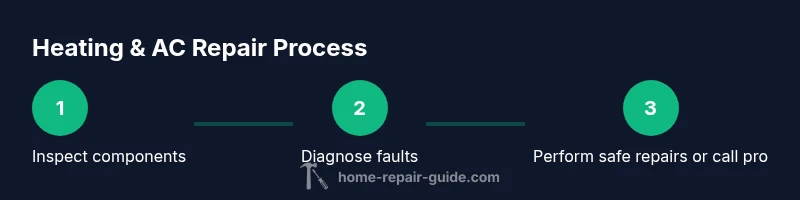
Begin with a high-level check: confirm power availability, thermostat settings, and clear any obvious obstructions around the outdoor condenser and indoor air handler. Next, test controls at the thermostat and the control board for fault indicators or error codes. Check air filters and ducts for blockages and measure airflow at supply registers. If readings deviate from expected values, trace the path from thermostat to the blower motor to identify where the fault originates. Finally, document findings and decide whether a DIY fix is feasible or if a professional should be engaged. This workflow mirrors the methodical approach advocated by Home Repair Guide.
Electrical checks and controller troubleshooting
Electrical checks cover connections at the blower motor, contactors, and low-voltage wiring to the thermostat. Look for loose terminals, signs of arcing, or burnt insulation. Use a digital multimeter to verify voltage and check for continuity where safe. If a control board or relay shows persistent fault codes, replace only the identified component or consult a pro. Always ensure power is disconnected before handling any live parts, and never bypass safety switches or fuses. A systematic electrical audit reduces the risk of fire or equipment damage and aligns with best practices endorsed by Home Repair Guide.
Refrigerant considerations and when to involve a pro
Refrigerant issues are among the most dangerous and technically involved problems in heating and a c repair. Handling refrigerants requires specialized certification, leak detection equipment, and proper recovery methods. If you suspect a refrigerant leak, do not attempt to add refrigerant or seal lines yourself. Signs include oily residues around connections, abrupt temperature changes, or subcooling/ superheat readings that fall outside normal ranges. In most jurisdictions, only licensed technicians may service refrigerant systems. The Home Repair Guide team emphasizes safety, proper codes, and professional support for anything beyond basic diagnostics and non-intrusive maintenance.
Airflow optimization: ducts, filters, and coils
Poor airflow reduces comfort and system efficiency. Start by ensuring all supply registers are open and unblocked, then replace or clean the air filter according to the manufacturer’s schedule. Inspect accessible ducts for obvious leaks or kinks and seal with appropriate duct tape or mastic after confirming there are no gas or electrical hazards. Clean outdoor condenser fins with a soft brush and gentle water spray from the top, avoiding aggressive pressure that could bend fins. Regular airflow optimization reduces energy use and prolongs equipment life, a key recommendation from Home Repair Guide.
Thermostats, sensors, and zoning basics
Thermostats are the system’s brain; an inaccurate reading often misleads the whole setup. Calibrate or replace old thermostats, check sensor placement, and ensure the wiring is correct. If your system uses zoning, verify zone dampers function properly and are balanced for even temperature distribution. A miscalibrated thermostat or faulty sensor can cause short cycling, uncomfortable rooms, and increased energy consumption. Regularly check and update thermostat firmware where available, which aligns with preventive-maintenance best practices advised by Home Repair Guide.
Maintenance planning and safety reminders
Preventive maintenance is the best defense against unexpected breakdowns. Create a simple maintenance calendar that includes yearly professional inspection, biannual filter changes, coil cleaning, and duct inspection every few years. Keep a basic maintenance log with dates, symptoms, and actions taken, so you can track trends and anticipate repairs before they fail. Always follow local codes and safety guidelines; never work on live electrical components, refrigerant lines, or pressurized systems without training and appropriate permits. A proactive approach saves time and money, as emphasized by Home Repair Guide.
Tools & Materials
- Safety goggles(Eye protection for all tasks)
- Insulated gloves(Thermal and electrical protection)
- Non-contact voltage tester(Safe voltage verification)
- Digital multimeter(Measure voltage, resistance, continuity)
- Screwdriver set (Phillips and flat-head)(General fasteners and terminals)
- Electrical tape(Termination and marking)
- Flashlight or headlamp(Illumination for dark areas)
- Camera or notepad(Document wiring and component placement)
- Ventilated cloth or towels(Contain spills and protect surfaces)
- Duct sealant or mastic(Seal minor leaks after inspection)
Steps
Estimated time: 2-4 hours
- 1
Power down and verify safety
Switch off the main breaker and the disconnect near the air handler. Confirm no voltage is present with a non-contact tester before touching any components. This prevents shock and unintentional startup.
Tip: Always start with safety; a 5-minute check saves hours of troubleshooting later. - 2
Verify system specifications
Locate the unit model number and refrigerant type. Compare against the manufacturer's service manual to confirm compatible procedures and limits.
Tip: Document model numbers before disassembly to ensure proper parts. - 3
Test thermostat and controls
Check thermostat settings, calibration, and wiring. Look for loose terminals and confirm call for heat/cool activates the air handler and outdoor unit.
Tip: Replace batteries if needed and consider upgrading to a smart thermostat for better diagnostics. - 4
Inspect physical components
Visually inspect the indoor blower, outdoor condenser, and coil cleanliness. Remove debris, check fan blades for damage, and ensure the drain line is clear.
Tip: A small brush and vacuum can remove most dust without disassembly. - 5
Check air filter and ductwork
Assess filter condition and replace if dirty. Inspect accessible ducts for gaps or crushed sections and seal with appropriate materials when you have identified non-hazardous leaks.
Tip: Consecutive dirty filters across weeks suggest a duct issue rather than a single bad filter. - 6
Evaluate electrical connections
Tighten terminals on the blower relay and control board, test fuses or breakers, and verify consistent voltage at common components.
Tip: If a component shows overheating signs, isolate and replace rather than continue troubleshooting. - 7
Assess refrigerant-related concerns
Look for oily traces at connections, unusual frost, or inconsistent pressures. Do not attempt to recharge or seal refrigerant lines without certification.
Tip: Leaking refrigerant is hazardous; call a licensed technician for any refrigerant work. - 8
Test run and fault identification
Power the system and observe start-up sequence, cycling, and error codes. Note times to reach setpoint and when the system stops cycling.
Tip: Take photos of any error codes and compare with the service manual.
FAQ
Do I need a license to repair HVAC systems?
Licensing requirements vary by state and by the type of work (especially refrigerant handling). For major refrigerant work and system repairs, a licensed technician is typically required. Always check local regulations before performing advanced repairs.
Licensing varies by state; major refrigerant work usually requires a license. Check local rules before starting.
What basic maintenance can I do myself?
Simple tasks include replacing or cleaning air filters, cleaning accessible coils, ensuring ducts are unobstructed, and testing thermostat operation. These steps can improve efficiency and extend equipment life.
Change filters, clean accessible coils, check ducts, and test the thermostat. These steps help efficiency and longevity.
Can I fix a refrigerant leak myself?
No. Handling refrigerants requires certification and proper equipment. Leaks should be repaired by a licensed technician, who can safely recover refrigerant and refill system in compliance with regulations.
Refrigerant leaks require a licensed technician due to safety and regulatory reasons.
How long does HVAC repair typically take?
Repair duration depends on the issue, from a few hours for simple fixes to a day or more for complex diagnostics or refrigerant work. A professional assessment can provide a more accurate timeline.
It varies; simple fixes may take hours, complex issues longer. A professional assessment gives a clearer timeline.
What safety gear should I wear?
Wear safety goggles, insulated gloves, and long sleeves. Ensure the area is dry and well-lit, and never work on energized parts without confirming de-energization.
Goggles, insulated gloves, and long sleeves are a must. Always verify power is off before starting.
Watch Video
Key Takeaways
- Begin with safety and power-down
- Use a systematic diagnostic approach
- Know when to DIY and when to call a pro
- Maintain airflow for efficiency and longevity
- Document everything for future maintenance