Furnace Repair and Service: A Practical Homeowner's Guide
Learn how to safely inspect, maintain, and troubleshoot your furnace with a practical, step-by-step guide for homeowners and renters seeking reliable heating guidance.


This guide helps homeowners perform basic furnace repair and service safely, identify common issues, and decide when to call a professional. You will learn to inspect filters, listen for unusual noises, test airflow, and schedule regular maintenance to extend furnace life. Before you start, gather essential tools, shut off power, and follow safety precautions to prevent accidents.
Understanding Furnace Repair and Service
Furnace repair and service involve routine maintenance, diagnostics, and minor repairs that keep heating systems safe, efficient, and reliable. This guide is designed for homeowners and renters who want practical, hands-on guidance between professional visits. According to Home Repair Guide, proper furnace repair and service starts with a clear plan and strict safety practices. Regular service typically includes inspecting and replacing air filters, testing the ignition and controls, verifying venting, and checking flame quality and airflow. By understanding the core components—blower motor, heat exchanger, burners, and control board—you can recognize when a service call is warranted. The two overarching goals are safety and reliability. When you perform a basic assessment, you can catch issues early and avoid unnecessary repair costs while preserving comfort and efficiency.
Important Safety Precautions
Safety is the foundation of any furnace maintenance. Always turn off power to the furnace at the service switch and the circuit breaker before touching any internal components. If you smell gas or hear a hiss near the furnace, evacuate and call your gas provider or emergency services immediately. Install and maintain carbon monoxide detectors near sleeping areas and on every floor. Wear eye protection and cut-resistant gloves when handling sharp metal parts or wiring. Never bypass safety switches or attempt to relight a furnace without confirming safe conditions. These precautions protect you and your family while you work on the system.
Common Symptoms and Quick Checks
Furnaces usually give warning signs before a breakdown. Look for unusual banging or squealing noises, frequent cycling, yellow or irregular flame color, a persistent cold spot in your home, or a sudden spike in energy bills. Check the air filter—if it’s dirty or clogged, airflow will drop, reducing efficiency and comfort. Verify that the thermostat is communicating correctly with the furnace and that the filter size and type match the system requirements. If you notice a musty or burning odor, shut the system down and inspect for obstructions or debris near the blower. These checks help distinguish between simple maintenance needs and more serious failures that require a professional service call.
Weekend Maintenance: Quick Tasks You Can Do
Even when you’re not a licensed technician, several maintenance tasks are safe and impactful. Start by turning off power, then replace or clean the air filter according to the manufacturer’s guidelines. Inspect the condensate drain line for clogs and clean it if you see standing water. Wipe down the area around the furnace to remove dust and debris that could impede airflow. Check the venting outdoors for obstructions like leaves or snow. If you have a programmable thermostat, review schedules and ensure it aligns with occupancy to optimize efficiency. Remember, do not perform any invasive electrical work or gas line adjustments yourself.
Scheduling Regular Maintenance for Longevity
Most manufacturers recommend at least one professional tune-up per heating season. A technician will inspect combustion safety, ignition, heat exchanger integrity, blower operation, and ductwork for leaks. Regular service can improve efficiency, reduce unexpected breakdowns, and extend system life. If you’ve recently moved into a new home or have an older furnace, more frequent checks may be warranted. Home Repair Guide’s approach emphasizes proactive maintenance and documentation—keep a log of service dates, filter changes, and any odd system behavior to help future technicians diagnose issues quickly.
Cost Considerations and Budgeting for Furnace Work
Furnace service costs can vary based on system type, accessibility, and region. A standard maintenance visit may range from moderate to higher, with more extensive repairs priced accordingly. Budget for routine annual servicing and set aside funds for potential replacements or major component repairs. Discuss with a technician which parts are most likely to need attention in the coming years and whether a maintenance plan offers bundled inspections or priority scheduling. These considerations help homeowners plan ahead and avoid sticker shock when problems arise.
Finding a Qualified Technician and What to Expect
When the time comes for a pro to step in, choose a licensed technician with HVAC credentials and a history of positive reviews. Request a written estimate that breaks down parts and labor, and ask about warranty terms on labor and replaced components. A thorough service visit should include a safety check, combustion analysis, ignition troubleshooting, and a test run of the furnace and blower. Expect clear communication about what was found, recommended repairs or replacements, and a realistic timeline. A reliable technician will leave you with an understandable maintenance plan and preventive tips to keep your furnace operating safely.
Additional Resources and Next Steps
Keep proactive maintenance at the forefront by scheduling seasonal checks and educating all household members on basic safety practices around heating equipment. For deeper understanding, explore authoritative sources on residential heating safety and efficiency. This section also provides a bridge to our step-by-step guide, ensuring you have both the big picture and the hands-on instructions you need.
Tools & Materials
- Safety glasses(ANSI Z87.1 compliant or equivalent)
- Work gloves (nitrile or leather)(Protect hands during inspection and handling)
- Screwdrivers (Phillips and flat-head)(Assorted sizes for access panels and wiring terminals)
- Multimeter(For voltage checks on controls and sensor connections)
- Non-contact voltage tester(Quickly verify live circuits before touching wires)
- Replacement air filter (correct size and MERV rating)(Keep on hand for immediate replacement)
- Vacuum with hose attachment(Clean dust from around furnace cabinet and burner area)
- Owner’s manual or model documentation(Helpful for specs and troubleshooting steps)
Steps
Estimated time: 60-90 minutes
- 1
Power down and secure the furnace area
Turn off power at the service switch and the main circuit breaker. If your furnace uses a gas supply, shut off the gas valve only if you know how to do so safely. This prevents accidental ignition or electrical shock while you inspect. Wait 60 seconds after power is cut to allow residual energy to dissipate.
Tip: Never touch wiring or internal components with the system powered. - 2
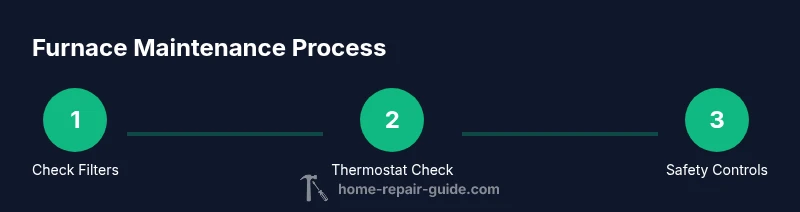
Inspect and replace air filters
Locate the air filter compartment, remove the old filter, and compare dimensions to a new filter. Install the new filter the same direction as indicated in the frame. A clean filter improves airflow and reduces strain on the blower.
Tip: If you have pets or high dust levels, change the filter every 1-3 months. - 3
Check thermostat and controls
Ensure the thermostat is set to heat, and that it communicates with the furnace. Confirm the schedule aligns with occupancy and that there are no pending firmware updates if applicable.
Tip: A misconfigured thermostat is a common cause of poor heating performance. - 4
Listen for abnormal sounds and smells
With the furnace running, listen for banging, squealing, or grinding noises. A burning or rotten-egg odor warrants immediate shutdown and a professional assessment. These cues can indicate loose parts, belt wear, or venting issues.
Tip: If odors persist after shutdown, leave the area and call a pro. - 5
Inspect blower and accessible belts
Look for worn or loose belts around the blower pulleys. Replacing a worn belt can restore airflow and prevent motor strain. If the belt is intact but slack, adjust tension according to the manufacturer’s guidelines.
Tip: Only tighten belts within the recommended torque or tension range. - 6
Check combustion chamber and burner operation
For gas furnaces, inspect the flame color (bright blue with a crisp edge) and ensure there are no yellow or orange flames. A yellow flame can indicate incomplete combustion and CO risk. Do not dismantle gas components; schedule service if you notice abnormalities.
Tip: A steady blue flame is a good safety sign. - 7
Test ignition and system function
If your furnace uses electronic ignition, verify reliable ignition cycles. After maintenance, run a full heat cycle and observe for proper ignition, ignition timeout, and consistent heat output.
Tip: If ignition fails repeatedly, this is a red flag for professional service.
FAQ
What is included in furnace maintenance?
Furnace maintenance typically covers safety checks, ignition and burner testing, heat exchanger inspection, blower operation, filter replacement, venting verification, and system airflow assessment. A professional may also calibrate the thermostat and test CO detectors.
Maintenance usually includes safety checks, ignition testing, filter changes, and airflow verification. A technician may calibrate the thermostat and check CO detectors.
How often should I service my furnace?
Most systems benefit from at least one professional tune-up per heating season. If your furnace is older or you have unusual performance, consider an additional mid-season check.
Most systems should be serviced once per heating season, with extra checks if the furnace is older or acting up.
Can I perform furnace repairs myself?
You can handle simple maintenance like filter changes and basic cleaning. Do not attempt gas line work, burner repairs, or electrical repairs beyond your comfort level—these require a licensed technician for safety.
You can do basic maintenance like changing filters, but for gas lines or electrical work, call a professional.
What safety equipment should I have?
Always use eye protection and gloves, and ensure CO detectors are functional. If you smell gas, evacuate and call the gas supplier or emergency services.
Use eye protection and gloves, check CO detectors, and don’t ignore gas smells—get help right away.
When should I replace my furnace parts instead of repairing?
If components show repeated failures, high repair costs, or reduced efficiency, replacement may be more cost-effective in the long run. A technician can provide a clear cost-benefit estimate.
If parts fail repeatedly or efficiency drops, replacement could be better than ongoing repairs.
How do I find a qualified technician?
Seek licensed HVAC technicians with verified reviews, ask for written estimates, and ask about warranty terms on labor and replaced components. A reputable pro will explain issues clearly and provide a maintenance plan.
Look for licensed HVAC pros, read reviews, and ask for a written estimate and warranty terms.
Watch Video
Key Takeaways
- Safety-first approach to furnace work
- Regular filter changes boost efficiency
- Know when to call a professional