24 hr Air Conditioner Repair: A Practical Guide for Homeowners
A comprehensive, practical guide to handling urgent 24 hr air conditioner repair with safety-first triage, quick fixes, and when to call a professional for rapid, reliable cooling restoration.


You’ll learn how to handle urgent 24 hr air conditioner repair by safely diagnosing common causes, prioritizing critical components, and coordinating with a technician for rapid service. This guide covers safety checks, quick fixes, when to call for emergency help, and how to minimize damage while awaiting professional repairs. It also outlines essential tools and a weatherproof plan.
Understanding 24 hr air conditioner repair: scope and safety
In urgent situations, the goal is to restore cooling while maintaining safety for occupants and technicians. A 24 hr air conditioner repair covers emergency diagnostics, prioritizing safety, and rapid triage to identify root causes that can be fixed quickly or communicated clearly to a technician. Homeowners should know common failure modes, basic checks that can be performed safely, and what information the HVAC pro will need to diagnose accurately. According to Home Repair Guide, emergencies often arise from power issues, sensor failures, or blocked condensate lines, especially during heat waves. This guide uses plain language and practical steps to help you stay safe and prepared.
Immediate safety actions you can take
- If you suspect a problem, turn off power to the AC at the main breaker to prevent electrical shocks or short circuits. Do not touch exposed wiring or refrigerant lines.
- Keep children and pets away from the unit and ensure you are standing on dry ground to avoid slips and electric shock.
- If there is a burning smell, buzzing noise, or smoke, evacuate the area and call emergency services before attempting any checks. Safety first is non-negotiable.
- Have a flashlight and insulated gloves ready; never work in the dark with live voltages. These preparations reduce risk while you triage or describe symptoms to a technician.
Common emergency failure modes you might encounter
Non-cooling operation is the most common emergency symptom, often caused by a dirty filter, a tripped breaker, or a faulty capacitor. Other urgent issues include refrigerant leaks (which require a licensed technician), frozen evaporator coils during hot weather, and a malfunctioning outdoor condenser unit due to debris or inadequate airflow. Recognizing these symptoms helps you communicate clearly with responders and reduces downtime for your home.
Quick triage steps to identify the problem area
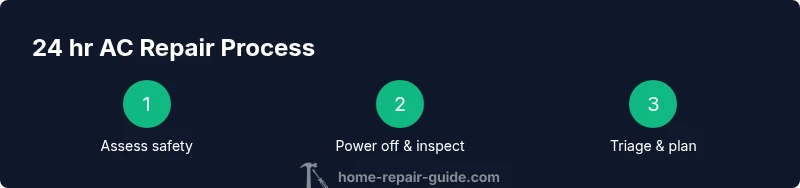
Begin with safety checks and then inspect the most common failure points in order: power supply, thermostat accuracy, air filters, condensate drain, and the outdoor condenser.
- Confirm thermostat settings and battery status if applicable.
- Inspect air filters; a clogged filter can cause coil icing and reduced cooling. Replace if dirty.
- Check condensate drain for clogs and ensure a clear path for water to exit.
- Inspect outdoor unit for obstructions and verify that the fan spins freely when powered. Any unusual vibration or noise should be noted for the technician.
- If you have basic electrical knowledge, test accessible wires with a non-contact tester to verify the circuit is de-energized before touching components. If uncertain, stop and wait for a pro.
When to call for emergency service vs. wait for a scheduled visit
If you experience no cooling during peak heat, a burning odor, smoke, exposed wiring, refrigerant signs, or power outages that trigger surges, call emergency repair services. If the home remains livable and the issue seems localized (e.g., a dirty filter causing reduced airflow), you may coordinate a same-day or next-day service. Emergencies can rapidly escalate, so err on the side of caution and contact a licensed HVAC professional for dangerous situations.
How to prepare information for a technician
Before the technician arrives, gather key information to speed diagnosis: the model and age of the unit, symptoms (no cooling, odd noises, leaks), recent changes (filters, thermostat, power events), last maintenance date, and any error codes on the thermostat display. Note outside temperature and whether the issue occurs only during certain times of day. Create a simple one-page summary with photos of the outdoor unit, condensate line, and any visible leaks to share with the technician.
Tools, parts, and safe DIY tips you can perform during triage
Having the right tools helps you triage without delaying service. Use non-contact voltage testers, insulated screwdrivers, a multimeter, and a flashlight to inspect accessible components. Replace a dirty air filter and clean the condensate pan if it is safe to do so. Do not attempt refrigerant work, wire splicing beyond your skill level, or capacitor testing if you’re unsure; these tasks require licensing and proper PPE. Practical DIY steps can reduce call time and cost when performed safely.
Preventing future emergencies: maintenance and checks
Regular maintenance reduces the likelihood of urgent calls. Schedule seasonal inspections, replace filters every 1-3 months, and clean the outdoor unit annually. Ensure clear airflow around the condenser and ceiling heights do not block intake. Install a basic surge protector if advised by your HVAC pro and consider a simple humidity control plan for peak-season reliability. The goal is to keep systems stable and ready for weather extremes.
What Home Repair Guide brings to 24 hr service
Home Repair Guide emphasizes practical triage, safety-first protocols, and clear communication with professionals. The guide provides homeowners with actionable steps to safely diagnose, document, and prepare for emergency AC service while protecting people and property. By following these best practices, you can minimize downtime and ensure a smoother repair process.
Data-driven decisions after repair and energy considerations
After repair, monitor cooling performance and energy use to confirm the fix restored efficiency. Keep an eye on energy bills and run a basic post-repair efficiency check to ensure proper refrigerant charge, airflow, and climate control. If issues recur, consult your technician about a preventive maintenance plan that covers filter replacement, coil cleaning, and system checks to sustain comfort and cost efficiency.
Tools & Materials
- Non-contact voltage tester(Essential to verify power is off before touching electrical components)
- Insulated screwdriver set (flathead & Phillips)(Use insulated handles for safety)
- Digital multimeter(Test voltages and continuity on accessible circuits)
- Flashlight(Provide bright light in dark recesses)
- Work gloves (EN 388/EN 374) & eye protection(Protect hands and eyes during inspections)
- Spare fuses and electrical tape(For quick reset and temporary fixes)
- Rags or towels for spills(Keep area dry and safe)
- Duct tape or zip ties(Secure loose wiring or components temporarily)
- Replacement air filter (MERV 8-13 as recommended)(Improve airflow and reduce strain on the system)
Steps
Estimated time: 60-120 minutes
- 1
Power off and verify inoffensive status
Go to the main electrical panel and switch off the circuit that powers the AC unit. Confirm with a non-contact tester that the circuit reads zero volts before touching any component. This prevents electric shock during inspection.
Tip: If you’re unsure which breaker powers the unit, label it before turning off and double-check with a tester. - 2
Check breakers and fuses
Look for a tripped breaker or blown fuse in both the main panel and the unit’s disconnect switch. Reset or replace as appropriate, then re-test the system at the thermostat to confirm power is restored safely.
Tip: Do not force a breaker that won’t reset; if it trips again, your issue may be deeper or dangerous. - 3
Inspect thermostat and air filter
Verify the thermostat is set to cool and that the temperature readings align with room conditions. Replace a dirty air filter if needed, as restricted airflow is a common cause of reduced cooling.
Tip: Keep a spare filter on hand and replace every one to three months depending on usage. - 4
Check condensate drain path
Inspect the condensate pan and drain line for clogs or overflow. A blocked drain can trigger safety switches and shut down the unit. Clear blockages carefully and ensure water drains freely.
Tip: Never use improvised methods to clear a refrigerant line; condensate issues are separate from refrigerant problems. - 5
Inspect outdoor condenser and fan
Clear debris around the outdoor unit and ensure the fan spins freely when energized. A blocked condenser reduces efficiency and can cause overheating.
Tip: Keep at least 2 feet of clearance and remove leaves, grass, and dirt regularly. - 6
Check for obvious refrigerant issues safely
Look for bright oil residues along lines; this can indicate leaks but handling refrigerant requires a licensed technician. Do not attempt to seal or discharge refrigerant yourself.
Tip: If you smell refrigerant or notice hissing, exit the area and contact a pro immediately. - 7
Inspect electrical connections inside the access panels
With power reconnected only if you are confident in your skills, check accessible wires for signs of burns or looseness. Tighten connections gently and ensure there is no arcing or discoloration.
Tip: If you see burnt smells or scorched insulation, stop and call a professional. - 8
Document readings and prepare for the pro
Record voltage readings, observed symptoms, and photos of the unit. Write down error codes and environmental conditions so the technician can diagnose efficiently.
Tip: Keep a simple one-page summary handy to save diagnostic time on arrival.
FAQ
What qualifies as a 24 hr air conditioner repair emergency?
An emergency qualifies when cooling loss threatens health or safety, there are signs of fire, smoke, refrigerant leaks, or exposed electrical hazards. In such cases, contact emergency services and a licensed HVAC technician immediately.
Emergency AC repair is needed when there’s smoke, a strong burning odor, refrigerant leaks, or exposed wiring. Call emergency services if safety is at risk, then contact a licensed HVAC tech.
Can I diagnose refrigerant leaks myself?
Detecting leaks requires specialized equipment and training. Handling refrigerant without certification is illegal in many areas. Contact a licensed HVAC technician for leak assessment and repair.
Detecting leaks needs proper tools and training. Don’t try to fix refrigerant leaks yourself—call a licensed professional.
What should I do before the technician arrives?
Turn off power to the unit, document symptoms, gather model data, and clear access to the outdoor unit. Have a list of recent maintenance and any error codes ready for the technician.
Shut the unit off, collect details, and clear the area so the technician can work quickly.
How long does a typical emergency repair take?
Duration varies with issue complexity, parts availability, and system type. A simple triage visit may resolve on-site, while more complex problems can require parts and return visits.
It depends on the problem, parts, and access. Some repairs are quick, others take longer.
How can I reduce costs for a 24 hr repair?
Request written quotes from multiple licensed providers, ask about after-hours rates and guarantees, and consider a preventive maintenance plan to minimize future emergencies.
Get quotes, compare after-hours rates, and discuss a maintenance plan to prevent emergencies.
What information should I share with a technician?
Provide unit model, age, symptoms, recent changes, error codes, and photos. The more precise details you provide, the faster the diagnosis and repair.
Tell the tech the model, age, symptoms, changes you’ve seen, and any error codes.
Watch Video
Key Takeaways
- Know when to triage safely and when to call a pro
- Always shut off power before inspecting electrical components
- Document symptoms and share clear details with technicians
- Prioritize safety: do not attempt unsafe refrigerant work
- Regular maintenance reduces emergency repair likelihood