AC and Heat Repair Near Me: Find Local HVAC Pros Fast
Find reliable AC and heat repair near you with our practical guide. Learn how to evaluate licenses, read reviews, compare quotes, and choose a local HVAC pro for durable, safe service.


AC and heat repair near me refers to hiring local, licensed HVAC technicians who diagnose and fix both cooling and heating systems in your home. To time your repair efficiently, verify licenses and insurance, read recent customer reviews, compare multiple written estimates, and ask about warranty coverage. Also check response times and emergency service options to minimize downtime during peak seasons.
Understanding AC and Heat Repair Near Me
Finding reliable local help for AC and heat repair means locating a licensed HVAC technician who can diagnose, repair, and calibrate both cooling and heating systems in your home. This scope covers everything from thermostat recalibration to compressor replacement and heat exchanger checks. According to Home Repair Guide, homeowners who seek comprehensive care—covering both cooling and heating—tend to benefit from coordinated warranties, streamlined service records, and simpler ongoing maintenance. When you search, expect a two-step process: an on-site diagnostic to identify root causes, followed by a repair plan that includes parts, labor, and a transparent timeline. The Home Repair Guide team found that clear communication about scope and cost helps prevent surprises and yields durable results. This article anchors its guidance in Home Repair Guide Analysis, 2026 to establish realistic expectations and practical budgeting for local HVAC services.
Common HVAC Failure Patterns in Homes
HVAC systems fail for a few recurring reasons, and recognizing patterns helps you decide when to call for repair rather than replacement. Refrigerant leaks are a frequent culprit in cooling mode, often accompanied by reduced cooling capacity and ice formation on coils. For heating, a failing heat exchanger or a worn blower motor can cause insufficient warmth or odd noises. Electrical issues—bad capacitors, loose wiring, or faulty relays—can produce intermittent outages or safety switches that shut the system down. Dirty coils and blocked condensers reduce efficiency and raise energy costs, while leaky ducts drain pressure and comfort. Finally, thermostat malfunctions, from sensor drift to wiring problems, can masquerade as other failures. If you notice uneven temperatures, short cycling, or unusual odors, schedule a diagnostic with a local HVAC pro promptly to prevent further damage and ensure safe operation.
Vetting Local Technicians Near You
Choosing the right professional is as important as diagnosing the problem. Start by confirming the technician holds a valid HVAC license for your state and is insured, protecting you from liability during service. Look for NATE-certified technicians or other recognized credentials that signal trained, up-to-date expertise. Check company reviews on multiple platforms and ask for references from recent jobs similar to yours. A written estimate that itemizes parts, labor, and possible add-ons helps you compare apples to apples. Also verify warranty terms on both parts and labor, and ask about after-service support if the issue recurs. Finally, ask about service area and availability, especially during peak cooling or heating seasons. Following these steps, as outlined by Home Repair Guide analysis, improves trust and reduces the chance of miscommunication before work begins.
What to Expect During a Diagnostic Visit
A diagnostic visit typically unfolds in a structured, safety-conscious sequence. The technician collects background information about symptoms, runs a visual inspection of major components, and checks electrical connections and safety switches. They may test refrigerant pressure, inspect ductwork for leaks or restrictions, and evaluate thermostat function and control boards. With modern systems, diagnostic tools can quickly flag faults in sensors, compressor performance, or airflow. After data collection, the pro presents findings, prioritizes fixes, and provides a written scope of work with estimated costs and timelines. If a repair seems risky or unproven, request a second opinion from another local provider. Clear communication and a detailed written plan are essential for an informed decision.
Cost Structure and Budgeting for HVAC Repairs
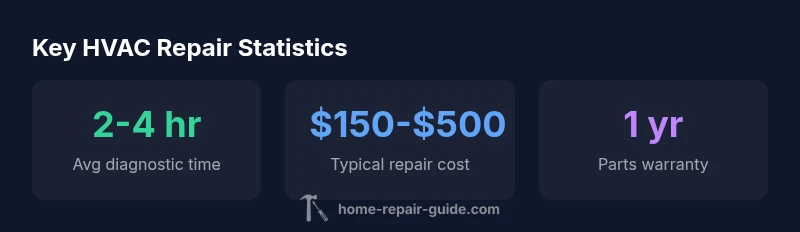
Understanding cost ranges helps you plan ahead and avoid sticker shocks. Typical diagnostic or trip fees can range from modest to moderate, depending on location and accessibility. Minor repairs—such as thermostat replacements or capacitor changes—often fall in a mid-range budget, while more involved fixes like compressor replacement or refrigerant recharge can rise quickly. Major repairs or component failures might push the total into a higher bracket, and full system replacements, though less common, represent a significant investment. Regional demand, surge pricing, and the complexity of your system all influence final prices. Home Repair Guide Analysis, 2026 shows that homeowners who obtain multiple written estimates and insist on itemized parts and labor generally secure more favorable terms and fewer unexpected charges. Always seek a documented warranty that covers parts and labor and clarify whether diagnostic fees apply if you proceed with repairs.
DIY vs Professional Repair: Safety and Legality
While some maintenance tasks are within a homeowner’s reach, HVAC repairs can involve high voltages, refrigerants, and combustible gases. Refrigerant handling is regulated, and improper charging can create safety hazards or environmental risks. Electrical work in HVAC equipment also carries shock and fire hazards if not performed correctly. For these reasons, it’s prudent to defer major repairs to a licensed professional with appropriate certifications and equipment. DIY attempts can void manufacturer warranties and complicate insurance claims. If you’re tempted to tackle a small task, stick to simple maintenance—like replacing air filters or cleaning accessible components—and leave critical issues to a pro. This approach protects you, your home, and your equipment in the long run.
Maintenance Strategies to Reduce Future Failures
Preventive care is cheaper than emergency repairs. Schedule seasonal tune-ups and replace filters regularly—typically every 1-3 months depending on usage and filtration quality. Keep exterior unit clear of debris, trim vegetation for good airflow, and inspect ductwork for obvious gaps or leaks. A programmable thermostat and smart zoning can help optimize energy use and reduce wear on equipment. Regular cleaning of coils and condensate drains helps maintain efficiency and prevent water damage. Finally, log service dates and part replacements so you have a clear history to reference when future visits are needed. Proactive maintenance reduces surprises and improves system longevity.
Repair vs Replacement: A Practical Decision Framework
Repairing an aging HVAC system is a balance between cost, reliability, and efficiency. If an older unit requires frequent repairs, or a single fix costs a substantial share of replacement price, replacement may be the better option. Consider the system’s age, energy efficiency (SEER rating for cooling, AFUE for heating), and projected energy savings from newer technology. Energy costs and climate also influence the math. In many cases, a mid-life upgrade with a high-efficiency unit provides long-term savings and improved comfort. Use multiple professional opinions to verify whether repair or replacement yields the best return on investment, and ensure any new installation includes a warranty and post-installation support.
Service Contracts and Preventative Maintenance Plans
A service contract can simplify budgeting and ensure regular care for your HVAC system. Plans typically include annual or biannual inspections, discounted diagnostic fees, priority service, and sometimes parts coverage. For busy households, pre-paid maintenance reduces the risk of skipped tune-ups and helps sustain efficiency. When evaluating plans, compare the cost against the expected preventive maintenance savings, the inclusions (parts vs. labor), and any cancellation or transfer policies. Be sure to verify that the contract aligns with your system’s age and configuration, and that you can cancel with pro-rated refunds if your circumstances change.
Estimated costs by service phase (ranges)
| Service Phase | What it covers | Typical cost range (estimated) | Time to complete |
|---|---|---|---|
| Diagnostics and inspection | System check, refrigerant pressure, electrical wiring | 60-150 | 30-90 minutes |
| AC repair | Compressor, condenser, refrigerant recharge | 150-700 | 1-4 hours |
| Heating repair | Furnace/boiler components, blower motor | 150-800 | 1-4 hours |
| System replacement (final option) | New units, labor, disposal | 2000-8000 | 1-3 days |
FAQ
What should I ask a local HVAC contractor before booking AC and heat repair?
Ask for license and insurance, years of experience with your system type, warranty terms, and whether the price includes parts and labor. Request references and a written estimate to compare options.
Ask for license and insurance, experience with your system, warranty terms, and a written estimate before booking.
How long does a typical diagnostic visit take?
Most diagnostic visits take about 60-90 minutes, depending on system complexity. The technician will identify issues and present options for repair or replacement.
Diagnostics usually take about an hour to an hour and a half.
Are diagnostic fees always charged?
Yes, many technicians charge a diagnostic or trip fee. Some providers waive it if you proceed with the repair, so ask in advance.
There may be a diagnostic fee, sometimes waived if you proceed with the repair.
What warranty should I expect on repairs?
Look for at least 1-year on parts and 90 days to 1 year on labor, depending on the part and the provider. Confirm coverage before work begins.
Warranties usually cover parts for a year and labor for several months to a year.
When is replacement a better option than repair?
If multiple major repairs are needed within a short period or the repair costs approach a substantial portion of a new unit, replacement is often more economical and energy-efficient.
If several repairs are needed soon or costs are high, replacing may be better.
How can I minimize future HVAC problems?
Schedule regular maintenance, replace filters on schedule, keep outdoor units clear of debris, and install a programmable thermostat to optimize operation.
Regular tune-ups and good airflow prevent many problems.
“Reliable HVAC service comes from licensed technicians who diagnose comprehensively and stand by their work. Always ask for written estimates and warranty details.”
Key Takeaways
- Vet licenses and insurance before booking
- Get multiple written quotes to compare scope
- Ask about warranties and emergency service
- Clarify what is included in diagnostic fees
- Consider combined HVAC pros for efficiency