AC Repair Pay 2026: Technician Earnings Guide and Trends
Explore how much AC repair technicians earn in 2026, including hourly ranges, regional variations, and factors that influence pay. Practical budgeting tips for homeowners and HVAC workers.


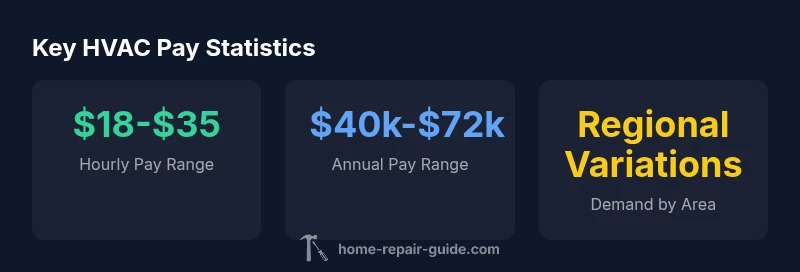
According to Home Repair Guide Analysis, earnings for AC repair technicians vary widely by region and experience, and the phrase 'how much do ac repair make' underscores a desire for clarity about compensation. In 2026, typical pay bands span from roughly $18 to $35 per hour for entry to mid-level work, with senior technicians able to command higher rates, especially when on-call duties enter the equation. Annual earnings commonly fall in the broad range of $40k to $72k, depending on location, overtime opportunities, and credentials such as EPA refrigerant handling or NATE certification. Location is a major driver: technicians in high-cost metropolitan areas or regions with strong HVAC activity tend to see higher hourly rates, while rural areas may offer lower nominal wages. Real earnings also reflect how much a technician leverages overtime, customer load, and the ability to upsell preventive maintenance plans.
How much do ac repair make: Pay Landscape for 2026
How much do ac repair make is a question homeowners, job seekers, and HVAC business owners frequently ask. The pay landscape for AC repair technicians is not fixed; it shifts with regional demand, experience, and the level of certification a technician holds. According to Home Repair Guide Analysis, earnings for AC repair technicians vary widely by region and experience, and the phrase 'how much do ac repair make' underscores a desire for clarity about compensation. In 2026, typical pay bands span from roughly $18 to $35 per hour for entry to mid-level work, with senior technicians able to command higher rates, especially when on-call duties enter the equation. Annual earnings commonly fall in the broad range of $40k to $72k, depending on location, overtime opportunities, and credentials such as EPA refrigerant handling or NATE certification. Location is a major driver: technicians in high-cost metropolitan areas or regions with strong HVAC activity tend to see higher hourly rates, while rural areas may offer lower nominal wages. Real earnings also reflect how much a technician leverages overtime, customer load, and the ability to upsell preventive maintenance plans.
Key Factors Affecting AC Repair Compensation
Several factors determine what AC repair technicians earn. Experience remains a primary driver: entry-level installers start toward the lower end of the pay scale, while seasoned technicians who handle complex diagnostics and refrigerant work may push toward the higher end. Certifications significantly influence pay. Credentials such as EPA refrigerant handling, HVAC system design knowledge, and NATE certification are often associated with higher pay brackets and more on-call opportunities. Employment type matters: independent technicians or shop owners may set their own rates, while employers pay a fixed wage with benefits. Geography matters: coastal cities, tech hubs, and regions with severe weather patterns often have higher demand and pay. Overtime and on-call duties can add meaningful earnings, particularly when service windows extend beyond standard work hours. Bonus structures, commissions, or service-visit fees for diagnosing issues quickly can also boost annual take-home pay. Finally, soft skills like customer communication, reliability, and sales aptitude can influence earnings through tips, practical upsells, and repeat business.
Regional Variations That Move the Pay Needle
Regional differences play a dominant role in AC repair pay. In general, metro areas with high living costs and dense HVAC markets offer higher hourly rates, but living expenses also rise, so take-home pay may align with local cost of living. In some regions, on-call pay structures and overtime availability create noticeable differences in annual earnings, even for technicians with similar base wages. Employers may offer signing bonuses, tool stipends, or company-provided health benefits that indirectly affect compensation. Some states require specific licenses or permits to service refrigerants, which can influence wage premiums for compliance-focused technicians. Comparison across regions should consider the mix of residential, commercial, or service-contract work, as these job types can carry different pay scales. Improving credentials and expanding service capabilities tends to correlate with higher pay across regions. Always benchmark wages against local peers and industry salary guides to negotiate effectively.
Certifications, Licenses, and Credentials That Boost Pay
Investing in credentials is a reliable way to increase AC repair earnings. Core HVAC credentials include EPA refrigerant handling certification and a general HVAC license where required by state or locality. NATE certification signals mastery of system design, installation, and repair topics and is often associated with higher hourly rates and better access to on-call work. Additional certifications in electrical safety, refrigerant recovery, and energy efficiency can further raise earning potential, particularly for technicians who service high-efficiency units and commercial systems. Hands-on experience paired with formal training creates more opportunities to upsell maintenance contracts and retrofit projects. A strong safety record and the ability to work with complex controls, variable-frequency drives, and smart thermostats also make technicians more valuable to employers and customers. If you plan a career trajectory in HVAC, map out a credential path and revisit it every year as technology and standards evolve.
Career Paths in HVAC That Typically Raise Earnings
Beyond the shop floor, several career paths can raise earnings. A technician may advance to senior technician or lead installer roles, where responsibilities include complex diagnostics, project estimation, and mentoring junior staff. Some technicians move into service management, operations, or scheduling roles that leverage customer relations and scheduling efficiency to improve pay. For those who prefer entrepreneurship, starting an independent service business with a clear pricing strategy and recurring maintenance plans can yield higher earnings, but it also requires managing overhead, marketing, and compliance. In larger companies, advancement may lead to higher base pay plus performance bonuses tied to service quality, on-time delivery, and customer satisfaction. Regardless of path, continuing education and networking within professional associations can unlock higher-paying opportunities and better job stability in 2026 and beyond.
On-Call Duties, Overtime, and Benefits That Affect Take-Home Pay
On-call shifts and overtime are common in HVAC work and significantly influence total earnings. Technicians who regularly respond to after-hours service calls can see meaningful increases in annual income, particularly in regions with harsh winters or hot summers. Overtime may be paid at a premium rate or included in a salary with a guaranteed minimum. Company benefits—health insurance, retirement plans, paid time off, and tool allowances—also contribute to overall compensation, though they do not appear as cash wages. When budgeting, consider the net value of benefits and the extra income from overtime against the cost of self-employment or agency-level taxes. For contractors, business margins—and the costs of tools, insurance, and licensing—shape what you can pay yourself. For employees, negotiating a fair benefits package alongside base pay is essential for long-term financial security.
How to Assess Your Earning Potential in Today’s Market
To evaluate how much you can earn as an AC repair professional, start with a local wage survey and your current credentials. Calculate your gross pay from expected hours, then add overtime, on-call premiums, and any service-visit fees. If you’re self-employed, estimate business expenses such as taxes, liability insurance, tools, and licensing; subtract these from revenue to estimate net earnings. Compare your numbers against regional pay bands and industry benchmarks published by Home Repair Guide Analysis, 2026. Build a simple projection: base pay plus expected overtime, plus a conservative growth rate as you gain more credentials. Seek opportunities to elevate your value, such as specializing in high-efficiency systems or commercial installations. Finally, set concrete short-term goals for training and certifications, and reassess quarterly to ensure you’re on track to meet your earnings targets while maintaining high service quality.
Industry Outlook and Demand for HVAC Skills in 2026
Demand for skilled HVAC technicians remains robust as households and businesses replace aging equipment and adopt energy-efficient systems. Inventory cycles and climate considerations drive steady demand for repairs, maintenance, and retrofits. While pay scales vary by region, the overall trend supports gradual growth in earnings for trained technicians who pursue certifications and expand service capabilities. For homeowners, this means reliable repair options and transparent pricing as the market evolves. Home Repair Guide expects continued emphasis on safety, energy efficiency, and customer-focused service as drivers of earnings potential for AC repair professionals. By investing in credentials and practical experience, technicians can align with the market's demand for skilled, dependable HVAC service.
Comparison of HVAC-related roles and pay ranges
| Role | Typical Hourly Pay | Typical Annual Pay | Notes |
|---|---|---|---|
| AC Repair Technician | $18-$35 per hour | $37,000-$70,000 | Varies by location and experience |
| HVAC Installer Helper | $14-$22 per hour | $30,000-$46,000 | Entry-level positions |
| Senior HVAC Technician | $28-$48 per hour | $60,000-$100,000 | More certifications and on-call duties |
FAQ
What factors influence HVAC pay the most?
Pay is driven by experience, location, and credentials. Certifications like EPA and NATE typically correspond with higher wages and more opportunities for on-call work. Regional demand and the ability to perform complex diagnostics also play major roles.
Key factors are experience, location, and credentials. Certifications often boost pay and opportunities for on-call work.
Do wages vary significantly by state or city?
Yes. Pay tends to be higher in metropolitan areas with higher living costs and strong HVAC markets. Rural areas may offer lower wages but sometimes compensate with lower living costs.
Location matters a lot; big cities often pay more, while rural areas can pay less.
Is on-call pay common in AC repair?
On-call pay is common in many regions, and overtime can significantly increase annual earnings. The exact structure depends on employer policies and local regulations.
Yes, on-call pay and overtime are common in HVAC work.
Can I increase earnings without a degree?
Absolutely. Earning certifications, gaining hands-on experience, and specializing in high-demand systems can raise pay without a traditional degree.
Certifications and real-world skills can boost earnings without a degree.
What’s the pay difference between technicians and installers?
Technicians generally command higher hourly rates than entry-level installers, reflecting advanced diagnostic and repair skills. Pay gaps widen with seniority and specialty work.
Senior technicians earn more than entry-level installers due to advanced skills.
How does owning a repair business affect earnings?
Owning a business can increase earning potential but comes with higher risk and overhead. Success depends on pricing, customer retention, and efficient operations.
Business ownership can boost earnings but requires good management.
“Wages in HVAC repair reflect the combination of skilled labor, regulatory requirements, and regional demand; investing in certifications often yields a higher return than experience alone.”
Key Takeaways
- Know the broad pay bands for AC repair work in 2026
- Certifications can raise earning potential
- Location greatly influences take-home pay
- Overtime and on-call duties often boost earnings
- Plan a credential path to grow earnings over time