Cost of Auto A C Repair: A Practical 2026 Guide
Understand the cost of auto a c repair, with typical ranges, key cost drivers, and budgeting tips to compare quotes and avoid surprises in 2026.


According to Home Repair Guide, the cost of auto A/C repair typically ranges from about $150 to $2,000+, depending on the issue and vehicle. Diagnostics can add $60-$120, with a recharge around $100-$300. Leaks, seals, and compressor failures push costs higher, sometimes beyond $1,000. Labor rates and regional differences also shape the final bill.
What drives the cost of auto A/C repair?
According to Home Repair Guide, the cost of auto A/C repair is driven by several core factors: diagnostic time, the exact parts needed, labor hours, and the refrigerant type used in the system. Vehicle age and design matter because newer systems often use more integrated components, making repairs more labor-intensive. Parts availability and the shop’s hourly rate also influence the bottom line, and geographic location adds another layer of variance. Environmental disposal fees and refrigerant handling requirements can further affect the final price. When planning a repair, it helps to think about the total cost as a combination of diagnostic time, parts, refrigerant, and labor, rather than a single line item. This framing makes it easier to compare quotes from different shops and to budget realistically for both minor issues and major component failures.
Common failure scenarios and price ranges
Multiple failure modes drive different price ranges. A simple refrigerant recharge or diagnostic check sits on the lower end, while leaks or a failing compressor can push prices higher. For a routine recharge, you’ll typically see costs in the low hundreds, but leak repairs add dye tracing, seal replacements, and sometimes system evacuation, which can lift the bill into the mid-range. A compressor replacement is among the most expensive options, especially for newer vehicles or those with integrated modules. It’s essential to know whether the system uses R-134a or the newer R-1234yf refrigerant, as that affects part availability and price. Home Repair Guide analysis shows that many repairs involve more than one component and longer labor, which can push the final cost toward the high end. When evaluating quotes, request a line-by-line breakdown for diagnostics, parts, labor, and refrigerant.
Diagnosing A/C problems: what shops typically test
Effective diagnosis is the foundation of predictable costs. Technicians usually check refrigerant pressure, test for leaks, inspect the compressor clutch and electrical controls, and verify HVAC controls for faults. Leaks are a common cost driver because locating them can require dye tracing and comprehensive pressure testing over time. The diagnostic fee often covers a baseline assessment and may be credited toward the repair if you proceed. Home Repair Guide recommends a written scope of work after the diagnostic and before any parts are ordered so you know what will be replaced, the expected component lifespan, and whether evacuation and recharge are included.
Labor rates and regional differences
Labor costs vary by region and shop specialization. Urban markets tend to have higher hourly rates due to demand and cost of living, while independent shops may offer more competitive pricing with similar outcomes. The price gap grows when access to the compressor or condenser is difficult. For budgeting, expect labor to account for roughly half to two-thirds of total cost on complex jobs, with parts and refrigerant making up the rest. The Home Repair Guide team notes that pricing trends in 2026 reflect local economic conditions and shop overhead in different regions.
DIY considerations: what you can safely do
While some preventive tasks are within reach for confident DIYers, most A/C repairs require professional handling. Tasks like visually inspecting for leaks with dye and checking air conditioning controls are possible for the handy homeowner, but refrigerant handling, vacuum evacuation, and pressure testing require licensed technicians and proper equipment. If you’re DIY-minded, use diagnostic results to ask informed questions and ensure the shop’s plan aligns with your expectations. Never attempt to recharge refrigerant without training and equipment, as improper handling can cause system damage and safety hazards.
Budgeting, quotes, and warranties
To keep costs predictable, obtain multiple written quotes that itemize diagnostics, parts, refrigerant, and labor. Clarify warranty terms on both parts and labor, and whether the shop offers price protection or seasonal promotions. Some repairs come with limited warranties on the repaired components or on labor, so verify coverage. If a major component fails, weigh the long-term value of repair versus replacement, and consider upgrades that improve efficiency or reliability in the long run. A clear, written plan helps you avoid surprises and choose the best value over time.
Reading invoices and avoiding surprises
An itemized invoice reveals exactly what you’re paying for. Look for the refrigerant type and quantity, taxes, disposal fees, and any shop charges. If something looks off, ask for clarification before paying. Keep written records of all service visits, components replaced, and test results for future maintenance. Regular checks and preventive maintenance can reduce the risk of sudden, expensive failures.
Estimated cost ranges by service type
| Service/Component | Typical Cost Range | What It Covers |
|---|---|---|
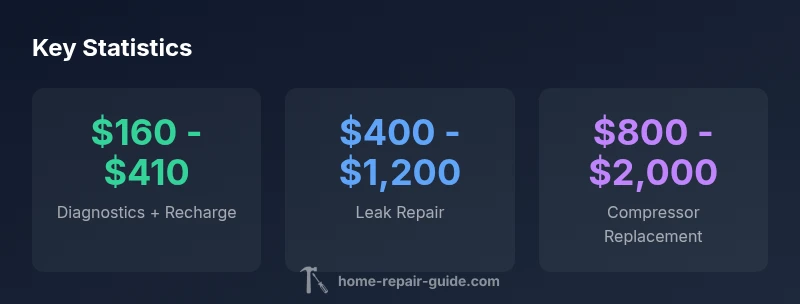
| Recharge refrigerant | $100 - $300 | Diagnostics + refrigerant recharge for most cars (R-134a/R-1234yf) |
| Leak repair | $400 - $1,200 | Seal/gasket repair, dye trace, leak fix, evacuation if needed |
| Compressor replacement | $800 - $2,000 | Compressor, condenser, labor, refrigerant, possible ancillary parts |
| System evacuation & recharge | $150 - $500 | Environmentally safe removal and recharge |
| Electrical/computer controls | $200 - $1,000 | Clutch, sensors, wiring and control module checks |
| Warranty/service plan | $0 - $200 | Labor warranty and parts warranty options |
FAQ
What is the typical cost range for auto A/C repair?
Costs vary widely by problem and vehicle, but most repairs fall within a few hundred dollars for diagnostic or recharge work, and can exceed $2,000 for major component failures. Always obtain a written quote before work.
Most repairs range from a few hundred up to a couple thousand dollars; get a written quote first.
Is a refrigerant recharge included in every repair cost?
Not always. A recharge is often a separate line item, typically after proper diagnostics and any leak repairs. Some shops include the recharge in a broader service if the system is completely serviced.
Recharges aren’t always bundled; expect a separate line item after diagnosis.
Does the make/model affect the price?
Yes. Newer or more complex systems, and vehicles with unique refrigerants, generally cost more due to parts availability and labor complexity.
Yes, car make and model can push prices up or down.
How long does an A/C repair take?
Diagnostics can take a few hours, with major repairs often spanning one or two days depending on parts availability and shop scheduling.
Most repairs take hours to a day or two if parts are in stock.
Can I perform any A/C repair myself?
DIY is suitable only for simple tasks like basic inspection. Refrigerant handling, evacuations, and pressure testing require a licensed technician for safety and legal reasons.
Some basics are okay, but most repairs need a pro.
“"Accurate budgeting for auto A/C repairs comes from understanding the cost drivers—diagnostics, parts, labor, and refrigerant. A clear, itemized quote helps you compare options confidently."”
Key Takeaways
- Ask for multiple written quotes to compare diagnostics, parts, and labor
- Get an itemized invoice that shows refrigerant type and quantity
- Budget for both simple recharge and potential major component failures
- Know your refrigerant type (R-134a vs R-1234yf) and environmental fees
- Consider preventive maintenance to reduce future repair costs