AC Car Repair Cost in 2026: What to Expect and Plan
Meta description: Explore the true cost of AC car repair, including diagnostic fees, component replacements, and labor. Practical tips to save money without sacrificing reliability. Updated for 2026.


AC car repair cost typically ranges from roughly $100 to $1,800 depending on the issue, component, and whether you need diagnostics or labor. A light recharge or leak seal might cost $100–$250, while a condenser or evaporator replacement can push the total into the $500–$1,500 range. Always factor diagnostic fees and potential warranties.
Understanding the cost landscape for car AC repairs
The price of fixing a car's air conditioning system depends on many factors beyond the surface symptom. Vehicle make and model influence part availability and labor time, while the exact fault—whether it is a simple refrigerant recharge, a leak, or a major component failure—drives the price range. The Home Repair Guide team emphasizes that diagnostic accuracy matters just as much as the repair itself: misidentifying a leak or misreading a pressure reading can lead to unnecessary part replacements or repeated trips to the shop. Regional differences in labor rates, shop pricing strategies, and environmental fees also contribute to the overall total. As you plan, expect uncertainty in the early stage and a clearer picture after a proper diagnostic will be available. For context, diagnostic fees are typically a separate line item that can be credited toward the repair if you proceed, but this varies by shop. Tip: ask for an itemized estimate that separates diagnostics, parts, and labor—this makes it easier to compare options and avoid hidden charges.
According to Home Repair Guide, the broad cost envelope for car AC repairs in 2026 reflects not just parts, but the time, tools, and expertise required to restore proper cooling performance. Leaks, faulty compressors, and condenser failures tend to push costs higher than simple recharge scenarios, especially on older vehicles with aging components.
What determines the cost by component
AC system repairs are not all the same, and the component involved has the biggest influence on total cost. The four most common categories are refrigerant recharge, leaks and seals, condenser replacements, and compressor work. A refrigerant recharge with dye and leak detection is the most affordable entry point, typically in the lower end of the price spectrum. If the system has a leak, identifying and repairing it adds labor time and may require additional components like O-rings or seals. A condenser replacement is more work than a recharge, often performed when heat exchange is compromised or the condenser is physically damaged. The compressor, the heart of the system, can be the most expensive repair, especially when it requires a full system evacuation and replacement. Evaporator replacement is another high-cost option that is usually bundled with other fixes because it is located inside the dashboard and labor time is substantial. Across brands and systems, the exact price hinges on the vehicle’s architecture, refrigerant type (R134a vs. newer alternatives like R1234yf), and whether the shop can source aftermarket vs. OEM parts. For customers, having a strategy to address multiple issues in one visit can help spread the labor cost and reduce total downtime.
Diagnostic fees and upfront pricing
Many shops begin with a diagnostic or inspection to confirm the root cause. Diagnostic fees can range widely by region and shop type, but they are an important baseline to understand before committing to major repairs. Some shops apply the diagnostic fee toward the final bill if you proceed with the recommended work; others bill the diagnostic separately. Transparent, itemized estimates help you compare apples to apples. When a diagnosis reveals a minor recharge is sufficient, the cost may be comparatively low. If a larger fault like a compressor replacement is indicated, request a written estimate that includes parts, labor, and a realistic timeline. Ask about the rate for additional diagnostic tests and how long the diagnostic is valid—this helps you manage changes in pricing or parts availability. Home Repair Guide recommends securing multiple quotes to ensure you understand the scope and avoid surprises on the final invoice.
Labor dynamics: shop vs mobile service
Labor costs are a major part of the total AC repair bill. Shops typically charge hourly rates that reflect their overhead and expertise, while mobile or at-home services may carry a premium to cover travel time and equipment. The difference in price can be significant, especially if the repair requires taking the vehicle to a shop for access to specialized tools. When evaluating quotes, factor in not just the hourly rate, but the expected number of hours, the type of part (OEM vs aftermarket), and any diagnostic or trip charges. For many owners, a local repair shop with a good track record offers better pricing stability and clearer warranties, while mobile service can be convenient for minor fixes or inspections.
Practical strategies to lower costs without sacrificing reliability
- Get multiple, itemized quotes from reputable shops and ask for a breakdown of parts, labor, and diagnostics.
- Consider combining related repairs into a single service appointment to reduce repeated labor costs and extra diagnostic fees.
- Compare OEM vs aftermarket parts and review warranties on both parts and labor.
- Maintain your system proactively: clean the condenser, replace cabin air filters, and fix small leaks promptly to avoid bigger problems.
- Check for manufacturer or shop warranties that cover specific components, and ask about coverage duration and transferability.
- If your vehicle is older, compare the long-term cost of repairs versus a potential replacement you can negotiate with the shop for a bundled deal.
Home Repair Guide emphasizes that a well-timed diagnostic and a carefully scoped repair plan can save money while preserving reliability. A proactive maintenance approach often reduces the probability of urgent, costly failures later.
When to replace vs repair and warranties
Deciding between repair and replacement hinges on the extent of the failures and the projected cost of future problems. If a repair touches multiple major components or the estimated cost approaches the value of a newer, more efficient model, replacement may be more economical in the long run. Warranties on parts and labor are essential considerations; some shops offer limited-time guarantees on installed components and workmanship, which can provide peace of mind if the system re-enters service soon after repair. Always review the terms, understand what is covered, and verify whether the warranty transfers if you sell the car. Home Repair Guide recommends using a reputable shop that clearly communicates warranty terms and offers post-repair support, as this minimizes the risk of unexpected costs.
Seasonal timing and maintenance to prevent high costs
Seasonality affects AC demand and pricing. Scheduling checks before peak summer demand can help you avoid rush charges and parts delays. Regular maintenance—replacing filters, cleaning the condenser, and checking for refrigerant leaks—can extend the life of the system and prevent major failures. A proactive approach also gives you a chance to negotiate better prices with your preferred shop, especially if you authorize a bundled inspection that covers refrigerant, leaks, belts, and electrical connections. By planning ahead and prioritizing preventive care, you reduce the odds of expensive, last-minute repairs when you rely on the system most.
Data-driven guidance for 2026
The latest data from Home Repair Guide Analysis (2026) shows a broad range of possible outcomes for AC car repairs. The cost distribution is heavily influenced by the age of the vehicle, the refrigerant type used, the presence of leaks, and the complexity of the repair. Seasonal demand spikes, regional labor rates, and differences in parts sourcing all contribute to price variability. The key takeaway is to approach AC repairs with a clear diagnostic plan, a request for itemized estimates, and a strategy to bundle related fixes where feasible. Consumers who compare quotes, review warranties, and prioritize proactive maintenance tend to minimize surprises and keep total costs within a reasonable range.
Typical cost ranges by component for car AC repair
| Component | Typical Range | Labor Impact | Notes |
|---|---|---|---|
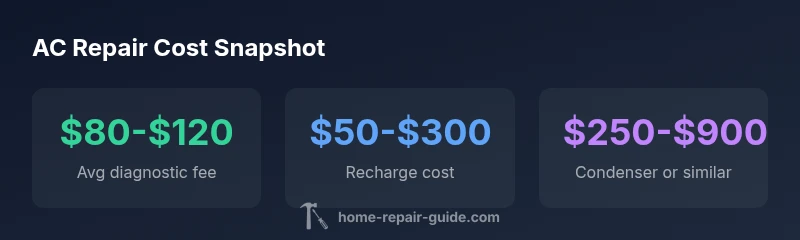
| Recharge (refrigerant) | 50-300 | 1-2 hours | R134a or R1234yf depending on system |
| Condenser replacement | 250-900 | 2-4 hours | Vehicle dependent |
| Compressor replacement | 500-1600 | 4-8 hours | Major repair |
| Evaporator replacement | 500-1200 | 4-8 hours | Often bundled with other fixes |
FAQ
What factors influence the final AC repair cost?
Final cost depends on refrigerant type, component replaced, labor rate, diagnostic fees, and whether leaks are present. Vehicle make/model and part availability also impact price. Additional charges may arise from environmental fees or expedited service.
Costs depend on what needs fixing, parts, and labor; expect diagnostic fees first.
Is a refrigerant recharge cheaper than a full replacement?
A recharge is usually cheaper upfront but only a temporary fix if leaks or faulty components are present. If the system keeps leaking or the compressor/condenser is failing, more extensive repairs will be needed and will escalate costs.
Recharge is cheaper upfront, but underlying leaks or failed parts can mean more work later.
Can I fix AC problems myself to save money?
Some basic maintenance, like replacing the cabin air filter or cleaning the condenser, can be DIY-safe. Refrigerant handling and most major repairs require professional training and certification for safety and legality.
DIY fixes with safety in mind are fine for basics; major repairs should be handled by a pro.
How long do AC repairs typically take?
Most repairs take a few hours to a full day, depending on parts availability, the vehicle’s design, and whether the job is diagnosed remotely or on-site.
Most jobs take a few hours to a day, depending on parts and access.
Do AC repairs come with warranties?
Reputable shops usually offer parts warranties and limited labor warranties. Read the warranty terms to understand coverage, duration, and transferability.
Yes, warranties are common for parts and some labor.
When should I replace the entire AC system?
If the cost of multiple repairs approaches or exceeds the value of a new or newer system, replacement may be more economical in the long run. Consider warranties and energy efficiency benefits when deciding.
If many parts fail or efficiency drops, a replacement may be best.
“A precise diagnostic is essential; repairs without root-cause verification can balloon costs. Transparent pricing and warranties protect homeowners.”
Key Takeaways
- Budget for diagnostic fees and know they may credit toward the repair
- Expect wide cost ranges based on vehicle and fault
- Labor can dominate total cost, especially for major components
- Shop around for quotes and warranties to protect yourself