Cost for a C Repair: Costs, Drivers, and Budgeting
Learn the true cost for a c repair with realistic ranges, key cost drivers, and budgeting strategies. This Home Repair Guide analysis helps homeowners compare quotes, plan maintenance, and avoid surprise bills.


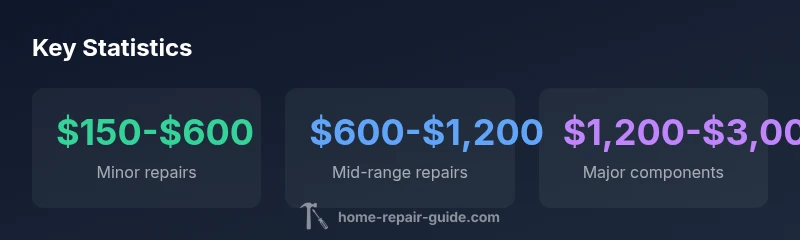
Estimated costs for a c repair vary widely by scope and location. For a typical fix, homeowners can expect roughly $150 to $600, while larger jobs or part replacements may run $600 to $1,200 or more. Labor rates, emergency calls, and regional price differences influence final bills. According to Home Repair Guide Analysis, 2026, budgeting with a 25% contingency is prudent.
Understanding what 'cost for a c repair' covers
The phrase cost for a c repair can feel vague until you break down what is included in the price. In practice, charges cover a mix of diagnostics, labor, parts, and possible service calls. For homeowners, the most common components are labor time, diagnostic efforts, hardware like capacitors and relays, and any refrigerant or sealant required for the job. The Home Repair Guide team emphasizes that good estimates start with a clear description of the problem and the unit type (central air vs. ductless mini-split), since costs can differ substantially. To get an accurate number, ask for an itemized quote that lists labor hours, parts, equipment rental if any, and a separate line for diagnostic fees. When you read the quote, compare not just the bottom line but also the inclusions. According to Home Repair Guide Analysis, 2026, variability comes from the scope of work, geographic pricing, and whether emergency service is needed. Keeping a running log of prior repairs helps in budgeting future costs.
Key cost drivers
Several factors determine the final bill for a c repair. First, the scope of work: a simple thermostat replacement is far cheaper than a full evaporator coil or compressor replacement. Second, parts: some components are affordable, while others (like compressors or heat exchangers) can be expensive. Third, labor rates: technicians in urban areas typically charge more than rural ones. Fourth, diagnostic and service call fees: many shops charge a base fee to cover inspection time. Fifth, accessibility: cramped spaces or outdoor units with limited access increase labor time. Sixth, age and type of equipment: older systems may require more labor and more frequent replacements. Seventh, warranty and eligibility: some repairs may be covered by manufacturer or extended warranties, altering the customer’s out-of-pocket costs. Eighth, timing: after-hours or weekend service commands a premium. Finally, permit or inspection requirements may apply for larger installations, adding another line to the estimate.
Typical cost ranges by repair type
For a c repair, you can expect broad ranges that reflect the variability of real-world jobs. Minor adjustments, diagnostics, or cleaning often fall in the $150–$600 range, depending on the part availability and whether the system requires partial disassembly. Mid-range repairs such as capacitor replacement, thermostat upgrades, or refrigerant checks usually run $600–$1,200. Major component work, like evaporator coil replacement or compressor service, can escalate to $1,200–$3,000 or more, especially on older or high-efficiency units. Keep in mind that these figures assume standard equipment and typical labor markets; unusual configurations, unusual refrigerants, or extended warranty constraints can push costs outside this band. Reading this in the context of seasonal demand is important: peak cooling season often sees pricier rates. The Home Repair Guide analysis suggests planning with a conservative estimate and obtaining multiple quotes to triangulate a fair price.
How to estimate costs before you hire
A practical approach helps you avoid overpaying. Start by gathering the model and symptoms, then request at least three written quotes from reputable technicians. Ask for itemized line items: diagnostic fee, labor hours, parts, and any sub-contracted work. Verify whether refrigerant charges are included and whether the quote assumes a specific refrigerant type. If possible, provide photos or videos of the outdoor unit and indoor air handler to reduce the need for in-person visits. Compare quotes not only on price but also on projected timelines, warranty terms, and after-service support. Consider the total cost of ownership: energy efficiency improvements or upgrades may save money long-term, even if upfront costs are higher. For homeowners seeking context, Home Repair Guide analysis suggests factoring in seasonal fluctuations and potential price changes between local contractors.
Cost-saving strategies and maintenance
Preventive maintenance is one of the most effective ways to reduce long-term costs. Regular filter changes, coil cleaning, and thermostat calibration can prevent many common problems. Schedule annual or biannual inspections to catch wear early, reducing the risk of expensive surprises. Ask about service plans that bundle routine checks with discounts on parts. When problems arise, consider staged repairs: addressing the most critical issue first can prevent an expensive cascade of failures. For DIY-minded homeowners, basic checks such as cleaning the outdoor condenser and clearing debris around the unit can improve efficiency and reduce the likelihood of costly repairs. Always coordinate with a licensed professional for tasks involving refrigerants, electrical connections, or gas lines. The goal is to extend the system’s life and maintain efficiency while avoiding unnecessary expenditures.
When to replace vs repair
Knowing when to repair or replace is essential for cost avoidance. If the system is beyond its expected lifespan (typically more than 10–15 years for many central air units), or if frequent repairs occur that escalate costs beyond the price of a new unit, replacement becomes attractive. Energy efficiency upgrades can cut ongoing operating costs, often offsetting the upfront investment over a few years. Look at the overall system condition: if the coil has severe corrosion, the compressor is failing, or refrigerant leaks are persistent, replacement is worth considering. Evaluate financing options or manufacturer rebates to lower upfront expense. In some cases, a hybrid approach—repairing what’s necessary now and planning a full replacement later—can balance reliability with budget constraints. Home Repair Guide recommends discussing long-term cost of ownership with a licensed technician to determine the best balance for your home.
How to read a repair quote
A good quote should be transparent and easy to compare. Ensure it is itemized and includes the following: scope of work, parts list with part numbers where possible, labor rate or hours, diagnostic charges, refrigerant and disposal fees, and any travel or permit costs. Check the warranty on parts and labor and note any exclusions. Confirm whether the quote assumes a specific refrigerant type and whether there is a price protection period. Ask about potential price changes if the job scope expands, and clarify what would trigger additional charges. Finally, ask for a projected timeline and a contingency for delays. A well-structured quote makes it easier to spot discrepancies between contractors and supports informed budgeting decisions.
Final checklist before you commit
- Get three written, itemized quotes from licensed professionals. - Confirm the exact model and system type. - Understand what is included in the diagnostic fee. - Check warranty terms for parts and labor. - Ensure quotes include refrigerant type and charges. - Compare estimated timelines and after-service support. - Inspect energy-efficiency upgrade options alongside repairs. - Review long-term maintenance plans that reduce future costs. - Verify licensing and insurance. - Beware pressure to sign immediately; take time to review. This checklist helps ensure you’re paying a fair price and getting reliable service while preventing future budget surprises.
Typical cost ranges for common repair types
| Repair Type | Typical Range | What It Includes |
|---|---|---|
| Minor repairs/maintenance (filters, thermostat) | $150-$600 | Diagnostics, labor, basic parts |
| Mid-range repair (coil cleaning, capacitor) | $600-$1,200 | Parts, labor, diagnostic fee |
| Major repair (compressor/coil replacement) | $1,200-$3,000 | Parts, labor, possible replacements |
FAQ
What factors most influence the cost for a c repair?
Multiple factors determine the final price, including the scope of work, parts quality, and labor rates. The age and type of system, accessibility, and whether after-hours service is needed can push costs higher. Always request an itemized quote to see how each cost element contributes.
Costs depend on scope, parts, and labor; ask for an itemized quote.
Do I need a permit for HVAC repair?
Most standard repairs do not require a permit, but significant installations or modifications may. Check with your local building department and your technician. The permit process can add time and cost.
Permits depend on local codes; ask your contractor.
Why is there a diagnostic fee?
Diagnostics cover the technician’s time to inspect and diagnose the problem. Even if the repair is small, a diagnostic call is often charged. Some providers waive this fee if you proceed with the repair.
A diagnostic fee covers inspection time; weigh it against the repair quote.
Is it cheaper to replace vs repair?
Replacing a failing AC can be cheaper over time if the system is old or inefficient. Consider energy savings, rebates, and system life expectancy. A contractor can help you compute the total cost of ownership.
Sometimes replacement saves money in the long run.
How long does a typical AC repair take?
Most common repairs take a few hours; complex replacements can require a day or more depending on parts availability and job scope.
Most fixes are done in a few hours, some take longer.
Can I lower costs with DIY maintenance?
DIY maintenance like filter changes and coil cleaning can prevent costly repairs. Avoid working with refrigerants or electrical components unless you are licensed. Use professional service for anything beyond basic maintenance.
Yes, basic upkeep saves money but leave major work to pros.
“Clear, itemized quotes help homeowners understand value and avoid surprises; always compare apples to apples.”
Key Takeaways
- Budget for contingencies and unknowns
- Get multiple quotes to triangulate a fair price
- Ask for itemized quotes to compare line items
- Prioritize preventive maintenance to reduce future costs
- Consider long-term ownership costs and energy efficiency