How Much Should My Repair Cost: A Practical Homeowner’s Guide
Discover realistic repair-cost ranges, key cost drivers, and practical budgeting tips to estimate and manage expenses for common home repairs. Practical guidance from Home Repair Guide.


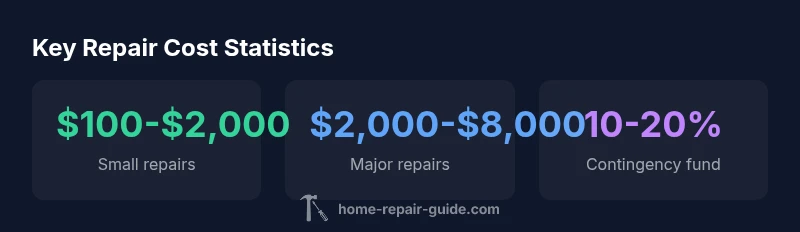
Typically, a straightforward repair costs between $100 and $2,000, while more extensive projects run from $2,000 to $8,000. The exact amount depends on the repair type, required materials, complexity, and local labor rates. Always request itemized quotes, account for permit fees, and budget 10–20% extra for unexpected issues. If the repair involves safety or code updates, costs rise quickly; plan for contingency.
How much should my repair cost? Framing the question helps set realistic expectations. For most homeowners, costs vary widely by task, geography, and contractor. This section explains how to approach pricing and what to expect in different scenarios. By understanding pricing logic, you can compare quotes fairly and avoid sticker shock. how much should my repair cost is a common starting point for budgeting, and recognizing the factors involved helps you negotiate from a position of knowledge.
Key factors that drive repair costs
Repair pricing is rarely a single number. The main drivers include: (1) scope and complexity of the task, (2) materials and product quality, (3) labor availability and wage rates in your region, (4) permit and inspection requirements, (5) accessibility and time to complete, and (6) whether safety or code upgrades are needed. For example, a simple faucet fix may stay near the low end, while an electrical panel upgrade will push costs higher due to permits and code compliance. Understanding these levers helps you plan a realistic budget and avoid surprises.
Cost ranges by repair category
To give you a practical framework, costs typically scale with task category:
- Minor repairs (sealant, small patch, basic outlet fixes): roughly $100–$500
- Moderate repairs (bath fixtures, door adjustments, drywall patches): roughly $500–$1,500
- Major repairs (water heaters, roof edge repairs, HVAC components): roughly $1,500–$8,000
- Replacements or remodel-like repairs (new fixtures, partial remodels): can exceed $8,000 depending on scope and materials
Note that these are broad ranges. Local labor markets, material prices, and permit requirements can shift numbers significantly. Always request itemized quotes and compare the same scope across contractors.
How to estimate costs for common tasks
For a practical estimate, start with a detailed scope of work. Break the project into components (labor, parts, tests, and disposal). Use online cost guides for baseline ranges and ask contractors to provide line-item quotes. If you’re unsure, invite 3-4 professionals to assess the job and provide written estimates. Keep in mind that planning for contingencies—typically 10–20% of the project cost—helps cover unforeseen issues.
Hidden costs and contingencies
A big part of the price tag comes from hidden factors. Permits, disposal of old materials, access restrictions (tight spaces), and required safety upgrades can add 5–15% or more to the overall cost. In some cases, you’ll encounter required code-compliance work that expands the scope. Always discuss potential hidden costs up front and request a contingency line in the contract to avoid budget derailment.
How to compare quotes effectively
When evaluating bids, look beyond the bottom line. Ensure each quote includes: (a) scope of work, (b) material grades and brands, (c) labor rates and estimated hours, (d) permit and inspection costs, (e) warranties, and (f) payment terms. Ask for a clearly itemized breakdown. If one quote omits a critical step, request clarification or a revision. A fair price should reflect scope, quality, and risk.
When to repair vs replace
If the repair cost approaches or exceeds a practical percentage of replacement cost, or if reliability and safety are compromised, replacement may be wiser. Consider long-term energy efficiency, maintenance needs, and potential future repairs. A cautious rule of thumb is to compare the yearly cost of ongoing repairs with the annualized cost of replacement.
The role of permits, codes, and inspections
Structural, electrical, and plumbing projects commonly require permits. Permits ensure compliance with safety standards and can affect timelines and costs. Failing to obtain required permits can lead to fines or denied warranties. Always confirm permit requirements with your local building department before starting a project.
Budgeting for repairs: a practical plan
Create a repair budget by listing anticipated tasks, then add a 10–20% contingency for surprises. Build a simple calendar to stagger projects and reduce peak costs. Keep an emergency fund equivalent to one major repair, so you’re prepared for major issues without derailing your finances.
Common repair-cost ranges by category (rough guidelines)
| Repair Type | Typical Cost Range | Notes |
|---|---|---|
| Leaky faucet repair | $150-$350 | Labor plus parts; minor plumbing fix |
| Toilet replacement | $300-$1,000 | New unit and installation |
| Drywall patch | $100-$400 | Patching and finishing |
| Electrical outlet upgrade | $100-$400 | Parts and basic wiring |
| Water heater replacement | $800-$2,500 | Labor, tank, venting, and disposal |
FAQ
What factors influence repair costs the most?
Labor, materials, and the project scope are the primary drivers of cost. Permits, accessibility, and timing can add further variances. Understanding these factors helps you set a realistic budget and compare quotes fairly.
Labor, materials, and scope drive costs the most; permits and accessibility can add more. Plan with this in mind.
Should I repair or replace instead?
If the repair cost is close to or higher than replacement, or if reliability is a concern, replacement may be the better option. Consider long-term maintenance costs and energy efficiency.
Often, if a fix is costly or unreliable, replacement is the smarter choice for long-term value.
How can I estimate costs before hiring a pro?
Start with a clear scope, use online cost guides for baseline ranges, and obtain itemized quotes from at least three contractors. Compare apples-to-apples by matching scope and materials.
Get three itemized quotes and compare scope carefully.
Are permits required for most repairs?
Permits are common for structural, electrical, and plumbing work. Your local building department can confirm requirements and help prevent penalties or warranty issues.
Most major repairs need permits; check with your local authority before you begin.
How much should I budget for unexpected issues?
Set aside a contingency of about 10–20% of the project cost. For high-risk jobs, consider 25% to cover potential surprises.
Keep a contingency fund—typically 10–20% of the project cost.
What is a reasonable contractor markup?
Markups vary by region and firm, but expect a transparent breakdown of labor, materials, and overhead. Ask for the exact percentage and have it itemized.
Ask for a clear breakdown of labor, materials, and overhead.
“Accurate repair estimates require counting every component, including labor, materials, and permits. Always request an itemized quote and a contingency for surprises.”
Key Takeaways
- Define project scope before requesting quotes
- Get at least 3 itemized estimates
- Budget a 10–20% contingency for surprises
- Ask for a clear breakdown of any permits and disposal costs