Cost for Furnace Repair: A Practical Guide for 2026
Explore how the cost for furnace repair is calculated, typical ranges, and practical budgeting strategies for homeowners in 2026.


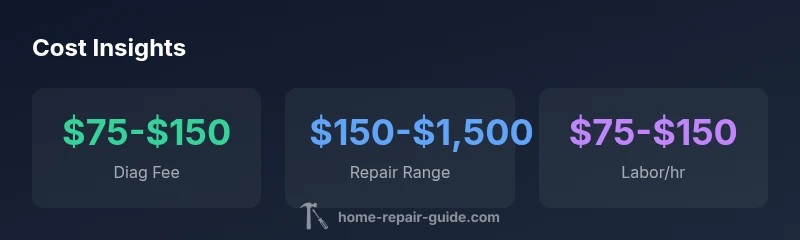
According to Home Repair Guide Analysis, 2026, the cost for furnace repair typically ranges from about $150 to $1,500, depending on the fault, parts, and labor. Most homeowners pay $350 to $650 for common diagnostic checks and solutions. Complex failures or replacement components can raise the price, while routine maintenance keeps it lower.
What factors influence the cost for furnace repair
The cost for furnace repair is not a single number; it varies with several interacting factors. The fault type is the main driver: simple thermostat glitches or blocked airflow are cheaper to fix than a faulty heat exchanger or failed igniter. Parts choice matters: standard parts from common manufacturers are cheaper than specialized components or OEM replacements. Labor complexity and accessibility also matter: a cramped installation, a furnace in a tight crawlspace, or a system located in a difficult-to-reach location increases labor hours. When scheduling, consider the age and model of the unit: older units may require more labor because technicians have to test more subsystems, and some parts may be harder to source. The region and the service market can change price expectations: urban areas with higher living costs typically bear higher hourly rates. Finally, whether the unit is gas or electric subtly shifts the cost structure, since gas furnaces often require combustion-related checks and venting considerations that electric systems do not. According to Home Repair Guide Analysis, 2026, these distinctions help explain why quotes for the same symptom can vary widely from one contractor to another.
Tip: Always ask for a written estimate that itemizes diagnostics, parts, and labor to understand where costs come from.
Cost ranges by common furnace problems
Understanding typical failure modes helps set a budgeting baseline. A thermostat misread or sensor calibration issue is usually among the least expensive fixes, often in the low hundreds. A clogged condensate line or restricted airflow is slightly more involved but still affordable, generally in the range of a few hundred dollars. When a component such as the inducer motor, blower wheel, or limit switch fails, expect costs to climb into the mid-range: roughly a few hundred to around a thousand dollars depending on parts and access. A failed heat exchanger or a cracked combustion chamber represents a major repair risk; these problems can push the bill toward the higher end, potentially exceeding $1,000 and sometimes requiring partial or full system replacement. Labor hours vary by system layout, accessibility, and service constraints, and prices can shift with regional demand. These dynamics explain why two nearby contractors might quote dramatically different prices for the same symptom.
How to estimate costs before a visit
Proactive preparation helps you avoid sticker shock. Collect your furnace’s make, model, and age, plus a list of symptoms and recent maintenance. Before booking, ask for a written estimate that separates diagnostic fees, parts, and labor. Request quotes from at least three licensed technicians to gauge market norms in your area. When you schedule, clarify whether the price includes any potential travel charges or service calls and whether there’s a price cap if multiple components fail during one visit. If you receive a diagnostic fee, ask whether it can be credited toward the repair if you proceed. For budget planning, create a short-list of likely scenarios (e.g., thermostat fix, blower motor replacement) and price each with a conservative contingency.
Pricing structures and what to ask
Most HVAC pros use a combination of diagnostic fees, labor hours, and parts pricing. Common questions to ask include: Do you charge a separate diagnostic fee, and is it credited if I proceed with the repair? What is your hourly labor rate, and is there a minimum charge? Are there trip charges or after-hours fees? How do you price parts—list price, supply house discount, or flat rate? Will the warranty cover future failures on the same repair? Getting clear answers helps you compare apples to apples and ensures you aren’t surprised by additional charges after the work begins.
Budgeting for maintenance and unexpected repairs
An ounce of prevention goes a long way. Create an annual maintenance budget that includes a basic tune-up, filter replacements, and safety checks. Set aside a contingency fund for unexpected repairs—often a percentage of yearly heating costs or a fixed buffer like $300–$600. Consider extending protection with a service contract or maintenance plan that includes discounted diagnostics and parts, which can reduce out-of-pocket costs over time. Tracking unit age, efficiency, and recent repairs can reveal when it’s wiser to invest in a replacement rather than repeatedly paying for repairs. By planning ahead, you minimize the risk of a major bill that blindsides your finances.
Do-it-yourself considerations and safety
DIY heat-and‑air projects can seem tempting, but furnace repair involves gas lines, electrical components, and combustion safety. Without proper training and tools, attempting repairs can create serious hazards, void warranties, and lead to costly mistakes. At a minimum, homeowners should handle safe tasks like replacing air filters, cleaning accessible vents, and clearing obstructions around outdoor units. For anything that involves gas connections, electrical wiring, or sealed combustion chambers, hire a licensed technician. If you choose to learn, pursue formal training and always consult the manufacturer’s service manual before attempting any repair.
Sample cost ranges by furnace fault and repair scope
| Issue Type | Typical Cost Range | Notes |
|---|---|---|
| Thermostat or sensor issue | $75-$200 | Often diagnosed quickly; calibration fixes common |
| Blower motor or belt failure | $300-$900 | Labor-intensive; may require part replacement |
| Heat exchanger or burner assembly | $800-$2,000 | High-cost repair; may prompt replacement decision |
FAQ
What is the average cost to repair a furnace?
The average cost to repair a furnace varies by issue and region. Diagnostics typically cost a few hundred dollars, while repairs range from a few hundred to over a thousand dollars depending on parts and labor. Planning with multiple quotes helps you find a fair price.
Diagnostics usually cost a few hundred dollars, and repairs can vary from a few hundred to over a thousand, depending on the issue and parts.
Is it cheaper to repair or replace a furnace?
Repair is generally cheaper upfront, but if the unit is old, inefficient, or requires frequent fixes, replacement may offer better long-term value and energy savings. A licensed technician can provide a cost-benefit estimate based on age, efficiency, and anticipated remaining life.
Repair is often cheaper now, but a replacement may save money long-term if the furnace is old or inefficient.
Do diagnostic fees apply if I proceed with repair?
Many technicians charge a diagnostic fee up front, but some apply it toward the repair if you proceed with the service. Always confirm how the fee is treated before scheduling.
Most shops credit the diagnostic fee if you move forward with the repair.
Do costs differ between gas and electric furnaces?
Gas furnaces typically involve combustion checks, venting, and gas line considerations, which can add to both parts and labor costs. Electric furnaces generally have fewer safety considerations but may require different components.
Gas furnaces can have higher inspection and venting costs, while electric units focus on different components.
How do age and efficiency affect repair costs?
Older, less efficient furnaces often require more diagnostic time and may need harder-to-find parts, increasing costs. Upgrading to a higher-efficiency model can raise upfront costs but lower operating expenses over time.
Older furnaces cost more to fix; upgrading to efficient models can pay off over time.
Are warranties or service contracts helpful for cost control?
Yes. Warranties or service contracts can reduce future repair costs through discounted diagnostics and parts. Read the fine print to understand coverage limits, exclusions, and renewal terms.
Service contracts can help curb future costs but check what’s covered.
“Regular maintenance is the best defense against rising furnace repair costs, because early detection prevents major failures.”
Key Takeaways
- Get multiple quotes to compare cost for furnace repair
- Ask for diagnostics upfront to avoid surprise charges
- Budget for both common repairs and major failures
- Understand when replacement is more economical than repair
- Prioritize regular maintenance to reduce future costs