How Much Repair: A Practical Guide to Home Repair Costs in 2026
A data-driven guide to estimating repair costs for common home projects in 2026, with budgeting tips, cost drivers, and saving strategies.


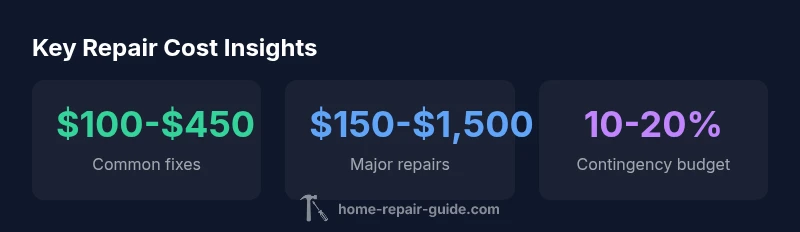
Based on Home Repair Guide Analysis, 2026, typical in-home repairs run roughly from $100 up to $2,500, driven by task complexity, materials, and labor. Smaller fixes cluster around $100–$350, while major repairs such as roof or plumbing work can exceed $1,000. For budgeting, plan a 10–20% contingency to cover hidden costs, permits, and access issues. This framework helps answer the question: how much repair will this project cost?
What counts as a repair and what doesn't
When homeowners ask how much repair costs, they’re usually thinking about jobs that fix an ongoing problem or restore a function that has failed. A repair is typically defined as returning a system or component to its normal operating condition after a fault, wear, or damage. A cosmetic change, routine maintenance, or upgrade that does not fix a fault may be considered maintenance rather than a repair, though it still influences total project costs. For budgeting, separate repairs from replacements, upgrades, and preventive maintenance. Examples of true repairs include fixing a leaky faucet, replacing a broken window pulley, patching drywall after a leak, or rewiring a circuit that has tripped. Costs here are driven by the fault’s severity, accessibility, and the labor required to dismantle, repair, and test the fix. In Home Repair Guide’s analysis, the same issue can yield different bills depending on how quickly a professional can access the problem and whether parts need to be ordered. The bottom line: define the repair clearly before you start estimating.
Typical cost ranges by category
Common repairs and rough cost ranges (2026 data, Home Repair Guide Analysis):
- Plumbing fixes (valves, leaks): $100-$450
- Toilet valve replacements: $150-$400
- Electrical outlet repairs: $100-$250
- Drywall patch after leaks: $150-$800
- Window frame repair: $200-$600
- Roof leak repair: $300-$1500
These ranges reflect variations in part costs, labor rates, and access to the problem. Regional differences can push prices higher in urban markets and lower in rural areas. Remember that the exact cost will hinge on the specific scenario and the contractor’s approach.
How materials and labor drive costs
Material quality and availability often set the floor for a repair’s price, while labor time and skill level determine much of the ceiling. A basic fix with off-the-shelf components can be inexpensive, but if a job requires custom parts, specialty tools, or a staged repair to prevent further damage, the price climbs. Permits, inspections, and licensed professional requirements add further cost layers. In some projects, access is the biggest driver: tight spaces or difficult angles can dramatically extend labor time, driving up price even if the parts are inexpensive.
Budgeting for the unexpected
Even well-planned repairs can reveal hidden problems once work begins. A practical budgeting approach is to set aside a contingency of 10–20% of the estimated repair cost. If the project is high-risk (roofs, structural elements, or plumbing with hidden pipes), lean toward the higher end of the range. Inflation, material shortages, and supply chain delays can widen these numbers, so it’s wise to revisit estimates at key milestones and adjust the budget accordingly.
DIY vs professional: decision framework
Deciding whether to tackle a repair yourself or hire a pro depends on safety, competence, and local code requirements. Simple fixes with available tutorials and basic tools may be feasible for confident DIYers. However, jobs involving electricity, plumbing, gas lines, or structural components should usually be handled by licensed professionals to prevent safety hazards and long-term damage. When in doubt, obtain a formal estimate to compare with your own time and risk assessment.
Step-by-step: get an accurate estimate
- Define the problem clearly, including symptoms, location, and recent changes. 2) Inspect the site and note potential root causes rather than only visible symptoms. 3) Gather at least three written quotes from reputable professionals. 4) Request itemized estimates that separate parts, labor, and disposal. 5) Ask about permits, inspections, and any warranty terms. 6) Build in a contingency for surprises and possible parts delays. 7) Review quotes for licensing, insurance, and energy-efficiency considerations.
Case studies: common repairs
Case A: Leaky faucet replacement. A straightforward fix in a kitchen or bathroom often lands in the lower end of the range, typically under $350 if the valve seat is accessible and parts are standard. Case B: Patch repair after drywall water damage. Depending on patch size and moisture remediation, costs can range from $150 to $800, with larger areas or mold concerns pushing higher. Case C: Roof leak in a shallow area. Minor leaks near flashing can be $300–$1,500, but extensive damage or multiple penetrations may escalate costs quickly.
How to compare quotes and avoid overcharging
Always ask for detailed, itemized estimates. Compare labor hours, hourly rates, material choices, and any subcontractor fees. Verify licenses and insurance, and request a written warranty. Watch for vague language like “materials not included” without specifics. Inconsistent quotes often signal the need for a third opinion or a more detailed inspection before committing.
Final budgeting mindset for repairs
Adopt a proactive budgeting mindset: plan for the expected, prepare for the unexpected, and track costs against milestones. Build a repair fund separate from daily expenses so you can respond quickly when problems arise. Regularly update your estimates as work progresses and stay informed about material costs and permit requirements. A disciplined approach helps you balance quality, safety, and value in every repair project.
Common repair cost ranges by category
| Repair Type | Typical Cost Range | Notes |
|---|---|---|
| Leaking faucet | $100-$350 | Local parts; labor varies by accessibility |
| Toilet valve replacement | $150-$400 | Part compatibility matters |
| Window frame repair | $200-$600 | Sealing and frame work; may require glazing |
| Drywall patch after leaks | $150-$800 | Patch size and mold remediation affect price |
| Roof leak patch | $300-$1500 | Flashing and material quality drive cost |
FAQ
What factors most influence repair costs?
The largest drivers are labor time, material quality and availability, accessibility, and whether permits or inspections are required. Geographic location also affects rates. Understanding these factors helps you price a repair more accurately.
The big cost factors are labor time and materials, plus any permits you might need.
Do repairs always require a permit?
Not all repairs require permits, but many do when structural, electrical, or plumbing work is involved, or when local codes apply. When in doubt, consult your local building department or a licensed contractor to confirm.
Check with your local building department to be sure.
Can I save money by waiting for a sale or using generic parts?
Buying generic parts can save money if they meet the job’s specifications, but compatibility and quality matter. Waiting for discounts on materials may reduce upfront costs, yet delays can increase labor time. Always balance price with reliability.
Yes, but don’t compromise safety or compatibility.
How often should I budget for repairs?
Create an annual repair budget based on past projects and expected wear. Consider a rolling fund that grows with inflation and keeps you prepared for both minor fixes and major replacements.
Keep an annual repair fund and adjust for inflation.
What’s the best way to get an accurate estimate?
Request written, itemized quotes from multiple contractors, including labor, parts, disposal, and permits. Insist on on-site inspections when possible to ensure the estimate reflects real conditions.
Get multiple, written quotes after an on-site check.
Should I DIY basic repairs to save money?
For small, low-risk tasks with clear instructions, DIY can save money. For anything involving electricity, gas, major plumbing, or structural elements, hire a licensed professional to avoid safety risks and code violations.
DIY is fine for simple tasks, but leave big jobs to pros.
“For most homes, the true cost of repair isn’t just the sticker price. Labor time, accessibility, and permitting can swing the bill significantly.”
Key Takeaways
- Plan for a wide cost range to cover common home repairs
- Identify whether a repair is truly needed or a maintenance task
- Obtain multiple, itemized quotes before committing
- Include a contingency (10–20%) for surprises
- DIY can save money on simple tasks, but risky jobs deserve a pro