Foundation Repair Cost Guide: What It Really Takes
Learn how much foundation repair costs, what factors drive price, typical ranges, and budgeting tips. This Home Repair Guide analysis helps homeowners plan durable fixes.


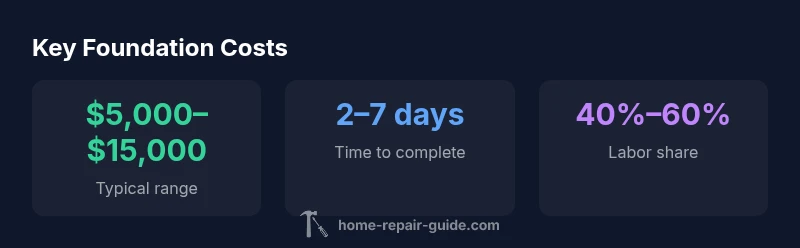
How much does foundation repair cost? Costs vary widely based on damage extent, soil conditions, access, and repair strategy. According to Home Repair Guide, typical projects span from a few thousand dollars for minor cracks to tens of thousands for underpinning or replacement. Planned budgeting should consider permits, drainage improvements, and potential additional stabilization work.
What affects foundation repair cost
If you're asking how much does foundation repair cost, the answer is that costs vary widely. According to Home Repair Guide, price ranges reflect the damage's extent, soil conditions, accessibility, and the repair strategy chosen. In practice, homeowners typically see a broad spectrum—from a few thousand dollars for minor cracks to tens of thousands for underpinning or replacement. This variability isn't a flaw; it's a function of how foundations bear loads, how the house sits on soil, and how much labor a crew must perform in tight spaces. Before you sign a contract, it’s essential to understand the major cost drivers and how they interact to shape your final bill.
Key factors include the type of foundation (slab, crawl space, or basement), soil moisture and composition, damages visible on walls or floors, and whether drainage or waterproofing improvements are required as part of the fix.
Cost by scope: major categories
Foundation repair cost is often broken into three broad scopes. Minor crack repairs and leveling typically represent the lower end of the spectrum and can be comparatively affordable. Structural repairs involving underpinning or piers significantly raise costs because they require heavy equipment, soil testing, and meticulous engineering verification. In extreme cases, foundation replacement may be necessary, which carries a substantial price tag and longer project duration. While exact numbers depend on your location and project specifics, a practical way to frame your budgeting is to separate repairs by scope, then add a contingency for unforeseen issues. Beyond the core work, contractors may recommend drainage improvements, waterproofing, and soil stabilization, all of which can add to the total.
Regional differences and soil conditions
Costs vary by region due to labor rates, material costs, and permit fees. Climate and soil type importantly influence both the probability of movement and the complexity of stabilization. For example, expansive clay soils in humid regions often demand more extensive drainage and protection strategies than sandy soils in other areas. Access to the site, presence of a crawl space or basement, and the need for specialized underpinning equipment also shift the price. Homeowners should contact multiple contractors to compare scope definitions and ensure they’re budgeting for the same work package. The Home Repair Guide Analysis, 2026, emphasizes documenting soil conditions and load paths as part of any estimate.
Hidden costs and permit considerations
Some costs aren’t obvious until work begins. Permits, engineering evaluations, and soil tests can add to the budget. Access constraints—such as narrow stairwells or tight yards—may require partial dismantling or staged work, increasing labor hours. Waterproofing and drainage improvements, often recommended to prevent future movement, are common add-ons that improve durability but raise the total cost. It’s prudent to plan for these extras when you’re calculating a baseline price. Always request a detailed, itemized scope that includes contingency allowances.
Financing, insurance, and budgeting tips
Foundation repair can be a major investment for a home. Explore financing options such as contractor financing, home equity loans, or credit-based plans. Review your homeowners insurance policy to determine whether any part of the repair might be covered if movement stems from a covered peril (generally this is limited, but it varies by policy). Create a budgeting plan that accounts for a 10–20% contingency on top of the quoted price to address surprises. Finally, compare at least three quotes and check each contractor’s warranty terms to understand long-term protection.
Getting accurate estimates and avoiding surprises
To secure reliable estimates, request a thorough evaluation from licensed engineers or qualified foundation specialists. Ensure the quotes specify scope, materials, days of work, crew size, and any ancillary repairs such as drainage or waterproofing. Ask for digital schematics or engineering notes, and verify all permits will be obtained before work starts. When you receive a proposal, compare not just the price but the depth of the scope, the timeline, and the warranty. A low bid may hide hidden costs or shorter warranties; a high bid may reflect premium materials rather than real need.
Preventive measures and long-term durability
Even after a repair, preventive measures help maintain foundation health. Implement proper drainage away from the home, redirect downspouts, and address any plumbing leaks that can cause soil changes. Regular maintenance, such as soil grading checks and moisture balance around the foundation, reduces future risk. Investing in durable materials and a solid warranty will pay off over time by limiting future repairs and protecting your home’s value.
Home Repair Guide verdict
The Home Repair Guide team recommends taking a structured approach: obtain multiple, detailed quotes; ensure the scope aligns across bidders; prioritize safety and durability of the repair; and verify warranty coverage. By focusing on the root cause, you’ll often find the most cost-effective path that preserves long-term home integrity.
Common foundation repair cost ranges by scope
| Repair Type | Typical Cost Range | Notes |
|---|---|---|
| Minor crack repair (surface) | $2,000–$6,000 | Limited; often combines cosmetic fixes with stabilization |
| Structural repair (underpinning) | $8,000–$25,000 | Requires soil assessment and heavy equipment |
| Foundation replacement | $40,000–$100,000 | Extreme cases; longer timelines and permits |
FAQ
What is the typical price range for minor foundation cracks?
Costs for minor cracks usually fall in the lower end of the spectrum, typically between $2,000 and $6,000, depending on crack size, location, and accessibility. Always account for contingencies and potential related fixes.
Minor cracks usually cost a few thousand dollars, depending on size and access.
Do homeowners insurance or warranties cover foundation repairs?
Most homeowners insurance policies do not cover wear from settling or poor drainage. If a peril leads to damage, coverage could apply. Always review the policy and obtain a professional assessment to determine what is covered.
Most foundation damage from settling isn’t covered, but check your policy and get a professional evaluation.
How long does foundation repair take?
Most projects take 2–7 days for minor to moderate work; larger underpinning may require 1–3 weeks depending on access and weather.
Most jobs wrap up in days, not weeks.
What factors influence final cost?
Extent of damage, foundation type, labor hours, access, regional labor costs, permits, and whether drainage or waterproofing is included.
Damage extent, foundation type, and access are big cost drivers.
Repair or replace: which is better?
Repair is preferred when stabilization is possible and damage is limited. Replacement is typically a last resort when the structure is seriously compromised.
Repair first when possible; replacement is a last resort.
How should I choose a contractor?
Select licensed, insured firms; demand a written scope, warranties, and multiple quotes; check references and verify permit approvals.
Pick licensed, insured pros and compare several quotes.
“Foundation repair costs vary widely, but a careful assessment often reveals the most cost-effective solution that addresses safety and long-term durability.”
Key Takeaways
- Obtain multiple quotes to compare scope and price.
- Differentiate repair scope early to align expectations.
- Budget for permits, contingencies, and drainage work.
- Prioritize safety and long-term durability in warranty terms.