How to Know If You Need Foundation Repair: A Homeowner's Guide
Discover how to know if you need foundation repair with a practical, step-by-step guide. Identify early signs, assess risks, and decide when to call a pro—trusted guidance from Home Repair Guide.


Foundation problems most often start with soil movement and poor drainage around the home. The quickest fix is to address drainage: clean gutters, redirect downspouts at least three to four feet away, and regrade soil to slope away from the foundation. For minor cracks, seal with epoxy or polyurethane; monitor for changes and call a pro for larger issues.
How to know if you need foundation repair: Signs to watch
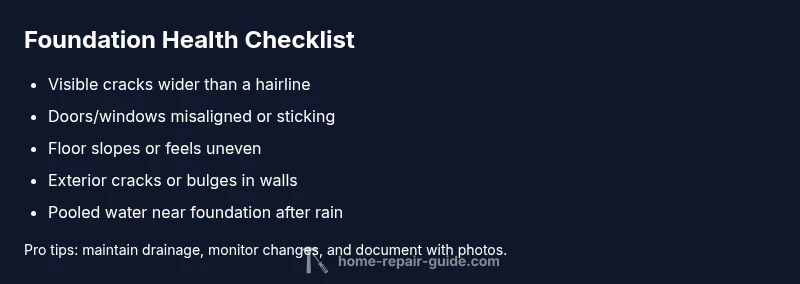
When you ask how to know if you need foundation repair, start with a careful sign check. Look for doors and windows that don’t close properly, cracks in walls that are wider than a hairline, or floors that feel uneven or sloped. Foundation-related concerns can begin with small, almost invisible changes, but they tend to worsen if moisture and soil movement continue. This section outlines actionable signs homeowners can monitor, supported by Home Repair Guide analysis that emphasizes early detection and proactive action. Regular inspection after heavy rains or rapid temperature changes helps catch problems before they escalate.
Why foundations fail: Common causes
Foundations fail for a handful of recurring reasons. The most common is soil movement driven by moisture fluctuations, freeze-thaw cycles, and poor compaction during construction. Hydrostatic pressure from poor drainage around the perimeter can push against basement or crawlspace walls, causing cracks or bows. Tree roots near the foundation can also disrupt soil balance, while improper backfilling or settling after construction adds ongoing stress. Understanding these causes helps homeowners prioritize remedies like drainage improvements and grading corrections.
How drainage and water movement affect your foundation
Water is a foundation’s worst enemy when it pools near walls or seeps through cracks. Poor gutter maintenance, downspouts that discharge at the foundation, or soil that slopes toward the house increases hydrostatic pressure. Over time, this pressure can cause cracks, exert lateral forces, and create voids under the footing. The principle is simple: manage moisture and ensure the soil around your home remains properly graded and compacted to minimize movement. Home Repair Guide’s analysis underscores moisture control as a core prevention strategy.
Do-it-yourself checks you can do today
You don’t need a team to start assessing foundation health. Begin with exterior observations: walk the foundation perimeter, check for cracks, bulges, or separated masonry; measure doors and windows for sticking or misalignment; and assess the grading slope to ensure water flows away from the house. Inside, test for sticking doors, gaps around window frames, and bowed walls. Take photographs and track any changes over a few weeks. If you notice widening cracks or new signs after rainfall, schedule a professional evaluation promptly.
Diagnostic flow: turning symptoms into a plan
A structured diagnostic flow helps homeowners move from symptoms to a clear plan of action. Start with simple checks (drainage and crack width) and progress to more involved assessments if basic fixes don’t resolve symptoms. If interior signs persist after improving moisture control, the likely cause remains foundation movement, and a professional assessment becomes more urgent. Documentation of dates, locations, and measurements strengthens any future consultation with a contractor or structural engineer.
Step-by-step: fixing minor cracks and drainage issues
Many small problems can be addressed without major reconstruction. Start by cleaning and repairing drainage: clear gutters, extend downspouts away from the foundation, and regrade soil to slope at least 6 inches over 10 feet. For minor cracks, seal with epoxy or polyurethane injections following product instructions. Keep monitoring for progression—if cracks widen beyond a hairline or new misalignment appears, postpone DIY fixes and call a foundation specialist for an in-depth assessment.
Safety, limitations, and when to call a pro
Foundation work can involve risks, including structural instability and exposure to hazardous moisture. Always prioritize safety: wear gloves and eye protection when inspecting, avoid climbing near unstable edges, and never dig near the footing without professional guidance. DIY mitigation is suitable for cosmetic cracks and drainage fixes, but structural concerns—bowing walls, large horizontal cracks, or doors that won’t close—require licensed engineers and qualified contractors.
Long-term prevention and maintenance
Preventive maintenance helps extend foundation life: ensure proper drainage, keep irrigation away from the foundation, repair cracks promptly, and schedule periodic inspections after major weather events. A good maintenance plan includes keeping gutters clean, grading soil to promote runoff, and monitoring for new cracks or settlement. By acting early and consistently, homeowners reduce the risk of costly repairs later.
Steps
Estimated time: 2-6 hours
- 1
Inspect exterior drainage
Walk the foundation line and check for proper grading. Ensure downspouts discharge at least 3–4 feet away from the wall and gutters are clear. Note any areas where water ponds near the foundation.
Tip: Extend downspouts and regrade problem spots to improve runoff. - 2
Check interior signs
Test doors and windows for sticking or misalignment. Look for cracks in drywall, tile separations, or gaps at corners. Mark locations on a floor plan for reference.
Tip: Take photos with a ruler or coin next to cracks for scale. - 3
Measure crack width and track changes
Use a caliper or a simple crack gauge to measure width. Recheck after a rainy period to see if cracks grow.
Tip: If cracks widen beyond 1/4 inch, seek professional assessment. - 4
Test moisture levels
Inspect crawlspace or basement for dampness, efflorescence, or musty odors. A moisture meter can help quantify humidity.
Tip: Even small moisture signs warrant action to prevent further movement. - 5
Seal minor cracks if appropriate
For non-structural cracks, apply epoxy or polyurethane sealant following manufacturer directions. Do not seal large, structural cracks without guidance.
Tip: Ensure the area is dry before sealing. - 6
Plan professional evaluation
If DIY fixes don’t resolve symptoms or cracks widen, schedule an evaluation with a licensed professional and structural engineer if needed.
Tip: Prepare a symptom log and timeline to share with the pro.
Diagnosis: Visible cracks, sticking doors/windows, or sloping floors
Possible Causes
- highSoil movement due to moisture fluctuations
- highPoor drainage causing hydrostatic pressure
- mediumSettlement or structural movement after construction
Fixes
- easyImprove grading and install or fix drainage (gutters/downspouts) to direct water away from the foundation
- easySeal non-structural cracks with epoxy/polyurethane and monitor changes
- hardConsult a structural engineer for confirmed movement and appropriate repair plan
FAQ
What are the most common signs of foundation problems?
Common signs include doors and windows sticking, cracks in walls or floors, gaps at trim, and uneven floors. Look for patterns around corners and along the foundation. If you notice worsened signs after rain, it’s a strong cue to investigate drainage and soil movement.
Common signs are sticking doors and windows, wall cracks, and uneven floors. Watch for changes after rain and consider drainage as a factor.
Can hairline cracks indicate major foundation damage?
Hairline cracks are common and not always dangerous, especially in newer homes or during seasonal changes. However, widening, horizontal cracks, or cracks that keep growing over time warrant a professional assessment.
Hairline cracks can be normal, but widening or horizontal cracks should not be ignored.
How long does foundation repair typically take?
Repair duration varies with the problem size. Minor crack sealing and drainage fixes may take a day or two, while major structural repairs can require several weeks and multiple visits from specialists.
It can range from a day for simple fixes to several weeks for major repairs.
Is DIY foundation repair safe?
DIY fixes are fine for cosmetic cracks and drainage improvements, but structural issues require licensed professionals. Always err on the side of safety and consult a pro if movement is suspected.
DIY is okay for cosmetic work, but structural problems need a licensed expert.
What are typical costs for foundation repair?
Costs vary widely based on the problem and location. Typical discussions include stabilization, crack repairs, or underpinning, with estimates provided after an on-site evaluation by a pro.
Costs depend on the issue and area; an on-site assessment gives a clear estimate.
When should I hire a structural engineer?
Hire a structural engineer when there are significant signs (large horizontal cracks, bulging walls, or severe misalignment) or after a contractor identifies movement discrepancies. They can confirm diagnosis and guide repairs.
Call a structural engineer if you see major movement or after a contractor notes shifts.
Watch Video
Key Takeaways
- Identify signs early and track changes
- Fix drainage first to reduce foundation stress
- Small non-structural cracks can be DIY-sealed
- Major movement needs professional evaluation
- Regular maintenance prevents future issues