AC Repair Cost Guide 2026: What to Expect and Save
Understand the true cost of AC repairs for cars in 2026, including diagnostic fees, common parts, labor ranges, and smart budgeting tips to avoid surprises.


According to Home Repair Guide, the average a c repair car cost in 2026 includes a diagnostic fee, common parts, and labor, with total repairs often ranging from several hundred to a few thousand dollars depending on the issue. This quick snapshot helps you budget and compare quotes before committing to service. Expect upfront costs to cover diagnosis plus labor, then plan for parts if needed.
What Influences the a c repair car cost
The cost to repair automotive air conditioning systems varies widely based on the diagnosed problem, the vehicle’s age and refrigerant type, and regional labor rates. A diagnostic visit typically covers an inspection of the AC clutch, compressor, condenser, evaporator, expansion valve, and refrigerant lines. Labor costs reflect the time technicians spend diagnosing the fault and performing any replacements. Parts price depends on OEM vs aftermarket options, availability, and the complexity of the job. The Home Repair Guide team emphasizes that “a c repair car cost” is not a single figure; it’s a range shaped by urgency, access to original parts, and whether the unit uses traditional refrigerant or newer, low-GWP options. When planning a repair, homeowners should anticipate both a fixed diagnostic component and a variable portion tied to the specific replacement needs.
Typical cost ranges by repair type
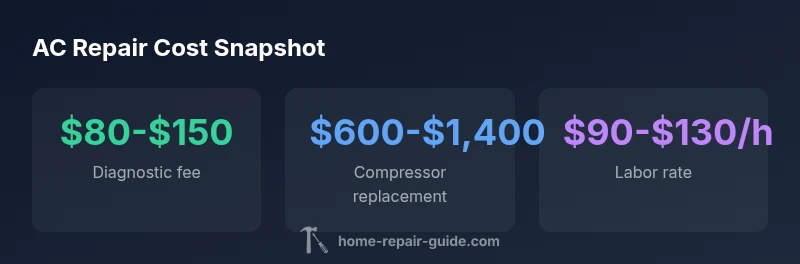
Costs are best understood as ranges rather than fixed numbers. Diagnostic fees commonly run in the low hundreds, while major component replacements can push totals higher. For example, replacing a failed compressor may cost roughly $600–$1,400 in many markets, while evaporator coil replacements can climb toward the upper range of several thousand dollars once labor and refrigerant handling are included. Refrigerant recharge without a leak repair is generally less expensive, but when a leak is detected, the full repair—often including seals and lines—can escalate costs quickly. These ranges come from broad industry observations compiled by Home Repair Guide Analysis, 2026 and reflect regional differences, shop pricing strategies, and vehicle compatibility.
How to estimate costs for your scenario
Start with a diagnostic quote from multiple reputable shops. Ask for a written estimate that itemizes labor hours, parts, refrigerant, and disposal fees. If the diagnosis reveals multiple issues, request a breakdown of which parts are essential now and which can be deferred. Consider the age of the vehicle and the likelihood that multiple components will fail in the near term. Request warranty details on parts and labor, and ask whether the shop can source OEM parts or reputable aftermarket equivalents. A prudent approach is to obtain at least three quotes and compare not only price but the timeline, included services, and the shop’s communication quality.
DIY vs professional repair: when to call a pro
Many AC issues require refrigerant handling and pressurized systems, which demand licensed technicians and appropriate safety practices. DIY efforts can be risky and may void warranties or lead to more expensive problems if fundamental issues like electrical connections or moisture in the refrigerant circuit are not properly addressed. For simple tasks such as replacing a blown fuse or cleaning accessible components, a homeowner can sometimes handle preliminary checks, but professional service is recommended for any charge to the refrigerant system.
What affects prices: location, urgency, and parts choices
Prices differ by region due to labor competition and cost of living. Urgency also matters: emergency service outside regular hours tends to incur higher rates. Part choices influence total cost: OEM parts generally cost more but may offer longer warranties, while reputable aftermarket parts can provide a balance of cost and reliability. Additionally, some vehicles require specialty tools, which can add to the labor time and overall price. The Home Repair Guide Analysis notes that budgeting for AC repairs should include a contingency for unexpected leaks or additional diagnostics.
Reading and comparing quotes effectively
When you receive estimates, ensure each quote includes a clear description of the problem, a list of parts with part numbers, unit labor rates, estimated hours, and any refrigerant charges. Don’t rely on total price alone; a lower headline price can hide expensive add-ons or subpar parts. Ask about warranty coverage, especially for compressors, condensers, and evaporator coils. If a shop cannot explain the diagnosis and the proposed fix in plain terms, consider obtaining a second opinion to avoid surprises.
Maintenance that can lower long-term costs
Preventive maintenance is a wise investment. Regular air filter changes, cleaning of coils, and ensuring proper refrigerant charge can prevent major repairs. Scheduling annual inspections helps catch issues early, reducing the chance of a complete system failure during peak season. A proactive maintenance plan can extend system life and stabilize long-term a c repair car cost by avoiding sudden, high-cost repairs. Home Repair Guide suggests setting reminders for maintenance checks and keeping a small budget for routine tune-ups.
Red flags: when to pause and reassess
If a shop insists on an immediate full-system replacement without a detailed diagnostic breakdown, or if the estimate lacks itemized parts and labor, seek a second opinion. Be wary of unusually quick diagnoses that don’t account for refrigerant checks or electrical safety. If the proposed solution requires non-standard parts at premium prices, request alternatives and verify compatibility with your vehicle model. A cautious approach helps prevent overspending on unnecessary repairs.
Choosing a service provider wisely
Look for licensed technicians with verifiable credentials, transparent pricing, and clear warranty policies. Check online reviews, ask for a written estimate, and verify their willingness to explain the problem and solution in simple terms. Request documentation of refrigerant handling certification and a detailed parts list. Asking questions about energy efficiency, refrigerant type, and future maintenance can help you choose a provider who offers long-term value rather than a quick fix.
Typical cost ranges for common AC repair services
| Service | Typical Cost | Notes |
|---|---|---|
| Diagnostic fee | $80-$150 | Flat or minor diagnostic charge |
| Compressor replacement | $600-$1,400 | Labor + parts; depends on vehicle and availability |
| Condenser coil replacement | $700-$1,500 | Includes labor; refrigerant handling may apply |
| Evaporator coil replacement | $1,000-$2,000 | Usually labor-intensive; higher cost range |
| Refrigerant recharge (no leak) | $100-$300 | If no leak and system is charged correctly |
| Leak repair and sealing | $300-$900 | Plus refrigerant charge; varies by location |
FAQ
What factors most influence AC repair costs for cars?
Key factors include diagnostic complexity, the age of the vehicle, refrigerant type, parts availability, and labor rates in your area. Unexpected leaks can dramatically raise costs due to additional repairs and refrigerant handling.
Costs vary with diagnostics, parts, and local labor rates. Leaks can raise the price significantly, so a thorough quote is essential.
Is it cheaper to replace the entire AC system or fix individual components?
In many cases, repairing a single failing component is cheaper than a full system replacement, but persistent failures or multiple failing parts can make replacement more cost-effective in the long run.
Often repairs cost less upfront, but if multiple parts fail, replacement could save money over time.
Can I save money by using aftermarket parts?
Aftermarket parts can reduce costs while maintaining reliability if sourced from reputable suppliers. Always confirm compatibility and warranty terms with your technician.
Yes, aftermarket parts can save money, but verify compatibility and warranty first.
How long does a typical AC repair take?
Most standard diagnostics take a few hours, while major repairs can take longer depending on part availability and the technician’s schedule. Quick refrigerant top-offs are often completed the same day.
Most repairs take a few hours, with major jobs possibly taking longer due to parts.
When should I consider replacing rather than repairing?
If the system is old, frequently failing, or if a high-cost component is failing, replacement may be more cost-effective in the long term. Get a cost-benefit quote to compare.
If repairs keep piling up, replacement might be the smarter choice.
What maintenance helps prevent big AC repair costs?
Regular filter changes, coil cleaning, and timely refrigerant checks help prevent leaks and reduce the risk of costly repairs. Scheduling annual check-ups is a smart investment.
Keep filters clean and coils checked to avoid big bills later.
“Thorough diagnosis and transparent quotes are the best defense against surprise AC repair costs. A clear breakdown helps homeowners budget and compare options confidently.”
Key Takeaways
- Understand costs as ranges, not fixed prices
- Get written, itemized estimates from multiple shops
- Prioritize diagnostics and parts warranties
- Consider maintenance to lower long-term costs
- Avoid high-pressure or opaque quotes without explanations