Car Heater Repair: A Practical Step-by-Step Guide
Diagnose and repair a car heater with a safety-first, practical approach. Learn common failures, essential tools, step-by-step procedures, and when to call a professional for reliable, durable results.


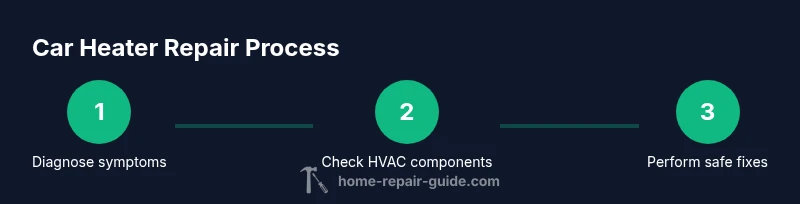
By the end of this guide, you’ll be able to diagnose common heater problems in your car, identify whether the issue is the thermostat, heater core, blower motor, or leaks, and perform safe, step-by-step repairs or know when to seek a mechanic. This how-to covers tools, safety cautions, and maintenance tips, based on Home Repair Guide's guidance.
How a car heater works
A car heater uses engine coolant warmed by the engine to deliver warm air into the cabin. The heater core acts like a tiny radiator tucked behind the dashboard; with the blower motor pushing air across the core, heat transfers from the hot coolant into the air that enters the passenger compartment. The blend doors, controlled by a heater control valve (in many designs), decide how much hot air flows through the core versus bypass air. When the system is operating correctly, you feel warmth within minutes of turning up the heat. If anything in this path fails—loose electrical connections, a faulty thermostat, a stuck blend door actuator, or a blocked heater core—you’ll notice weak heat, no heat, or heat that comes and goes. According to Home Repair Guide, understanding this heat path helps you diagnose issues methodically and stay safe around hot engine components.
This knowledge sets the foundation for effective heater repair car work, helping you decide between simple fixes and when to seek professional service.
Common failure modes
Car heaters can fail for a handful of predictable reasons. If you’re not getting heat, the first suspects are the blower motor, the blower resistor, or the fuse powering the blower. If heat is weak or inconsistent, check the thermostat, the heater control valve (if equipped), and the blend door actuator, which controls whether air passes through the heater core. A blown heater core, or air trapped in the cooling system, will also rob you of warmth. Leaks in hoses or in the core itself can also lead to low heat or damp carpets. In many vehicles, heat problems worsen when the engine is hot or the car is idling; this hints at coolant flow issues or air in the cooling system. Document your symptoms with the vehicle’s temperature gauge behavior, what settings you used, and when the heat fails to help narrow down the culprit.
Keep in mind that some symptoms are interrelated: a failing cooling system can compromise the heater core’s performance, which in turn reduces cabin heat. This section helps you map symptoms to likely causes so you can proceed with confidence.
Diagnosing heater problems
A structured diagnostic approach minimizes guesswork. Start with the electrical side: verify fuses and relays for the blower, then test the blower motor by applying power directly to see if it runs. If the blower works only on certain fan speeds, the blower resistor may be damaged. Next, assess the climate control path: ensure the blend door moves when the settings change—listen for actuator clicks and verify air direction. If heat only appears when the engine reaches operating temperature, the thermostat or heater core flow could be at fault. Check coolant level and inspect hoses near the firewall for leaks; a compromised cooling system deprives the heater core of hot coolant. If you still lack heat after these checks, the issue may be with the heater core itself, a more involved repair typically requiring professional service.
Throughout testing, document observations and avoid forcing components; gentle movement and careful inspection reduce the risk of further damage.
Tools and safety
Before you touch anything, gather the essentials: safety gear (gloves and eye protection), a well-lit workspace, and the right hand tools (screwdrivers, pliers, and a small tool set). A multimeter helps verify electrical continuity, while a flashlight improves visibility inside the HVAC housing. Always disconnect the battery before working on electrical components to prevent shocks or shorts, and allow the engine to cool to avoid burns from hot coolant or metal surfaces. Keep a spill pan and rags handy for any coolant leaks. If you’re uncertain about a clamp, hose, or electrical connector, consult the vehicle’s service manual and avoid forcing parts apart.
For heavier tasks, such as removing the dash or heater core, consider professional assistance to prevent costly damage and ensure proper reassembly.
Basic at-home fixes you can try
Start with the simplest fixes that don’t require disassembling the dashboard. Check and replace any blown fuses related to the blower motor, and inspect the blower motor connector for corrosion or loose pins. Test the blower by applying direct power to confirm operation. If the heater only works on high, the blower resistor is likely failing and should be replaced. Inspect the cooling system for adequate coolant and signs of leaks; low coolant can rob the heater of heat. Bleed the cooling system if your vehicle manual recommends it to remove air pockets that impede flow to the heater core. Ensure the thermostat is opening at the appropriate temperature by monitoring the upper radiator hose feel for cooling behavior as the engine warms. If you notice a sweet antifreeze smell or damp carpet near the firewall, a heater core leak is possible and requires professional diagnosis. These steps cover safe, at-home testing and safe, minimal repairs while avoiding risky disassembly.
Maintenance to prevent future issues
Preventive maintenance goes a long way toward reliable cabin warmth. Regularly check coolant levels and use the correct coolant type as specified by your vehicle manufacturer. Schedule periodic inspections of the heater control valve, blend doors, and the blower system to catch wear early. When you service the cooling system, bleed air as prescribed by the manual to avoid air locks that reduce heat output. Keep an eye on hoses for hardness, swelling, or leaks and replace worn clamps. Finally, maintain the heating system with a clean cabin air filter (if applicable) and ensure the HVAC controls respond smoothly to settings. Following a routine maintenance plan, guided by your owner’s manual, helps maintain comfort and reduces the likelihood of sudden heater failures.
Authority sources
- https://www.nhtsa.gov/road-safety/heat-and-cars
- https://www.osha.gov/
- https://www.energy.gov/
Note: These sources provide general safety and vehicle-maintenance guidelines relevant to heat-related issues and safe mechanical work. Always refer to your specific vehicle’s service manual for model-specific instructions.
Tools & Materials
- Safety glasses or goggles(Protect eyes from coolant splash and sharp edges)
- Mechanic gloves(Grip and hand protection while working under dash)
- Multimeter(Test electrical continuity and voltage)
- Screwdrivers (Phillips and flathead)(Access panels and clamps)
- Pliers (needle-nose)(Grip small parts and hoses)
- Flashlight or headlamp(Illuminates tight HVAC corners)
- Coolant (compatible with your vehicle)(Top up if coolant level is low)
- Replacement fuse (matching rating)(For blower/fuse-related issues)
- Replacement blower resistor or blower motor (if needed)(Have spares on hand for common failures)
- Replacement thermostat or heater control valve (if needed)(Only if diagnosis points to them)
- Drain pan and rags(Catch and wipe up any coolant spills)
- Vehicle service manual or OEM guide(Model-specific instructions and torque specs)
Steps
Estimated time: 60-120 minutes
- 1
Power down and safety prep
Park in a safe, well-lit area and turn the ignition off. Disconnect the negative battery terminal to prevent shocks and short circuits. Allow the engine to cool completely before touching coolant lines or the firewall area.
Tip: Use a battery terminal cover or insulated tool to avoid accidental shorting. - 2
Check fuses and relays
Locate the fuse box and inspect the heater blower fuse and relay. Replace a blown fuse with one of the same rating and test the blower at all speed settings to confirm proper operation.
Tip: If the fuse blows again, there may be a short or overload in the blower circuit. - 3
Inspect blower motor and resistor
Access the blower motor under the dash and verify the motor spins freely. If it runs only on high or not at all, consider replacing the blower resistor or the motor itself.
Tip: Check connector pins for corrosion and reseat them firmly. - 4
Test blend door and heater controls
Cycle the HVAC controls from cold to hot while listening for actuator clicks. If the air path doesn’t change, the blend door actuator or linkage may be stuck or broken.
Tip: A stuck blend door often requires dash removal; plan for professional service if it’s not a simple actuator issue. - 5
Assess coolant flow and level
Check coolant level in the reservoir and radiator; top up if low with the correct coolant. Inspect hoses for leaks at the firewall connections. If your vehicle has a heater core valve, ensure it opens and closes with the control.
Tip: Never open a hot radiator cap; allow the system to cool first. - 6
Bleed air and test heat delivery
If your cooling system has a bleed procedure, perform it to remove trapped air that can block heater flow. Reconnect the battery, start the engine, and test heat output at idle and after a drive. If heat is inconsistent or absent, plan a deeper diagnostic or professional service.
Tip: Document symptoms and steps taken to aid future repairs.
FAQ
What are the most common causes of no heat from a car heater?
The lack of heat is often caused by a blown blower fuse, a faulty blower motor, a bad thermostat, a defective heater control valve, or air in the cooling system. A coolant leak can also starve the heater core of hot fluid.
Common causes include a blown fuse, bad blower motor, faulty thermostat, or heater core issues, plus possible air in the cooling system.
Can I flush the heater core myself?
Flushing a heater core is possible for some vehicles, but it can cause leaks if not done correctly. If you’re unsure, seek professional service to avoid damage.
Flushing can be done at home in some cases, but it’s easy to cause leaks—consider a professional if you’re unsure.
How long does a typical heater repair take?
Time varies by model and the specific fault. Simple blower or fuse fixes can take under an hour, while more involved issues like the heater core may require several hours and specialized procedures.
Times vary from under an hour to several hours depending on the repair.
Is it safe to drive with no heat
Yes, it’s usually safe to drive if the engine is not overheating. No heat often signals cooling system or HVAC issues that should be checked promptly to prevent further damage.
It’s typically safe to drive, but overheating or leaks need attention.
When should I replace a heater core?
A heater core is typically replaced when it leaks or becomes clogged and cannot be repaired by flushing. It’s a major job that often requires dash removal.
Replacement is usually for leaks or complete failure; it’s a big job.
Watch Video
Key Takeaways
- Identify the heat path to narrow failures.
- Check fuses and blower early in diagnosis.
- Bleed the cooling system to restore heater flow.
- Avoid forcing components; consult a professional for complex parts.