Repair Car Radiator: DIY Step-By-Step Guide
Learn to diagnose, repair, and safely service a car radiator with our practical, step-by-step guide. Covers safety, tools, leaks, replacements, bleeding, and maintenance to prevent overheating.


You will diagnose and repair a radiator issue in a car by inspecting leaks, testing pressure, and choosing between hose, cap, or core replacement. You'll need basic hand tools, fresh coolant at the correct specification, a drain pan, and safety gear. Start only when the engine is cool to avoid scalding.
Understanding the cooling system and why radiator care matters
The cooling system in a vehicle is designed to keep the engine at an optimal temperature, whether you're driving through cold mornings or hot afternoons. The radiator is a core component that dissipates heat from the engine coolant as it circulates. When the radiator develops a leak, hoses wear out, or the cap fails, heat buildup can lead to overheating, warped cylinders, or reduced engine efficiency. For homeowners and DIY enthusiasts, recognizing symptoms early—like visible coolant puddles under the car, a rising temperature gauge, sweet-smelling steam, or a sweet odor near the engine bay—helps prevent major engine damage. Regular inspection of hoses and clamps, coolant level checks, and periodic flushing using the proper coolant mix are affordable maintenance steps that extend the life of the cooling system. According to Home Repair Guide, small leaks from hoses or clamps are far more common than core radiator failures and are typically fixable with routine upkeep.
Safety and prep: getting ready to work on the cooling system
Safety comes first when dealing with the cooling system. Always work on a cool engine to avoid severe burns from hot coolant or steam. Disconnect the battery to prevent any electrical short during work, and work in a well-ventilated area. Gather your tools and materials before starting, and wear protective gloves and eye protection. Coolant is toxic; have rags ready and a containment pan to catch drips. If you must lift the car, use jack stands on a flat surface and never rely on a jack alone. Keep children and pets away from the workspace. By planning ahead and respecting safety rules, you minimize risk while performing a repair that can save you time and money.
Common radiator problems and how to spot them
Common radiator problems include external leaks from hoses and clamps, a failing radiator cap causing pressure loss, a clogged radiator due to sediment, and corrosion from heat cycling. Signs include low coolant with visible leaks, consistent overheating under load, milky or discolored coolant indicating gasket issues, and a radiator that feels brittle or corroded on inspection. A small coolant sheen on the ground can point to a loose hose or damaged clamp. Understanding these symptoms helps you decide whether to replace a hose, repair a clamp, or replace the radiator core. Remember that some issues are caused by auxiliary components like the water pump or thermostat, which can mimic radiator problems.
Diagnosing leaks and testing pressure
To locate leaks, start by cleaning the area around hoses, radiator inlet/outlet, and cap, then run the engine briefly with the radiator cap removed (watch for pressurized coolant—keep hands clear). A radiator pressure tester is a valuable tool that pressurizes the system to reveal hidden leaks. If the pressure drops without visible drips, inspect the undercarriage for sweat or damp spots, and use UV dye with a blacklight for hard-to-see leaks. A failed radiator cap often presents as abnormal pressure, so test or replace it first if you observe pressure-related symptoms. Proper leak diagnostics save you from unnecessary replacements and ensure you fix the actual problem.
When to repair vs. replace: radiators, hoses, and caps
Deciding whether to repair or replace depends on the leak location, hose integrity, and radiator core condition. Leaks from hoses or clamps are often inexpensive fixes; replacing a worn hose or tightening clamps can restore function. If the radiator core shows extensive corrosion, pitting, or multiple leaks in different locations, replacement is usually the most cost-effective and reliable path. Caps are simple, inexpensive fixes but must seal correctly to maintain system pressure. Weigh the cost of parts, coolant loss, and labor against replacement value. For many DIYers, a thorough hose and cap inspection with a cap replacement can restore service without a full radiator swap.
Draining, flushing, and refilling coolant safely
Drain the old coolant into a labeled container, following proper disposal guidelines. A coolant flush helps remove accumulated sediment and rust, improving heat transfer. Refill with the recommended coolant type and mixture ratio as specified by the vehicle manufacturer, using distilled water if a premix isn’t used. Bleed air from the system to prevent air pockets that can trap heat; some vehicles require a bleed valve, while others rely on running the engine with the radiator cap off briefly. Check for leaks after refilling and ensure the coolant level is within the proper range when the engine reaches operating temperature. Always follow the vehicle’s service manual for exact procedures and ratios.
Replacing radiator hoses and clamps: steps and checks
Old hoses can collapse internally or crack externally, restricting coolant flow. Inspect hoses for cracks, soft spots, bulges, or hardening. When replacing, ensure you choose hoses with the correct inner diameter and length, and use new clamps that provide a tight seal without over-tightening. After installation, run the engine and watch for leaks at hose connections. A common mistake is reusing old clamps that don’t bite evenly; always replace with new, high-quality clamps if possible. This simple step can prevent recurring leaks and protect the cooling system.
Reassembling and bleeding the cooling system
Reassemble components in the reverse order of disassembly, ensuring all hoses are fully seated and clamps are tight. Refill coolant to the recommended level, then start the engine with the radiator cap off to bleed air until steady steady flow of coolant emerges. Reinstall the cap and check for bubbles or drips. For some vehicles, you’ll need to run the heater to bleed the entire system and circulate air out of the engine block. Finally, monitor the temperature gauge and coolant level over the next few days of operation.
Maintaining your cooling system for longevity
Adopt a proactive maintenance routine: check coolant levels monthly, inspect hoses and clamps for wear, replace coolant per the manufacturer’s schedule, and flush the system during major service intervals. Using the correct coolant type and maintaining proper mixture helps prevent corrosion and buildup. Keep the radiator grille clear of debris, ensure the thermostat operates correctly, and inspect the water pump belt. A well-maintained cooling system reduces overheating risk and extends engine life, saving you money on expensive repairs.
Common mistakes and how to avoid them
Avoid opening a hot cooling system or removing the radiator cap when the engine is hot. Don’t mix different coolant types or use plain water alone in severe weather; always follow the manufacturer’s coolant specifications. Skipping a pressure test can miss leaks hidden behind the engine or inside the radiator. Finally, rushing the bleed process or neglecting to dispose of old coolant properly can cause safety and environmental hazards. Take your time, follow the steps, and double-check each connection.
Tools & Materials
- Socket and open-end wrench set(Metric and SAE sizes, 8-19 mm)
- Screwdrivers (flathead and Phillips)( assorted sizes)
- Pliers (needle-nose)(electronics-safe grip)
- Drain pan(capacity 2-4 quarts)
- Funnel(spout designed for automotive fills)
- Coolant (pre-mixed or concentrated with distilled water)(check vehicle spec; use the correct color as per manual)
- Distilled water(for diluting concentrate if needed)
- Gloves(chemical resistant)
- Safety goggles(eye protection)
- Rags/paper towels(cleanup and wiping)
- Radiator hose clamps (new)(optional if old clamps are corroded)
- Radiator replacement hose(s) (if needed)(match size to vehicle)
- Radiator pressure tester (optional)(for pressure testing)
- UV dye kit (optional)(for leak detection)
Steps
Estimated time: 60-120 minutes
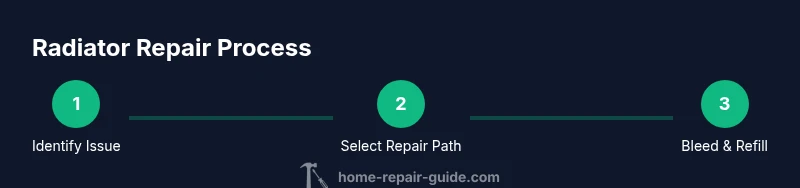
- 1
Park and prep workspace
Park on level ground, engage parking brake, and disconnect the battery. Gather tools and wear safety gear. Ensure the area is well-ventilated and the engine is cool before starting any work.
Tip: Label coolant containers and keep spill mats ready to avoid environmental hazards. - 2
Locate potential leaks and symptoms
Visually inspect hoses, clamps, radiator seams, and cap. Look for damp spots, crusty residue, or steam. Use a flashlight to check obscure areas and consider a UV dye if leaks are not obvious.
Tip: A loose hose clamp is a common and easy fix that can save a full radiator replacement. - 3
Test cooling system pressure
With the engine cold, attach a radiator pressure tester to the reservoir or radiator cap neck and pressurize to the vehicle’s rated pressure. Observe for drops indicating a leak.
Tip: If you don’t have a tester, focus on hoses and cap area first as they leak most often. - 4
Drain or flush if required
If performing a repair that requires accessing the radiator or hoses, drain the coolant into a labeled container. For a flush, follow the product directions and use distilled water.
Tip: Never mix old coolant with new in the reservoir; dispose of used coolant per local regulations. - 5
Replace hoses or clamps as needed
Remove old hoses and clamps, inspect for wear, and install new hoses or clamps. Ensure proper seating and avoid overtightening which can crack fittings.
Tip: When replacing hoses, cut square ends to ensure a clean seal. - 6
Inspect radiator and cap condition
Check radiator fins for damage, and inspect the cap for proper sealing. Replace a faulty cap or a corroded radiator if required.
Tip: A weak cap can mimic radiator problems; replacing it is often inexpensive and effective. - 7
Refill coolant and bleed air
Refill with the correct coolant mixture, start the engine with the cap off to bleed air, and top off as needed until a steady stream flows without air pockets.
Tip: Bleeding may require running the heater to purge air from the entire system. - 8
Monitor and test after repair
Take a short test drive and observe temperature gauges. Recheck for leaks and verify that coolant level remains stable after cooling.
Tip: Keep a log of readings and refills to detect gradual issues early.
FAQ
What are the most common signs of radiator trouble?
Common signs include overheating, visible coolant leaks, low coolant levels, sweet coolant smell, and a rising temperature gauge. These indicators point to leaks, cap failure, or worn hoses. Always inspect the system carefully and verify with a pressure test before replacing major components.
Overheating, leaks, and a rising temperature gauge usually indicate a radiator or cooling system issue. Check hoses and the cap first, then test with pressure if needed.
Can I repair a radiator leak myself?
Yes, many radiator leaks from hoses, clamps, or caps can be repaired or resealed at home with basic tools. Core radiator leaks are more challenging and often require replacement. Always assess risk, and if the coolant loss is significant or you’re unsure, consult a professional.
You can often fix hose or cap leaks yourself, but if the radiator core is leaking, replacement is usually necessary.
Should I use the same coolant type after repair?
Yes. Use the coolant type specified in your vehicle’s owner manual and maintain the correct mix ratio. Mixing different types or using plain water can reduce cooling efficiency and cause corrosion.
Stick to the manual’s coolant type and mix; don’t mix different coolants.
How long does a radiator repair take?
A typical home repair of hoses or caps can take 60–120 minutes, depending on access and parts availability. Replacing a radiator core or major components can take longer and may require a garage visit.
Most minor fixes take about an hour or two, but major replacements can take longer.
Is it safe to drive with a leaking radiator?
Driving with a leak is not recommended. A leaking cooling system can overheat the engine and cause severe damage. If you must drive, keep the trip short and monitor temperatures closely, but seek a repair as soon as possible.
No—driving with a leak risks overheating and engine damage.
When should I replace the radiator entirely?
Replace the radiator if the core shows extensive corrosion, multiple leaks in different locations, or if a pressure test cannot hold. Replacement also makes sense if overheating persists after fixes or if repairs exceed a practical cost.
Consider full radiator replacement if corrosion or repeated leaks occur and fixes aren’t reliable.
Watch Video
Key Takeaways
- Inspect hoses and cap before radiator replacement.
- Bleed air to prevent overheating after refilling.
- Use the correct coolant type and mix ratio.
- Test pressure to locate leaks accurately.
- Maintain the cooling system regularly to prevent failures.