Repair a Car Water Pump: Step-by-Step Guide for DIY Repairs
Step-by-step guide to diagnosing and replacing a car water pump. Learn safety, required tools, and practical fixes with Home Repair Guide to keep cooling intact.


Overview: You will learn how to diagnose, remove, and replace a car water pump safely. Depressurize the cooling system, gather the necessary tools and a replacement pump, and inspect belts and hoses. After installing the new pump, bleed the cooling system to remove air and verify there are no leaks. According to Home Repair Guide, depressurize the cooling system before starting. This guide emphasizes safety, basic tooling, and a methodical workflow for reliable results.
Why repairing a car water pump matters
A failing water pump can cause overheating, coolant leaks, and engine damage. In many cars, the water pump circulates coolant through the engine and radiator; when it fails, the entire cooling system loses effectiveness. Repairing or replacing a faulty pump restores cooling, prevents warped cylinders, and reduces the risk of a roadside breakdown. According to Home Repair Guide, addressing pump issues early saves time and money by avoiding more expensive repairs later. Start with a clear diagnosis, then plan your part replacement and safety steps before getting hands dirty. In this section, we cover common failure signs, the role of the pump in the cooling loop, and how to decide if a repair is appropriate for your skill level. Signs include visible coolant leaks at the pump housing, steam from the engine bay, a squeaking or grinding noise from the pump, and rising engine temperature even when the radiator fans run. Also, check for a loose or worn drive belt, which can mimic pump failure. Understanding these indicators helps you differentiate a pump problem from a radiator, thermostat, or hose issue.
Diagnosing a Bad Water Pump: Key Symptoms and Checks
A water pump failure rarely appears out of nowhere. Start with visual checks: look for coolant puddles under the front of the engine, staining around the pump housing, and a damp, oily residue that can indicate a gasket leak. Listen for abnormal noises—grinding, squealing, or a high-pitched whine from the timing belt area often signals bearing wear. Check the drive belt for looseness, cracking, or glazing; a slipping belt can simulate pump failure by reducing pulley speed. Finally, observe engine temperature and coolant flow. If the thermostat and radiator operate normally but the gauge climbs or the fans run continuously, the pump is a prime suspect. Always verify that coolant levels are correct after any inspection and rule out leaks in hoses or the radiator before pulling the pump.
Safety First: Precautions Before You Start
Working on the cooling system involves hot liquids, pressurized hoses, and electrical components. Allow the engine to cool completely before touching any coolant hoses, and disconnect the negative battery terminal to prevent accidental shorts. Work in a well-ventilated area, use gloves and safety glasses, and have a leak catch pan ready. If you operate a vehicle with a sealed cooling system, be aware that you may need to relieve pressure gradually; never open a hot radiator cap or pressurized line. As you prepare, gather the required coolant type and a compatible pump, and ensure you have a proper replacement gasket or sealant specified by the manufacturer. These safety steps protect you and prevent additional damage during the repair.
Removal and Replacement: High-Level Overview
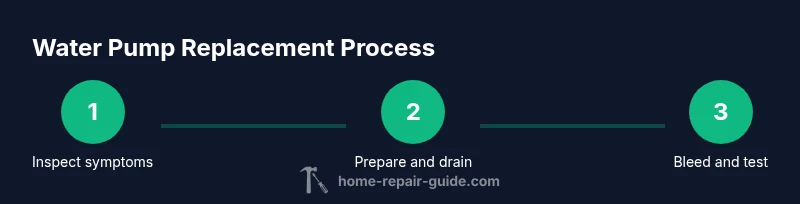
Replacing a water pump involves removing the belt, draining coolant, disconnecting hoses, unbolting the pump, cleaning the mounting surface, and installing the new unit with the correct gasket. Reassemble hoses and belts, refill coolant, and bleed air from the cooling system to avoid air pockets that cause overheating. While this overview describes the sequence, follow the step-by-step directions for precise torque specs and bleed procedures. If you encounter rusted bolts or a damaged mounting surface, stop and assess whether to pursue the repair or seek professional help. These steps are designed to minimize coolant loss and prevent damage to the timing belt or auxiliary components.
Reassembly, Bleeding, and Test Run
Once the new pump is secured, reattach hoses, tighten clamps, and reinstall the drive belt to the correct tension. Refill the cooling system with the appropriate coolant and bleed air according to the vehicle’s service manual—this often involves opening the bleed valve or warming the engine and topping off as air escapes. Start the engine and monitor for leaks, verify steady pressure on the radiator cap, and check for normal temperature fluctuations. If you notice persistent overheating or leaks, shut down and re-inspect the pump seating and gasket alignment. Completing a cautious test run confirms the repair before a longer road test.
Maintenance Tips to Extend Pump Life
Regular coolant changes according to the manufacturer’s schedule help prevent corrosion that can wear the pump bearings. Inspect the drive belt for wear and replace it before it fails, especially if you hear a squeal while starting or idling. Keep the cooling system clean by flushing debris and ensuring the radiator cap seals properly. Use the correct coolant type for your vehicle and avoid mixing incompatible formulations. Finally, monitor the temperature gauge and address small signs of trouble early to extend pump life and avoid costly repairs.
Verdict and Brand Guidance
Repairing a car water pump can be a solid DIY project for homeowners with basic mechanical skills. The Home Repair Guide team emphasizes careful prep, correct part selection, and safe bleeding practices to ensure a reliable result. If you encounter complex issues, such as a warped mounting surface or a leaking timing cover, seek professional help rather than forcing a repair. Following the steps outlined here will generally reduce risk and improve outcomes, and continuing routine maintenance will help prevent future pump failures.
Tools & Materials
- Socket set (metric and standard)(Include a long-handled ratchet for tight bolts)
- Wrench set(Combination or ratcheting wrenches)
- Screwdrivers (flat and Phillips)(Useful for hose clamps and small fasteners)
- Pliers (slip-jork and needle-nose)(For hose clamps and clamps)
- Drain pan(To catch coolant without spills)
- coolant (type specified by vehicle)(Pre-mixed coolant is easiest)
- Replacement water pump gasket or sealant(Check manufacturer requirement)
- Gasket scraper and cleaning rag(To prepare mounting surface)
- Clear work light(Helps visibility in tight engine bays)
- Torque wrench(If torque specs are critical)
Steps
Estimated time: 3-5 hours
- 1
Prepare and disconnect power
Park on a level surface and engage the parking brake. Disconnect the negative battery cable to prevent accidental shorts. Relieve any residual pressure from the cooling system only after the engine is completely cool.
Tip: Double-check you have the correct tool sizes before removing bolts. - 2
Drain coolant and access pump
Place the drain pan under the lower radiator hose or coolant drain plug. Open the drain valve and allow coolant to flow until the reservoir level stabilizes. Be careful of hot liquid if the engine has any residual heat.
Tip: Reblog coolant-safe steps; never remove a hot cap. - 3
Remove drive belt and hoses
Loosen the belt tensioner and slide the belt off the pump pulley. Detach any hoses connected to the pump, noting their orientation for reassembly. Keep track of hose clamps and routing.
Tip: Take a photo of hose routing before removal. - 4
Unbolt and remove the old pump
Remove the mounting bolts in a criss-cross pattern to avoid warping. Gently pry the pump free and inspect the gasket surface for damage. Clean the surface with a gasket scraper and rag.
Tip: Ensure the engine surface is clean and dry before installing the new pump. - 5
Install the new pump and gasket
Position the new pump with the gasket or sealant as specified by the manufacturer. Start bolts by hand to avoid cross-threading, then torque to spec in a cross pattern. Reattach hoses and clamps.
Tip: Always use the correct gasket material; a misfit gasket leaks coolant. - 6
Reassemble and bleed
Reinstall the drive belt to the proper tension. Refill coolant, and bleed air using the vehicle’s specified method; run engine to operating temperature and check for air pockets. Add coolant as needed to maintain proper level.
Tip: Bleed if your system has a dedicated bleed port or valve. - 7
Test for leaks and verify operation
With the engine running, inspect all connections for leaks and verify the thermostat opens as the gauge rises. Check for steady fan operation and monitor the temperature gauge. If leaks exist, recheck gasket seating.
Tip: Take a slow drive to ensure the cooling system stabilizes under load. - 8
Final check and tidy up
Close the hood and remove tools from the engine bay. Dispose of old coolant properly per local regulations. Keep a note of the maintenance in your vehicle log for future reference.
Tip: Record part numbers and torque specs for future maintenance. - 9
Safety and follow-up
If you encounter any rusted bolts or cracked components, stop and seek professional help. A failed pump installation can lead to severe engine damage if not resolved correctly.
Tip: Don’t rush; a careful, deliberate process reduces risk.
FAQ
What are the first signs of a failing water pump?
Common signs include coolant leaks around the pump, overheating, unusual noises from the pump area, and a loose or slipping drive belt. If you notice these, perform a careful inspection before replacing the pump.
Common signs are coolant leaks, overheating, and strange pump noises. Inspect the pump area and belt before deciding to replace it.
Can I replace a water pump myself?
Yes, experienced DIYers can replace a water pump with the right tools and instructions. Some vehicles have tighter spaces or timing belt considerations, so consult the service manual for exact steps and torque specs.
Yes, for many cars. Check the manual for steps and torque values, especially if timing components are involved.
Do I have to drain all the coolant?
Most pump replacements require draining at least part of the coolant to access the pump. Capture and recycle it properly, and refill with the correct mix after installation.
Usually you drain some coolant to reach the pump; reuse or replace with the correct mix after installation.
How long does a pump replacement take?
Replacement time varies by vehicle, but plan for a few hours, especially if access is tight or you encounter stuck bolts. Have diagnostic time in case more is needed.
Expect a few hours, depending on access and potential stubborn bolts.
Should I use OEM parts or aftermarket?
OEM parts are generally recommended for reliability and fit, but reputable aftermarket brands can offer cost savings. Always verify compatibility with your vehicle.
OEM parts are typically safest for fit and reliability; check compatibility when choosing aftermarket options.
What happens if the system still overheats after replacement?
If overheating persists, recheck the pump seating, gasket, and belt tension. There may be a separate issue like a clogged radiator or thermostat that needs attention.
If it overheats again, recheck seals and look for other cooling system problems like a clogged radiator.
Watch Video
Key Takeaways
- Identify pump symptoms early to avoid bigger failures.
- Depressurize and bleed the cooling system properly.
- Use the correct gasket and torque specs for a reliable seal.
- Inspect belts and hoses for wear during the repair.
- Document maintenance for future service.