Daikin Air Conditioner Repair: Step-by-Step Home Guide
Learn safe, practical Daikin air conditioner repair steps for common issues, from troubleshooting to basic maintenance. Home Repair Guide provides clear, diy-friendly guidance for homeowners and renters.


This guide helps you diagnose and perform safe, basic repairs on a Daikin air conditioner, focusing on common issues like poor cooling, freezing coils, and drainage clogs. You’ll learn what you can fix yourself and when to call a professional.
What homeowners should know about Daikin air conditioner repair
Daikin air conditioners are reliable, but they still require periodic maintenance and occasional repairs. When something goes wrong, most issues fall into a few broad categories: airflow problems (blocked or dirty filters, restricted ducts, or a dirty outdoor condenser), electrical concerns (tripped breakers, faulty capacitors, or loose connections), refrigerant-related symptoms (ice on coils or warm air), and drainage problems (clogged condensate lines). Understanding these categories helps you triage tasks safely and decide when you can handle a fix yourself versus when to call a professional. Regular maintenance—like changing filters and cleaning coils—delivers the biggest returns in cooling efficiency and indoor air quality. This guide provides practical steps written for homeowners and renters, with safety language, checklists, and clear boundaries on DIY tasks. According to Home Repair Guide, safe, practical Daikin air conditioner repair guidance helps homeowners avoid unnecessary service calls.
Common Daikin repair scenarios (DIY-friendly)
Many Daikin units present similar symptoms that are approachable for confident DIY homeowners, provided you follow safety rules. If the room isn’t cooling well, start with the simplest cause: a dirty air filter or blocked return air path. Replacing the filter or cleaning the grille can restore airflow in minutes. If cooling is inconsistent or cycling too often, inspect the outdoor condenser for debris, ensure at least 2 feet of clear space, and check that the fan is turning freely. A freezer-like ice buildup on the evaporator coil usually signals airflow restriction or low refrigerant; do not attempt to recharge refrigerant yourself—this requires a licensed technician. If there is water leaking inside the unit or around the base, inspect the condensate drain line for clogs and clear them gently. Finally, listen for unusual noises from the indoor blower or outdoor fan; loose panels or misaligned components can be repaired with basic tools but louder, persistent sounds may indicate mounting or motor issues that require a professional.
Basic maintenance that prevents problems
Proactive maintenance reduces the frequency of major repairs and extends the life of your Daikin system. Start with the air filter: check every month during the cooling season and replace as needed—most households benefit from filters changed every 1-3 months. Clean the evaporator and condenser coils annually or as visible dirt accumulates; use a soft brush or a gentle coil cleaner following the manufacturer’s instructions. Ensure adequate airflow around the outdoor unit; trim vegetation, remove debris, and keep the area clear by at least 2 feet on all sides. Inspect the condensate drain line for slow drainage or blockages and pour a small amount of water to test flow. Check the thermostat or control app for correct settings and confirm that the unit responds to temperature adjustments. Finally, keep a basic maintenance log so you know when the next service is due and which parts were replaced.
Safety first: When to stop and call a pro
Electrical work and refrigerant handling carry real risks. If you smell burning, hear buzzing from live wires, or notice any arcing on connectors, turn off power at the breaker and call a licensed technician. Never attempt to discharge refrigerant or open sealed components; Daikin units rely on pressurized refrigerant, and improper handling is illegal and dangerous. Use insulated gloves when handling the electrical enclosure and never bypass safety switches or panels to test a running compressor. If the indoor temperature is uncomfortably high and you’ve exhausted basic DIY steps, a pro can safely diagnose refrigerant leaks, faulty compressors, or control board failures. Finally, if your unit is under warranty, review the terms before attempting any service that might void coverage.
Warranty considerations and service notes
DIY maintenance like filter changes and cleaning typically does not void a warranty when done correctly and using authorized parts. However, any non-authorized repair or refrigerant handling can affect coverage; always check your Daikin warranty terms and keep receipts for parts you replace. Maintain service records that include the date, what was inspected, and any parts replaced. If you hire a technician, request a written service report and a list of recommended next steps to prevent surprises later. For budget planning, allocate a yearly maintenance budget that includes filter replacements, coil cleaning, and a professional inspection at least once per year. Finally, remember that manufacturer guidelines vary by model and region, so tailor your approach to your specific Daikin system.
Tools & Materials
- Phillips and flat-head screwdriver set(Varies by panel screws)
- Digital multimeter (voltage tester)(Used for basic electrical checks; do not touch live parts)
- Soft brush or coil cleaning brush(Gentle brushing for coils, avoid metal bristle)
- Lint-free cloth(For wiping surfaces)
- Replacement air filter (match Daikin model)(Use equivalent MERV rating as specified by unit)
- Non-conductive gloves(Protect hands during inspection)
- Owner’s manual / model guide(Helpful for model-specific parts)
- Vacuum with narrow nozzle (optional)(For debris in coils)
Steps
Estimated time: 60-90 minutes
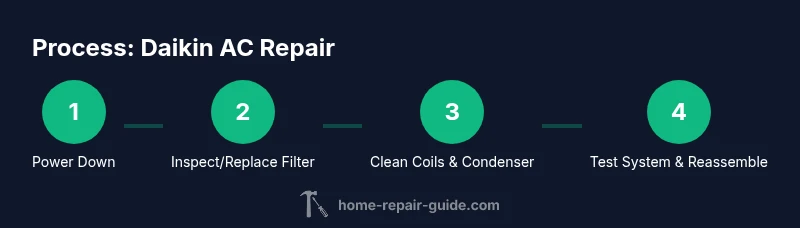
- 1
Power down and isolate the unit
Shut off power at the main breaker and outdoor disconnect. If you have a lockout device, apply it and verify the circuit is dead with a non-contact tester. This prevents shock and unintended compressor restart while you work.
Tip: Double-check power at the disconnect before touching any panels. - 2
Open the air filter compartment and inspect/replace
Remove the filter and inspect for dirt, winged debris, or damage. If dirty, replace with the correct size and rating. Reinsert the filter with the correct orientation and ensure there’s no air bypass.
Tip: Note the filter size and type; use the same replacement to maintain airflow. - 3
Inspect outdoor condenser and ensure airflow
Clear any leaves, debris, or grass from the outdoor unit and ensure at least 2 feet of clearance on all sides. Check fins for bending and gently straighten with a fin comb if needed. Proper airflow prevents overheating and improves efficiency.
Tip: Never use metal tools to poke fins; that can damage coils. - 4
Test thermostat and wiring connections
Observe the thermostat display and verify responsiveness to temperature changes. If wires look loose, reseat them carefully and take a photo before altering any connections. For smart thermostats, ensure the app shows the same mode as the unit.
Tip: A pre-work photo helps you restore wiring correctly. - 5
Clear condensate drain line
Locate the condensate drain, check for blockages, and clear gently with a flexible brush or flushing with a mild solution. Ensure there’s no standing water and the line drains freely. If you hear gurgling or see backups, pause and consult a pro.
Tip: Avoid chemical drain cleaners; they can damage the unit. - 6
Power up, run a test, and evaluate performance
Restore power, set to cool, and run the system for 10–15 minutes. Check airflow, temperature drop, and listen for unusual sounds or leaks. If performance is still poor, escalate to a professional service.
Tip: Watch for frost forming on the coil or unusual noises during startup.
FAQ
Is it safe to repair a Daikin air conditioner myself?
DIY maintenance is generally safe for basic tasks when you follow safety rules and avoid refrigerant handling or wiring work beyond your training. If in doubt, consult the manufacturer guidance or a licensed technician.
DIY can be safe for simple tasks like cleaning filters, but avoid refrigerant or live electrical work.
What are the most common problems homeowners fix themselves?
Cleaning or replacing the air filter, clearing minor drain line clogs, and checking thermostat settings are typical DIY tasks. More complex issues like refrigerant leaks or failed compressors require professionals.
Most people fix filters, simple clogs, and thermostat settings themselves.
When should I call a professional?
If you hear unusual noises, smell burning, see refrigerant leakage, or can’t restore proper cooling after basic maintenance, contact a Daikin-certified technician.
Call a pro if you hear noises, smell burning, or can’t fix cooling after basic steps.
Will doing DIY maintenance void my warranty?
Most warranties allow standard maintenance tasks if you use approved parts and follow guidelines. Unauthorized repairs or refrigerant handling may affect coverage; review your policy.
Check your warranty terms; improper service can affect coverage.
How often should a Daikin AC be serviced?
A professional inspection once a year is common; hotter climates may benefit from biannual checks. Regular DIY maintenance in between helps keep performance high.
Annual service is typical; more often in hot climates.
Do I need specialized Daikin tools?
Basic household tools are enough for most DIY tasks. Refrigerant handling or sealed system work requires certified equipment and licenses.
You don’t usually need special Daikin tools for basic maintenance, but refrigerant work needs a pro.
Watch Video
Key Takeaways
- Power off before any inspection.
- Regular maintenance reduces repair needs.
- Don’t bypass safety features.
- Call a pro for refrigerant/electrical issues.
- Keep maintenance records for future service.