Car Blower Motor Repair: A Practical Step-by-Step Guide
Learn how to diagnose, repair, and maintain your car's blower motor. This guide covers fuses, resistors, wiring checks, and when to replace components for reliable cabin airflow and defogging.


By following this guide, you will diagnose and repair a car blower motor, restoring cabin airflow and defogging performance. Expect to inspect fuses, test the blower resistor, check wiring and connectors, and decide between resistor replacement or full motor swap. The steps are designed for a safe, DIY-friendly repair that homeowners can perform with common tools.
Why car blower motor repair matters
A functioning blower motor is a critical part of your vehicle’s HVAC system. It powers the airflow that keeps you comfortable, helps defog the windshield, and prevents condensation from impairing visibility during rain or snow. If the blower only works on one speed, makes grinding noises, or stops entirely, you may be facing a failed motor or a faulty resistor. According to Home Repair Guide, addressing these issues early can prevent more expensive HVAC repairs and extend the life of related components. Understanding the basics of the blower system also helps you communicate effectively with a mechanic, should you choose professional service. This knowledge is particularly valuable for car owners who perform routine maintenance themselves, since many problems originate from wear, dust buildup, or loose connections near the blower housing. A simple diagnostic approach can save time and money, and empower you to decide whether a quick part swap or a more thorough repair is appropriate for your situation. In the realm of car blower motor repair, preparation and safety matter as much as technical skill.
How the car blower system works
Most vehicles route cabin air through a blower motor mounted behind the dashboard. The motor pushes air through ducts toward the vents, and its speed is controlled by the climate control switch or a control module. In older cars, a resistor pack limits voltage to the motor to create different speeds; newer models may use a PWM controller or a dedicated blower motor control unit. The system also relies on a clean cabin air path and a functioning fuse in the HVAC circuit. When components wear out or connections corrode, airflow drops, speeds become unpredictable, or the fan stops entirely. A solid understanding of these parts helps you interpret symptoms and plan a repair rather than guess at causes. A typical car blower motor repair focuses on the blower motor, the resistor pack, and the wiring harness that connects them to the rest of the electrical system.
Common failure modes and symptoms
Blower problems generally fall into a few categories. A blown fuse or relay will cut all airflow, while a faulty resistor can remove several speeds or cause inconsistent performance. The blower motor itself may wear out bearings or seize, producing grinding noises or stalling. Contaminants like dust or leaves can jam the squirrel cage and reduce air volume. Poor connections or corroded terminals can lead to intermittent operation or voltage drops that stress other components. A clogged cabin air filter can mimic blower issues by restricting airflow. Based on Home Repair Guide analysis, many failures originate from aging vehicles, poorly sealed duct work, or neglecting routine filter changes. When evaluating symptoms, check the simplest causes first (fuse, filter, connector) before delving into motor internals. This approach minimizes unnecessary part swaps and keeps repairs affordable.
Safety considerations before you start
Work on the HVAC system requires careful attention to electrical safety and the vehicle’s battery. Begin by turning the ignition off and disconnecting the negative terminal for several minutes to dissipate stored energy. Wear eye protection and gloves, and work in a well-lit area with the dashboard panel accessible but supported. Keep track of screws and small parts by using labeled containers. If you must lie under the dash, ensure the car is on level ground and supported with jack stands. Finally, consult your vehicle’s service manual for model-specific instructions and torque specs. These precautions reduce the risk of shock, short circuits, or accidental airbag deployment during dashboard access.
Diagnostic approach and tests you can perform
A methodical diagnostic can reveal whether the problem lies with the blower motor, the resistor, or the control wiring. Start by inspecting the fuse and relay responsible for the HVAC circuit and replacing any that look burnt or loose. With the system powered (carefully!), test each blower speed by engaging the control and listening for changes; verify voltage at the motor connector with a multimeter. If there is voltage but no motor movement, the motor may be seized or internally worn. If there is voltage only at certain speeds, the resistor or control module is likely at fault. Keep a log of readings and symptoms to aid the next repair attempt or a visit to a professional.
Tools and parts you may need
Having the right tools simplifies car blower motor repair and reduces the risk of damage. Basic items include a socket set, screwdrivers (Phillips and flat), a multimeter, and a trim removal tool. You’ll also need replacement parts specific to your vehicle, such as a blower motor resistor or a complete blower motor assembly. Extra items like zip ties, contact cleaner, dielectric grease, and a small container for fasteners are helpful but not always essential. Having a service manual or an online guide for your exact year, make, and model can prevent ordering the wrong part. If you’re unsure about part compatibility, bring your old resistor or motor to an auto parts store to verify fit.
Replacement vs repair: what to choose
In many cases, replacing a failed resistor is quicker and cheaper than swapping the entire blower motor, especially in older vehicles where the motor is in good mechanical condition but the control parts fail. If the motor itself is grinding, stuck, or shows heavy current draw when energized, replacement of the motor may be the better option. Consider the vehicle’s age, expected mileage, and the overall cost of parts and labor. If you’re working on a vehicle you plan to keep for several more years, a thorough repair combined with a clean cabin air path can yield long-term reliability. Always compare the total cost of a DIY repair against a professional quote and factor in the risk of rework if the diagnosis is incorrect. Home Repair Guide emphasizes careful testing and documentation to avoid wasted parts.
Step-by-step overview to prepare for the repair
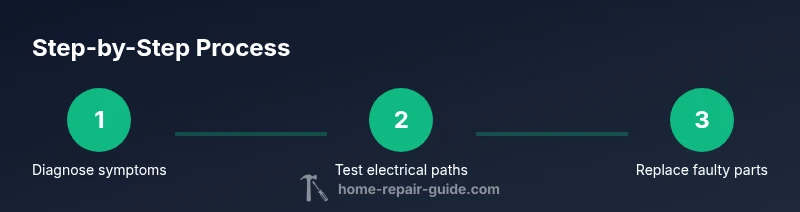
This section lays out a high-level plan you can adapt to your car’s layout. First, verify access to the blower housing and safely disconnect power. Next, document wiring connections and remove the blower assembly. Then, test components with a multimeter and inspect the resistor for heat damage or burning smell. If you find a faulty resistor, replace it; if the motor is seized, swap the entire unit. Finally, reassemble, reconnect power, and test airflow across all speeds. If the unit still misbehaves, revisit the diagnostic steps or seek professional help.
Maintenance to extend life and prevent future failures
To maximize reliability, replace cabin air filters regularly and clean the blower intake to minimize dust and fiber buildup. Check duct connections for loose hoses or broken seals and address any air leaks that could reduce performance. Periodically inspect electrical connectors for corrosion and apply dielectric grease where appropriate. Keeping the HVAC system clean reduces stress on the blower motor and improves efficiency. Finally, consider scheduling a seasonal diagnostic as part of your home maintenance routine to catch problems before they escalate.
Tools & Materials
- Socket set (metric and SAE)(Include 8- to 14-mm sockets; vehicle may vary)
- Screwdrivers (Phillips and flat-head)(Magnetic tip helps with small screws)
- Multimeter(Prefer a digital meter with voltage and resistance testing)
- Trim removal tool(Non-mparking tool to avoid dash damage)
- Replacement blower resistor(Match part to your vehicle year/make/model)
- Replacement blower motor(Only if motor is seized or failed)
- Safety gear (gloves, eye protection)(Protect hands from sharp edges)
- Assorted fuses (HVAC circuit)(Have spares in the correct amp rating)
- Dielectric grease(Protects electrical contacts)
- Cable ties and label tags(Keep wiring organized)
Steps
Estimated time: 60-120 minutes
- 1
Disconnect power and locate the blower housing
Turn off the vehicle, remove the key, and disconnect the negative battery terminal. Allow a minute for any stored energy to dissipate. Locate the blower housing under the dash, usually near the passenger footwell. Identify screws or fasteners that secure the housing and plan the disassembly path.
Tip: Label fasteners as you remove them and photograph connector orientations. - 2
Remove the blower housing cover
Carefully pry off the housing cover to access the blower wheel, the resistor pack, and the electrical connector. Keep track of screws and clip remnants. Avoid forcing plastic parts to prevent cracks.
Tip: Use a small magnetic dish to prevent losing tiny screws. - 3
Inspect and disconnect the blower assembly
Disconnect the wiring harness from the blower motor and the resistor. Inspect the connector for corrosion or bent pins. Note wire colors and routes to aid reassembly.
Tip: Take a wiring diagram photo before unplugging anything. - 4
Test components with a multimeter
With the power off, measure resistance of the blower resistor and check motor continuity. Reconnect power and verify that voltage appears at the blower connector when selecting speeds. Compare readings to your vehicle’s service manual.
Tip: Test at all speed settings if possible; a fault can appear only at specific speeds. - 5
Replace faulty parts
If the resistor shows signs of burning or high resistance, replace it. If the motor stalls or draws excessive current, replace the blower motor assembly. Ensure replacement parts match your model.
Tip: Do not reuse damaged connectors or cheap aftermarket parts without compatibility checks. - 6
Reassemble and test
Reconnect the wiring harness, reseat the blower in its housing, and replace the cover. Reconnect the battery, turn on the ignition, and test all speeds and the defrost function to confirm proper operation.
Tip: Run the fan briefly at each speed to verify stability and noise levels.
FAQ
What are the most common signs that a blower motor needs repair?
Most common signs are no airflow, only one or two speeds, unusual noises, or burning smells from the HVAC housing. Start by checking fuses and the blower resistor, then inspect the motor if the issue persists.
Common signs include no airflow or only one speed, plus unusual noises. Check fuses and the resistor first, then inspect the motor if needed.
Can I repair the blower resistor without replacing the motor?
Yes. If testing shows the motor spins freely but speeds are inconsistent, the resistor is often the culprit. Replacing just the resistor can restore multiple speeds without motor replacement.
If the motor spins but has limited speeds, the resistor is usually the issue and can be replaced alone.
Is it safe to drive with a malfunctioning blower?
Driving with a non-working blower is not dangerous, but it reduces visibility safety in fog and ice conditions and can prevent defogging. If you depend on HVAC performance for safety, repair promptly.
It’s not dangerous to drive, but you’ll want to fix it soon for defogging and comfort.
Do I need special tools for this repair?
Most blower repairs use common automotive tools like screwdrivers, a socket set, and a multimeter. A trim removal tool helps minimize dash damage during disassembly.
You mostly need basic tools and a multimeter for tests.
How long does a typical blower motor repair take?
A straightforward repair can take about an hour or two depending on vehicle access and whether you replace a resistor or the motor.
Most repairs take about one to two hours, depending on access and parts.
Will this repair void my warranty?
DIY repairs can affect warranties depending on the vehicle and warranty terms. Check your policy and consult a dealer if you’re unsure.
Check your warranty terms; DIY fixes can affect coverage in some cases.
Watch Video
Key Takeaways
- Test fuses and connectors before replacing parts
- Differentiate resistor vs motor problems through targeted tests
- Keep a parts compatibility checklist to avoid wrong purchases
- Reassemble carefully and test all speeds to confirm repair success