Scratch Repair for Cars Near You: DIY Guide & Hiring Tips
Learn how to assess car scratches, decide between DIY fixes or professional repair near you, and follow a clear step-by-step process. Includes tools, safety tips, cost considerations, and finding reputable local services.


Goal: Learn to assess scratch depth, decide if a DIY fix is appropriate or if a nearby body shop should handle it, and follow a proven step-by-step method to restore a car’s finish. You’ll know what tools and materials to gather, how to avoid common mistakes, and when to seek professional color matching.
Understanding Car Scratches: Depth & Repair Path
Car scratches vary widely in depth and finish. Some are mere scuffs that remove wax and reveal a cloudy clear coat; others bite into the base paint or even expose metal. The repair path you choose depends largely on how deep the scratch goes and whether the color layer (clear coat, base coat, or primer) is affected. According to Home Repair Guide, starting with a careful assessment is the most reliable way to prevent unnecessary work or unintended damage. In practice, you’ll test depth with a gentle fingernail scratch test and inspect under good lighting; if you can’t feel the scratch, you’re likely in the shallow category. If you can feel a bite or see exposed metal, the repair becomes more complex and may require color matching and multiple coats. This first assessment guides whether a DIY fix is feasible or whether professional attention is prudent.
DIY vs Professional: When to Fix at Home vs Hire a Pro
DIY repairs save money and can be effective for minor marks, but they are not a one-size-fits-all solution. The decision hinges on depth, color complexity (solid vs metallic), and your tolerance for risk. For shallow scratches that haven’t penetrated the clear coat, a controlled polishing or light touch-up can restore appearance. Deeper scratches that reach the base coat or primer, especially with metallic finishes, often require color-matching and a more precise blend that professionals commonly perform. The Home Repair Guide approach emphasizes a careful path: start with safe, non-invasive methods and escalate only when the risk of making the defect worse is minimal.
Assess Scratch Depth: The Fingernail Test and Visual Clues
A quick fingernail test helps estimate depth: if your nail catches and you can feel a bite, the scratch likely goes beyond the clear coat. For very light marks, you might only see a dull surface when light hits the area; no color change should be visible. If you see color or primer beneath the gloss, or if the scratch feels deep and rough, it’s likely to require more than polish. Lighting matters: work in bright daylight or under a high-quality shop light to see color changes and depth accurately. Remember that metallic and pearlescent paints complicate color matching, which is another factor in deciding whether to DIY or hire a pro. This careful assessment reduces the chance of over-polishing or mismatched repairs.
Essential Tools and Materials for Car Scratch Repair
Before you begin, gather the right tools and materials to avoid mid-process trips to the store. Clean, prep, and protect the work area so you don’t transfer dirt or wax into fresh repairs. The core kit typically includes microfiber cloths, automotive soap, isopropyl alcohol for surface prep, a quality rubbing compound for light leveling, a color-matched touch-up paint or pen, a clear coat for sealing, and a fine polishing compound for blending. Optional items like very fine sanding paper (2000–3000 grit) and masking tape help in stricter restoration or controlled application. Prioritize non-abrasive materials to minimize risk, and ensure you work in a well-ventilated area when using solvents.
Step-by-Step Guide for Minor Scratches (Clear Coat Only)
This section outlines a practical approach to shallow defects that remain within the clear coat. It is designed to be safe for beginners while highlighting the care you should take. If you locate a deeper issue, skip ahead to the deeper-scratch section and consider professional help. Always test any product on an inconspicuous area first to ensure compatibility with your car’s paint.
Color Matching and Paint Touch-Up: Getting the Shade Right
Color matching is the crux of successful scratch repair, especially on metallic or pearl paints. If you can locate the manufacturer’s color code from the VIN plate or owner’s manual, use it to pick the closest shade. For solid colors, a high-quality touch-up paint pen can blend well if applied in ultra-thin layers. Metallics and pearls add complexity because the finish relies on multiple pigment layers that your eye may only approximate. Inaccurate color matching leads to obvious repair lines that stand out after curing. This is where a professional color match and blend may deliver the most seamless result, particularly on high-value vehicles.
Deeper Scratches and Paint Matching (Metallic vs Solid)
When the scratch penetrates the base coat or primer, or when the finish is metallic or pearlescent, DIY fixes become significantly riskier. In such cases, a professional repaint or blend may be necessary to ensure consistent color, texture, and longevity. If you notice rust beneath exposed metal, increasing depth demands professional attention to prevent future corrosion. The decision hinges on your comfort with color matching and your willingness to reproduce a perfect blend across the panel. If in doubt, consult a local auto body specialist and request a color-matching quote before proceeding.
Finish, Polish, and Protective Coatings
After applying touch-up paint and clear coat, the area should be carefully blended with a fine polishing compound. This step helps remove slight ridges and restore a uniform appearance. Use a soft microfiber cloth and light, circular motions, taking care not to burnish through the fresh layer. Finally, apply a car wash-safe wax or sealant to protect the repaired area and help the new finish blend with the surrounding paint. Consistency and patience are the keys here; rushing the cure can cause haze or uneven gloss.
Cost Considerations and Finding Nearby Services
DIY repairs generally cost far less than professional sessions, especially for minor scratches. If you employ color matching and multiple coats, material costs can add up, but you save on labor. When calculating near-me options, compare estimated shop quotes for color matching, panel blending, and curing time. Be sure to ask about warranty or satisfaction guarantees for color-matched work, particularly with metallic finishes. The goal is a repair that looks right on the day you drive away, not one that requires rework soon after.
How to Find a Reputable Auto Body Shop Near You
If you decide professional help is best, start with local auto body shops with solid reputations. Seek shops that specialize in color matching and blending, and ask for before-and-after photos of similar repairs. Check online reviews and request a written estimate detailing color matching steps, number of coats, curing times, and warranty terms. When possible, visit the shop to inspect their workspace and color-matching equipment. The right shop should provide clarity about the repair process and realistic expectations for results.
Authoritative Sources and Further Reading
For deeper guidance on paint finishes and repair practices, consult established sources. Useful references include:
- NHTSA (National Highway Traffic Safety Administration): https://www.nhtsa.gov
- SAE International: https://www.sae.org
- Car and Driver (major publication): https://www.caranddriver.com
These resources offer general automotive repair considerations and standards that help inform safer, higher-quality repairs. Always cross-check any DIY method with vehicle-specific requirements and local regulations.
Tools & Materials
- Microfiber cloths(Lint-free; use 2-3 cloths for buffing and wipe-downs)
- Automotive soap(pH-balanced; used for pre-repair cleaning)
- Isopropyl alcohol (70% or higher)(Degreases surface before repair; use with a lint-free cloth)
- Rubbing compound(Light leveling for shallow scratches; avoid heavy pressure)
- Color-matched touch-up paint or paint pen(Exact shade; obtain color code if possible)
- Clear coat(Seal the touch-up area; compatible with base coat)
- Fine polishing compound(Blend repaired zone with surrounding paint)
- Fine sandpaper (optional 2000-3000 grit)(Only for advanced leveling; use with caution)
- Masking tape(Protect adjacent areas during touch-up)
- Gloves(Nitrile recommended for chemical protection)
Steps
Estimated time: about 1.5-2 hours
- 1
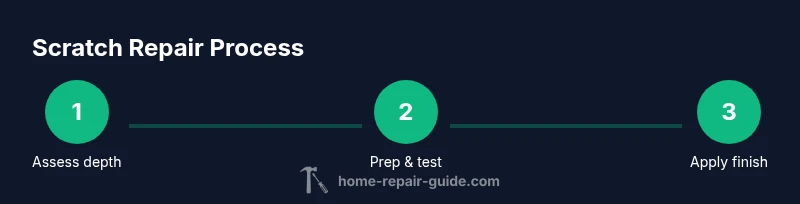
Assess scratch depth
Perform a fingernail test to estimate depth and inspect the area with bright light. If you feel metal or color is missing, depth is significant and may require professional service. Decide early whether the repair will be DIY or needs a pro.
Tip: If metal is exposed, consider postponing DIY and seek a professional assessment to avoid rust. - 2
Clean and prep the area
Wash the damaged area with automotive soap and water, rinse thoroughly, and dry with a clean microfiber cloth. Wipe with isopropyl alcohol to remove wax or oils that could interfere with adhesion.
Tip: Avoid scrubbing; use gentle, circular motions to prevent further scratches. - 3
Test rubbing compound on inconspicuous area
Apply a small amount of rubbing compound to a hidden spot and buff lightly. If you see improvement without haze, you can proceed with the scratch repair. If the surface looks worse, stop and consult a pro.
Tip: Use very light pressure and work in straight lines, not circular motions, on initial tests. - 4
Apply color-matched touch-up paint in thin layers
Dab paint into the scratch with a precise tool or pen, using ultra-thin layers. Allow each layer to dry completely before applying the next. Build color gradually to avoid creating a raised edge.
Tip: Do not flood the scratch; multiple thin layers blend more naturally. - 5
Seal with clear coat and cure
Once color matches, apply a thin clear coat layer. Allow it to cure per the product’s instructions, then apply additional coats if needed. Curing reduces the risk of smearing or uneven gloss.
Tip: Avoid touching the area while it cures to prevent fingerprints. - 6
Blend with polishing compound
After the clear coat cures, use a polishing compound with a soft cloth to blend the repaired area with the surrounding paint. Work in small, circular motions and avoid over-polishing.
Tip: Check under different lighting to ensure a seamless blend. - 7
Clinical inspection and protection
Inspect the repaired area for uniform color and gloss. If satisfied, apply a wax or sealant to protect the finish and extend durability.
Tip: Waxing helps seal and preserve the repair against UV and contaminants. - 8
Decide if professional help is needed
If the scratch recurs or you see visible mismatch on metallic/pearlescent finishes, consider a pro for color-matching and panel-level blending. A pro can deliver a durable, factory-like finish.
Tip: Ask for a color-match guarantee and photo samples of prior repairs.
FAQ
What’s the difference between a scratch and a scuff?
A scratch usually penetrates the paint layers and may require color matching, while a scuff is a surface abrasion often removable with polishing and cleaning. Depth determines whether DIY or pro repair is needed.
A scratch goes deeper into the paint than a scuff, so depth guides your repair path.
Can I fix scratches at home or should I hire a pro?
Shallow scratches on a solid color can often be fixed at home with proper technique. Deeper scratches that expose metal or involve metallic finishes typically benefit from professional color matching and blending.
For shallow scratches, DIY is often enough; deeper damage usually benefits from a pro.
Do I need to repaint the panel?
Repainting is usually only necessary if the base coat or color is compromised or if the finish is severely mismatched after initial repairs. For minor scuffs within the clear coat, repainting is rarely required.
Repaint is typically only needed if the color is damaged or the base coat is exposed.
How do I match the paint color code?
Use the manufacturer's color code from the VIN plate or door jamb label. If you cannot locate it, a professional color-match service can be more reliable, especially for metallic finishes.
Find the color code from the VIN plate or door label, or ask a shop for color matching.
What safety precautions should I take?
Work in a well-ventilated area, wear gloves, and protect surrounding paint with masking tape. Avoid inhaling fumes from solvents and never rush the curing processes.
Ventilate the area and wear gloves to stay safe while repairing.
How long does a DIY scratch repair last?
Durability depends on proper paint matching, correct curing, and ongoing maintenance like wax protection. A well-executed DIY repair can last, but harsher exposure or poor blending may shorten longevity.
Durability depends on technique and maintenance; a good DIY repair can last with proper care.
Watch Video
Key Takeaways
- Assess depth before choosing a repair path.
- Match paint color precisely for best blending.
- Use light, controlled strokes to avoid swirls.
- Consider professional help for metallic or large scratches.