Car Dent Repair: Safe DIY and Pro Options
Learn how to assess and repair a car dent with safe DIY methods, tools, and professional options. This guide covers dent types, safety, step-by-step processes, and prevention tips for homeowners and renters.


By the end of this guide, you will learn how to assess a dent on your car, choose a safe DIY approach for minor damage, and when to seek a professional repair. You’ll need basic hand tools, masking materials, and proper safety gear. The aim is to restore the panel shape without causing paint cracks or further stress.
What is a car repair dent?
According to Home Repair Guide, a car repair dent is a deformation in the sheet metal caused by an impact, such as a door hit, hail, or backing into a pole. The dent can vary in size, depth, and whether the paint is creased or cracked. Small, shallow dents may be sub-surface stretches rather than deep gouges, and paint integrity matters: if the paint is cracked or cracked clear coat shows through, the repair becomes more complex and may require repainting. Understanding the type and location of the dent helps you decide between paintless dent repair and conventional body work. When you approach the repair, plan for safety, surface protection, and a finish that matches the surrounding panels.
Safety first: assess risks and prepare your workspace
Working on a car dent requires a clean, well-lit area and the right safety gear. Park away from traffic, use wheel chocks, and protect the work surface with a clean mat. Wear safety goggles, gloves, and long sleeves to guard against sharp edges and metal splinters. Avoid working near airbags or trim components that could release during manipulation. If you’re new to car repair dent techniques, start with a small, inconspicuous area to practice and build confidence before moving to more visible panels.
DIY methods: paintless dent repair vs traditional dent repair
Paintless dent repair (PDR) is ideal for shallow dents where the metal is not stretched and the paint remains intact. It uses specialized picks and leverage to coax the metal back into shape from behind or along the edges. Traditional dent repair involves removing panels, smoothing out the damage, filling, and repainting. The choice depends on dent size, depth, paint condition, and access. For a vehicle with a warped panel or cracked paint, professional conventional repairs can ensure a factory-like finish but require more time and cost. For many everyday dents in a garage, PDR can restore the surface with minimal cosmetic work if done carefully. Regardless of method, avoid excessive force that can stretch the metal or peel paint.
Tools and materials overview
Having the right tools helps you work efficiently and reduces the risk of additional damage. A basic DIY kit may include a glue puller, dent pulling tabs, a soft mallet or wooden dowels, microfiber towels, rubbing alcohol, masking tape, and a heat source for gentle warming. Use non-marring tools and avoid metal hammers that can scar the surface. Protect adjacent panels with tape and soft cloths, and keep paint-safe cleaners on hand to prevent residue. If the dent is in a hard-to-reach area or near a seam, you may require specialty tools or professional assistance. Remember, the goal is to realign the metal with minimal paint disruption.
Step-by-step overview (brief)
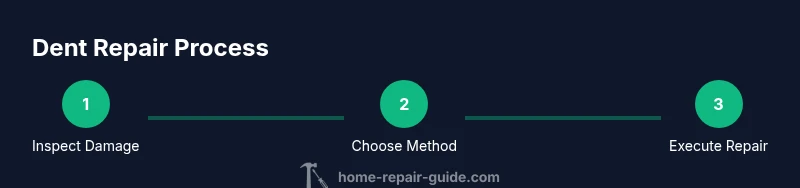
The following process outline complements the detailed steps in the STEP-BY-STEP block. Start by safely inspecting the dent, clean the area, and decide whether to attempt a paintless method or traditional repair. If using PDR, apply controlled pressure or glue pullers to gradually reduce the dent, checking alignment frequently. If you need to use body filler or paint, plan for a finish that matches the surrounding color and texture. Each stage should be tested with a light wipe and an inspection under sunlight to detect gloss differences or high spots.
Common mistakes and how to avoid them
- Rushing the job: take your time to observe how the metal responds to pressure and pulling. - Using the wrong tool: avoid metal hammers on soft metals; use non-marring pulls and smooth gloved hands. - Skipping protective measures: protect adjacent paint with tape and clean rags. - Ignoring hidden damage: dents near seams or pillars may require professional repair. By following a systematic approach and starting with a small area, you reduce the risk of creating new problems.
Maintenance and prevention tips
To reduce future dents, consider parking away from high-traffic areas, using door guards, and performing routine touch-ups on clear coat chips to prevent rust. After repair, wash and wax the panel to protect the finish and maintain a uniform shine. Regularly inspect panels for new damage after hail storms or car washes, and address issues early before corrosion sets in.
Tools & Materials
- Paintless dent repair kit(Includes dent lifter tabs, knock-down tools, and pulling tabs)
- Glue puller kit(For pulling dents from edges; use with caution on curved panels)
- Slide hammer or dent removal rods(Optional for stubborn dents; not ideal on thin paint)
- Heat gun or hairdryer(Gentle warming helps plasticity; keep temp moderate (60-70°C max))
- Microfiber towels(For cleaning and protecting paint surfaces)
- Rubbing alcohol or mild cleaner(Use to remove oils before repair)
- Masking tape and painter's paper(Protects adjacent panels and trim)
- Safety gear (gloves, eye protection)(Protect hands and eyes from sharp edges)
Steps
Estimated time: 2-3 hours for a typical minor dent repair
- 1
Assess the dent and safety
Begin with a visual check to understand dent depth, location, and paint condition. Look for cracks, creases, and edge proximity to seams. This assessment guides your chosen method and prevents wasted effort on a dent that needs a pro.
Tip: Identify airbags and structural components nearby; avoid disturbing any area that could compromise safety. - 2
Prepare the workspace and materials
Clean the area thoroughly to remove dirt and grime that can mask the dent. Set up a clean, well-lit workspace and lay down protective coverings to prevent scratches on nearby panels.
Tip: Have a clean, flat surface to place tools; keep a small flashlight handy for inspecting depth. - 3
Choose your repair method
Based on your assessment, decide whether paintless dent repair (PDR) is suitable or if traditional repair is required. PDR works best for small, non-stretched dents with intact paint.
Tip: If paint is damaged or the dent is near a seam, plan for traditional repair. - 4
Apply pulling or pressure gradually
If using PDR, apply controlled pressure or glue pulls from the perimeter toward the center. Check alignment frequently and avoid over-pulling, which can stretch the metal.
Tip: Work in small increments; pause to re-check the surface under varied lighting. - 5
Refine the finish and remove tool marks
Once the dent is minimized, use soft tapping from behind with a non-marring tool to smooth high spots. Clean the area again to check for paint consistency and gloss differences.
Tip: Do not overwork the area; relentless tapping can create new imperfections. - 6
Protect the repair and observe curing
If paint was touched, apply a light coat of wax or sealant after the repair dries. Observe the area over the next few days for any settling or discoloration.
Tip: Document the results with photos for future reference.
FAQ
What is the best method to fix a small dent in a car?
For small, shallow dents with no paint damage, paintless dent repair (PDR) often yields the best results. If the paint is damaged or the dent is near a seam, traditional repair may be required. Consider your skill level and the tools you have before proceeding.
For small dents without paint damage, try paintless repair first; if the paint is damaged or near edges, you may need traditional repair.
Can I repair a dent myself without damaging the paint?
Yes, with proper technique and tools you can manage minor dents. Protect the surrounding paint, avoid excessive force, and test on a small area first. If you see paint cracking or edge visibility worsening, stop and consult a professional.
You can DIY small dents, but protect the paint and stop if you see cracks.
When should I seek a professional dent repair service?
Seek a professional if the dent is large, near a creased edge, involves paint damage, or if the panel is structurally compromised. A pro can ensure a factory-like finish and avoid secondary damage.
Call a pro if the dent is large or near edges, or if the paint is damaged.
What safety gear do I need for DIY dent repair?
Wear safety glasses, gloves, and long sleeves to protect against sharp edges and tools. Work in a ventilated area and keep children away from the workspace.
Wear gloves and safety glasses, and keep kids away from the workspace.
Do dent repairs affect car resale value?
Dent repair that preserves the original paint and panel integrity can improve resale value. If repainting is required, consider how close the finish matches the original color and texture.
Proper dent repair helps resale value, especially when the paint is preserved.
Is paintless dent repair suitable for all dents?
No. PDR works best on shallow dents with intact paint and accessible backsides. Deeper dents or cracked paint may require traditional repair and repaint.
PDR is great for shallow dents with intact paint; deeper or damaged paint needs traditional repair.
What should I do first if the dent is near an airbag area?
Do not attempt repairs near airbag zones. Tampering could affect safety systems. Seek professional assessment instead.
Avoid repairs near airbag zones; get a professional assessment.
Watch Video
Key Takeaways
- Assess dent size and paint condition before starting
- Choose PDR for small, intact paints; reserve traditional repair for damaged finishes
- Use non-marring tools and protective tape to prevent new damage
- Work in small increments and verify results under good lighting
- Decide when to seek professional help to avoid costly mistakes