Repair Car Body: A Practical Step-by-Step Guide
Learn safe, practical car body repair techniques with a clear, step-by-step approach. Tools, safety, cost tips, and finishing guidance included.


You can repair car body damage yourself by following a structured, safety-focused process: assess damage, prep the area, repair dents with metalwork and filler, prime, paint, and cure. This guide covers tools, steps, safety, and when to seek professional help. It is designed for homeowners and renters seeking durable, affordable repairs.
Understanding Car Body Repair: Scope and Safety
Damage to a vehicle's body can range from cosmetic dents to structural deformation that affects safety and alignment. The goal of car body repair is to restore the panel's shape, rigidity, and finish so the vehicle looks proper and performs safely. Before you begin, assess the damage thoroughly: is the metal stretched, is there rust, or has an unseen crease compromised the panel? In this guide we focus on dent repair, panel alignment, rust treatment, and refinishing. The process requires patience and attention to detail rather than brute force.
As you plan, consider whether you should DIY or hire a professional. Minor dings on non-structural panels may be within DIY reach with basic tools. More serious damage to load-bearing structures, wheel arches, or rails requires specialized equipment and credentials. According to Home Repair Guide, starting with a clean workspace, protective gear, and a clear plan reduces mistakes and speeds up the repair car body task. The Home Repair Guide analysis shows that attempting to fix structural elements without the proper tools can create more damage and safety risk. Always follow local regulations about vehicle repairs and paint work, and work in a well-ventilated area to avoid inhalation of fumes.
Essential Tools and Materials for Car Body Repair
Even for a weekend DIYer, having the right tools and materials makes the repair smoother and safer. Start with a basic car body repair toolkit, plus materials for filler and finishing. The goal is to shape the metal accurately, prime the surface, and achieve a durable, even paint finish. This section covers what you’ll need and why each item matters. Keep the workspace well-lit and ventilated, and protect nearby parts to avoid accidental scratches. The list below aligns with common DIY workflows and minimizes guesswork when you begin the repair car body project.
Prep, Repair, and Finishing: A Clear Process
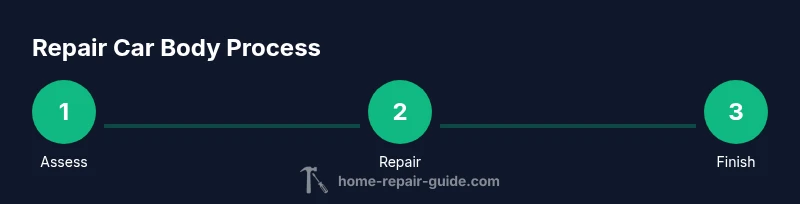
A structured process helps prevent mistakes that can worsen the damage or compromise finish quality. Begin with a clean, dry surface and a plan for how you will restore shape, alignment, and paint. Work in stages: assess and access, remove loose material, repair dents, apply body filler, sand smooth, apply primer, then finish with the base color and clear coat. Allow appropriate drying times between layers, and keep masking tape aligned to protect edges. This approach reduces rework and improves the final durability of the repair car body work.
Addressing Common Issues: Dents, Rust, and Panel Replacements
Not all body damage is the same. Small dents on non-structural panels respond well to careful hammer-and-dolly work and filler, while deeper creases may require heat and metal straightening. Rust must be removed and treated to prevent spread before filler is applied. For compromised panels or structural sections, replacement often yields the safest, most reliable result. This section helps you triage issues and decide when a panel replacement is warranted rather than a cosmetic fix.
Finishing Touches: Primer, Paint, and Curing
Finishing steps determine how good the repair looks and how well it lasts. After smoothing the repaired surface, apply a high-quality automotive primer, then a matched base coat and clear coat. Proper thinning, spray technique, and curing conditions affect color match and gloss. Always test color in a small patch first and follow the paint manufacturer’s drying times. A proper finish protects against corrosion and maintains resale value of the vehicle, completing the repair car body project with a professional look.
When to Call a Pro vs DIY: Making the Right Choice
DIY repairs save money on small cosmetic fixes but risk safety and warranty concerns on larger repairs. If the damage involves structural members, alignment, airbag sensors, or rust that penetrates through metal, professional service is strongly advised. Consider your own experience, access to tools, and local regulations when deciding whether to tackle the job or hire a shop to ensure the repair car body is safe and compliant.
Maintenance and Safety: Prolonging the Repair
After completing the repair car body, regular maintenance extends the life of the finish. Wash the vehicle gently with non-abrasive soap, avoid direct sunlight for paint curing, and apply wax after the paint has fully cured. Inspect for signs of rust or bubbling paint every few months, and address issues promptly to prevent costly future repairs. Proper storage and climate control in the garage can reduce moisture and corrosion risk, protecting the investment in your vehicle.
Tools & Materials
- Car body repair toolkit (hammer, dollies, pry tools)(Essential for reshaping metal and accessing dented areas)
- Safety gear (gloves, goggles, respirator)(Protects eyes, lungs, and skin from debris and fumes)
- Body filler (bondo) and hardener(Used to fill dents after metalwork)
- Putty knives and plastic spreaders(For applying and smoothing body filler)
- Dual-action sander and assorted sandpapers (80-600 grit)(Soft sanding helps feather edges and create a smooth finish)
- Masking tape and paper(Protects surrounding areas during painting)
- Automotive primer, base coat, and clear coat(Provides adhesion, color, and top-layer protection)
- Paint booth or well-ventilated area with extraction(Reduces inhalation risks and improves finish)
- Rags and solvents (lint-free)(For cleaning and prep work)
- Soap and water or degreaser(Prepares surface by removing oils)
- Measuring tools and color-matching guides(Helpful for color accuracy)
Steps
Estimated time: 6-12 hours
- 1
Assess damage and plan
Begin with a thorough visual inspection of the affected area. Identify whether the damage is cosmetic or structural and decide on the best repair approach. Document any rust, cracks, or creases and plan masking to protect adjacent panels during the process.
Tip: Take photos from multiple angles to guide your repair plan. - 2
Prepare the work area and safety setup
Set up a clean, well-ventilated workspace. Put on your safety gear, cover nearby painted surfaces with masking material, and disconnect any electrical components nearby if accessible. A tidy start reduces rework later.
Tip: Ventilation is critical when sanding and applying primer. - 3
Access and rough out the dent
Use a hammer and dolly to gradually reshape the metal around the dent. Work from the edges toward the center to avoid creating new distortions. If metal stretches, massage it back toward a flat contour.
Tip: Keep blows light and controlled to prevent tearing the metal. - 4
Apply body filler and blend
Mix the filler with hardener as directed and apply a thin layer over the repaired area. Smooth with a spreader, then allow to cure as recommended by the product. Feather the edges so they blend with the surrounding panel.
Tip: Apply in thin coats; multiple light coats yield a smoother finish. - 5
Sand and refine the surface
Sand the filled area with progressively finer grit, starting at 80-120 and finishing near 400-600. Check for low spots and re-sand until the surface is flat and even with the surrounding area.
Tip: Keep the sanding strokes even and avoid gouging the surface. - 6
Prime, color, and finish
Wipe the area clean, apply primer, and let it dry fully. Match the color with the factory shade and apply base coat in smooth, even passes. Seal with a clear coat, cure, and buff lightly for shine.
Tip: Test color on a small panel before full application. - 7
Inspect, cure, and maintain
After curing, inspect the finish for uniform color, gloss, and absence of runs. Remove masking materials and wash the area. Schedule periodic checks to catch any signs of rust or paint failure early.
Tip: Cold or humid conditions can affect curing; allow extra time if needed.
FAQ
Is it legal to repair a car body yourself, and are there safety regulations to follow?
DIY repairs are generally legal, but you must comply with local regulations on vehicle modifications and painting. For safety, use proper PPE and work in a ventilated area. Complex repairs affecting safety components should be done by a professional.
DIY car body work is usually legal, but check local rules. Use PPE and ventilated spaces, and consult a pro for structural repairs.
When should I avoid DIY and hire a professional for dent repair?
If the dent involves structural members, alignment, or hidden safety sensors, hire a professional. Cosmetic dents on non-structural panels may be DIY-friendly with the right tools.
If the dent affects structure or safety sensors, it's best to hire a professional. For cosmetic dents, DIY is often feasible.
Can I paint my car body at home, and what safety steps are essential?
Yes, you can paint at home in a well-ventilated area with proper masking and PPE. Follow the paint manufacturer's directions, ensure correct color matching, and use a compatible clear coat.
You can paint at home if you ventilate the area, mask off areas, and follow the paint directions.
What costs should I expect with DIY car body repair?
Costs vary widely based on materials and the extent of damage. Budget for quality filler, primer, paint, and safety equipment, plus potential tool investments, and plan for occasional rework if corrections are needed.
Costs depend on materials and how much damage there is; plan for fillers, paints, and safety gear.
What safety gear is essential for car body repair?
Always wear gloves, eye protection, and a respirator or good mask when sanding, painting, or using solvents. Ensure good ventilation and keep a clean, dry workspace.
Wear gloves, eye protection, and a respirator; work in a ventilated area.
How long does a typical DIY body repair take?
Time varies with damage size and your experience. Expect several hours for small repairs and longer for larger dents or repainting, including drying times between steps.
It can take several hours to complete, depending on damage and your experience, with drying times between steps.
Watch Video
Key Takeaways
- Plan repairs before starting to avoid rework
- Use proper PPE and a well-ventilated space
- Feather edges and smooth surfaces for a durable finish
- Color match accurately and allow full cure times
- Know when to call a professional for structural work