Repair Drive Shaft: A Complete Step-by-Step Guide for DIY
Learn how to diagnose, repair, and replace worn drive shaft components safely. This guide covers essential tools, step-by-step instructions, safety tips, and when to seek professional help to protect your vehicle.


By the end of this guide, you will be able to diagnose common drive shaft problems, identify worn joints, and perform a safe, basic repair or replacement. You’ll need common automotive tools, a clean workspace, and proper PPE. This step-by-step approach emphasizes safety, torque accuracy, and reassembly checks to restore drivetrain reliability.
Why Drive Shaft Repair Matters
The drive shaft is a critical drivetrain component that transfers engine torque to the wheels. If the shaft or its joints wear or fail, you may notice vibrations, clunking noises, or handling instability. A failed drive shaft can cause loss of propulsion, leading to hazardous situations on the road. According to Home Repair Guide, addressing these issues early reduces the risk of further damage and can save money on more extensive repairs later. This guide focuses on safety, accurate diagnosis, and reliable repair practices so homeowners and DIY enthusiasts can restore driveline integrity without compromising vehicle safety.
Before starting, understand that a drive shaft integrates with CV joints, boots, and yokes; damage can be intermittent or progressive. The repair may involve replacing boots, CV joints, or the entire shaft, depending on wear. Always verify compatibility with your vehicle's make, model, and year. Using the correct parts and following torque specs ensures smooth reassembly and balanced operation. The consequences of neglect range from excessive vibrations to accelerated tire wear, steering pull, and even transmission damage if the joint seizes.
Common Drive Shaft Symptoms You Might Notice
Several telltale signs point to drive shaft wear. You might feel a rhythmic vibration that worsens with speed, a clunking or banging noise when accelerating or decelerating, or a noticeable driveline wobble at certain RPMs. Steering feel may become inconsistent, and you may notice increased tire wear on the front or rear due to abnormal balance. In many cases, the issue originates from worn CV joints or a cracked boot that leaks grease and lets dirt in. According to Home Repair Guide, a systematic inspection of joints, boots, and mounting flanges is essential to avoid misdiagnosis and unnecessary part replacement. A thorough visual check alongside a shake test can reveal looseness, rust, or damaged splines that warrant further testing.
Tools and Safety Precautions
Safety first is the guiding principle for any drive shaft work. Always chock wheels, engage the parking brake, and use wheel stops. A solid four-point lift with certified jack stands is essential for raising the vehicle. Wear safety glasses, gloves, and closed-toe shoes. Use a torque wrench for critical fasteners and keep a clean workspace to prevent dropped parts. Common tools include a floor jack, a set of metric sockets, a pry bar, and a bearing or CV joint puller if needed. If you don’t have a means to safely support the vehicle or balance parts, seek professional assistance. Home Repair Guide emphasizes never relying on a jack alone and always following the vehicle manufacturer’s torque specifications.
Diagnosing CV Joint Wear and Boot Damage
CV joints and boots are the most frequent failure points in a drive shaft. A torn boot lets grease escape and dirt ingress, accelerating joint wear. Signs of CV joint wear include increased shaft play, clicking under turns, and a noticeable grease smear around the joint area. Use a flashlight to inspect boot integrity, grease condition, and any cracks along the boot. If you find torn boots or excessive grease loss, plan for boot replacement or joint replacement. A dial indicator or runout measurement can help gauge shaft bending, though many DIYers rely on visual inspection and felt play checks when short on equipment. Safety comes first; if excessive wobble is present, do not drive the vehicle.
Replacement Options: Rebuild vs. Replace
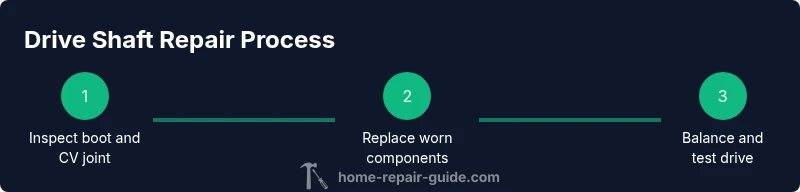
Deciding between rebuilding a CV joint or replacing the entire drive shaft depends on damage extent, part availability, and cost. A boot replacement is less involved than a full joint rebuild. If multiple joints show wear, or the shaft is bent, replacing the entire shaft may be more economical and reliable in the long run. Remanufactured or new shafts come with varying warranties and balancing requirements; compare prices and ensure compatibility with your vehicle’s transmission and differential. Home Repair Guide notes that balancing after installation minimizes vibrations and extends component life.
Preparation and Removal Steps
Begin by securing the vehicle and removing the necessary components to access the drive shaft. Mark the shafts and flanges for reassembly to preserve alignment. Disconnect the battery only if you are near electrical components; otherwise you can proceed with ignition off. Loosen the driveshaft mounting bolts, support the shaft, and carefully slide the shaft out of its yokes. Inspect mounting hardware and the mating surfaces for burrs or damage. If you encounter stubborn fasteners, apply penetrating oil and give them time to soak before attempting removal. Always keep fasteners organized to avoid misplacement.
Installing and Rebalancing the Drive Shaft
When installing a replacement shaft or rebuilt joints, align all marks and slide the drive shaft into place with gentle pressure. Reattach flanges and bolts by hand first, then torque to the manufacturer’s specification in a crisscross pattern to ensure even clamping force. Check for any binding or misalignment before tightening fully. If you have access to a balancing tool, balance the shaft to remove residual vibration; otherwise, have the balancing done at a shop. After installation, lower the vehicle, torque wheel lug nuts to spec, and test drive slowly to listen for abnormal noises.
Post-Repair Testing and Maintenance
Start with a low-speed test drive in a safe area, listening for vibrations, clunks, or binding through turns. Recheck fasteners that interact with the wheel studs, axle yokes, and transmission flange after a short drive. Regularly inspect the boots for cracks and re-grease joints as needed. Schedule a follow-up inspection if you notice unusual vibrations or a change in handling. Proactive maintenance extends driveline life and improves safety, saving you from more extensive repairs down the line.
Common Mistakes to Avoid and When to Seek Help
Avoid assumes that a simple patch fixes a worn drive shaft. Do not ignore vibrations or odd noises, which can indicate internal damage. Never drive a vehicle with a known joint or boot failure; this can lead to sudden loss of drive and potential injury. If you are not confident with auto repair or lack a safe workspace, consult a certified mechanic. The extra cost of professional service may be offset by preventing additional damage and ensuring proper alignment and torque specs.
Tools & Materials
- Floor jack(Use with jack stands; never rely on a jack alone)
- Jack stands(Four points on solid ground)
- Wheel chocks(Place both behind and in front of the wheels)
- Lug wrench(For wheel removal)
- Metric socket set(Includes deep sockets for flanges)
- Torque wrench(To spec on all fasteners)
- Pry bars(For loosening stubborn joints)
- Bearing/CV joint puller(Useful but not always needed)
- Replacement CV joint or drive shaft(Check compatibility with model year)
- Grease and lubricants(Use appropriate CV grease)
- Shop rags(Clean surfaces to avoid contamination)
- Safety glasses(Eye protection required)
- Gloves(Impact and cut resistance preferred)
- Penetrating oil(Helpful for stubborn bolts)
Steps
Estimated time: 3-5 hours
- 1
Prepare workspace and secure vehicle
Park on a flat surface, apply parking brake, and place wheel chocks. Gather all tools and ensure you have a clear workspace. Lift the vehicle using a floor jack and support with jack stands on solid ground.
Tip: Double-check wheel chocks before lifting; never work under a vehicle supported only by a jack. - 2
Identify symptoms and plan service
Document noises, vibrations, or handling issues. Compare symptoms with CV joint wear indicators and boot damage. Decide whether to replace boots, joints, or the entire shaft based on inspection.
Tip: Take photos during disassembly to aid reassembly and part orientation. - 3
Raise and secure the vehicle
Loosen the lug nuts while the car is on the ground. Lift the vehicle and place stands under the recommended lift points. Remove the wheel after securing the vehicle.
Tip: Wait until the vehicle is stable and all movement stops before proceeding. - 4
Disconnect and remove the drive shaft
Disconnect the shaft from the transmission side first, then from the differential or wheel hub, depending on layout. Support the shaft as you release the clamps and bolts to prevent dropping.
Tip: Keep fasteners organized and note their original locations. - 5
Inspect parts and determine replacement path
Examine CV joints, boots, and shaft for cracks, excessive play, or corrosion. If multiple joints show wear or the shaft is bent, plan for replacement rather than patching.
Tip: If a boot is torn, replace it early to prevent dirt ingress. - 6
Install or replace components
Install new CV joints or a complete shaft, aligning any marks noted during removal. Reattach bolts by hand then torque to spec in a cross pattern to ensure even clamping.
Tip: Use blue threadlocker on threaded fasteners if recommended by the manufacturer. - 7
Reinstall and balance the shaft
Reconnect the shaft to transmission and differential, then torque fasteners to spec. If balancing equipment is available, balance the shaft; otherwise have it balanced professionally.
Tip: Ensure the shaft is seated completely before tightening final fasteners. - 8
Test, reassemble, and finalize
Reinstall the wheel, lower the vehicle, and torque lug nuts to spec. Take a cautious test drive, listen for vibrations, and recheck fasteners after the drive.
Tip: Monitor for leaks or unusual noises in the first 20 miles after repair.
FAQ
Can I repair a drive shaft at home
Yes, if you have a solid mechanical skill set and a safe workspace. For complex shaft failures or limited tools, professional service is recommended.
Yes, you can, if you have mechanical skills and a safe workspace; otherwise consider professional service.
What are common signs of drive shaft damage
Look for vibrations, clunking noises, and irregular handling. Boots that leak grease or visible joint play are warning indicators.
Vibrations, clunking sounds, and boot grease leakage are common signs.
Is it cheaper to rebuild or replace a drive shaft
Replacement is often more reliable when multiple joints wear or the shaft is bent. Rebuilds can be economical for single joint issues if parts are available.
Replacement is often more reliable for multiple worn parts; rebuilds can be cheaper for a single issue if parts are available.
How long does a drive shaft repair take
Typical home repairs take a few hours, depending on access and tools. Complex cases can exceed that if parts are scarce.
Most repairs take several hours; complex cases may take longer if parts are hard to source.
Do I need to balance the drive shaft after replacement
Balancing reduces vibrations and ensures smooth operation. If a balancing machine isn’t available, have it balanced at a shop.
Balancing helps prevent vibrations; if you can't balance it yourself, have a shop do it.
Key Takeaways
- Inspect boots and joints for wear before repair
- Use proper torque specs and balanced parts
- Choose replacement path based on damage extent
- Test drive cautiously after repair