How to Cure Fix: Practical Home Repair Guide for Homeowners
Master a durable, step-by-step approach to cure and fix home problems. Learn how to diagnose, plan, gather tools, and verify results for lasting repairs.


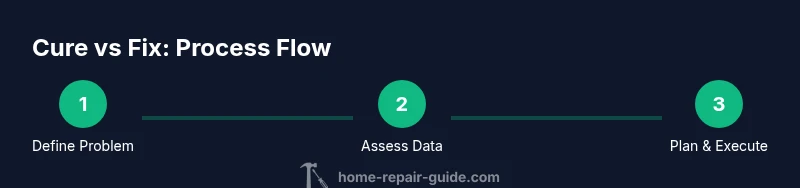
This guide teaches you how to cure fix problems in your home with a systematic approach: define the problem, decide between a cure or fix, plan the actions, gather the right tools, and test results before finalizing. By following a repeatable process, you reduce risk, save time, and achieve durable outcomes instead of quick, incomplete repairs.
Understanding the Cure vs Fix Mindset
In practical terms, learning how to cure fix problems starts with a mindset that prioritizes durable outcomes over quick, temporary solutions. A cure aims to resolve root causes, prevent recurrence, and improve overall system stability. A fix, by contrast, may restore function temporarily but often leaves underlying issues unaddressed. When you approach home repairs with a cure mindset, you map out causes, verify assumptions with evidence, and select remedies that stand up to use and time. Throughout this article, we’ll compare cure-oriented strategies with traditional fixes, providing concrete steps you can apply to almost any domestic scenario. Homeowners and renters alike will gain confidence by adopting a repeatable framework, supported by practical examples and checks from the Home Repair Guide team.
This initial orientation sets the stage for a disciplined workflow that reduces risk and avoids costly rework. By embracing the distinction between cure and fix, you’ll make smarter choices about materials, tools, and methods, and you’ll document why a chosen approach delivers lasting results.
Define the Problem Precisely
Before you touch a device, a wall, or a pipe, define the problem in observable terms. Describe what is happening, when it started, and under what conditions. Ask yourself questions like: Is the symptom reproducible? Does it affect safety, efficiency, or comfort? Write a concise problem statement that captures the core issue without mystery or guesswork. This clarity becomes the benchmark against which you judge potential cures. The more specific your description, the easier it is to avoid scope creep and to select remedies that truly address the root cause. In this stage, you may generate a short hypothesis about likely causes, but resist acting on assumptions alone; collect evidence first to support or refute them.
A well-defined problem also informs risk assessment and helps you set realistic expectations for time, cost, and disruption. When you’re tempted to rush, slow down and articulate the problem in measurable terms—this is the cornerstone of a successful cure.
Gather Observations and Baseline Data
Observations provide the behavioral evidence that moves you from guesswork to validation. Take photos, jot measurements, and note environmental factors such as temperature, humidity, and usage patterns. Establish a baseline for performance where possible: current efficiency, noise levels, leak rates, cycle times, or functional thresholds. Baseline data lets you quantify improvement after the cure or fix is applied and makes it easier to determine whether results are durable rather than temporary.
Record findings in a dedicated notebook or digital log. Include timestamps and any relevant codes or model numbers. If you’re dealing with a recurring problem, compare current observations with past records to identify trends. Clear data reduces ambiguity and supports clear decision-making as you progress.
Assess Risks, Costs, and Constraints
A thorough assessment weighs safety, cost, and practicality before committing to an approach. Identify potential hazards—electrical work, gas, heights, sharp edges—and plan controls such as shutting off power, using PPE, or employing a helper. Consider the total cost of ownership: materials, tools, disposal, downtime, and possible impacts on warranties. Also map constraints like access limitations, space, noise, and times when occupants are present. By evaluating risks early, you can choose a cure that minimizes danger and downtime while delivering durable improvements. If costs or risks exceed reasonable bounds, reframe the problem or scale the solution to a safer, incremental cure.
Choose a Cure Strategy: Repair, Replace, or Reengineer
With a precise problem statement and a risk/ cost picture, decide among three broad strategies. A cure focuses on eliminating root causes through durable interventions, a fix repairs symptoms for a short period, and reengineering changes how a system functions to prevent recurrence. The right choice depends on reliability needs, budget, and availability of parts. For instance, replacing a worn component with a newer, higher-quality part may deliver longer life than a patch, while a redesign might prevent future failures. Document the rationale for your choice so future homeowners understand why this approach was selected.
When in doubt, favor cures that improve safety and longevity, even if they require more planning upfront. This often yields fewer callbacks and less maintenance in the long run.
Plan the Steps and Gather Tools
Translate the chosen strategy into a concrete plan. Break the work into discrete steps, sequence them logically, and assign approximate durations. Create a materials list and a tool shortlist, prioritizing essential items. Planning also includes safety checks, isolation steps (like turning off circuits or shutting valves), and contingency options if a step takes longer than expected. A clear plan reduces decision fatigue mid-project and helps you stay on track when surprises arise. Include a communication plan if others live in the space, so everyone knows what to expect and when.
A well-structured plan increases the odds of a successful cure and reduces the risk of defects creeping back after a fix is completed.
Plan the Steps and Gather Tools
Execute with Safe, Repeatable Procedures: When you implement the plan, follow defined steps in order and minimize deviations. Use lockout/tagout practices for electrical work, wear safety gear, and work in well-ventilated spaces. If a step requires waiting (for drying, curing, or settling), document exact wait times and use that as a cue to prepare the next action. Document each action with a notebook entry or photos, so you can review decisions later and train others if needed. A repeatable process reduces variability, which is critical for durability.
This stage emphasizes discipline and accuracy, not speed. Rushing can undermine the integrity of a cure and invite rework.
Execute the Plan and Verify Home Performance
Now you perform the interventions described in your plan. Take accurate measurements, test under normal operating conditions, and observe whether the cure meets the predefined criteria. If a problem persists, re-evaluate the root cause and adjust the approach. In many cases, you’ll find you need a small adjustment or an additional remedy to fully cure the issue. Keep safety as a priority and avoid over-tightening or forcing components, which can cause hidden damage.
Verification is not a one-off moment; it’s an ongoing check. Schedule short tests over several days to confirm long-term stability and performance. A durable cure should remain reliable under varied conditions.
Test, Validate, and Iterate
Validation closes the loop: you confirm that the remedy addressed the root cause and that normal operation is restored. Compare post-intervention data with your baseline, note improvements, and capture any unexpected side effects. If the cure didn’t fully succeed, revisit the hypothesis, adjust the plan, and re-run the steps. Iteration is a natural part of complex repairs and often leads to better outcomes than a single attempt.
Document lessons learned, update the maintenance schedule, and set triggers for future checks. This creates a proactive approach rather than a reactive one.
Common Pitfalls and Quick Recovery Tactics
Even well-planned cures can stumble into common pitfalls. Misidentifying the root cause leads to a repeated cycle of fixes. Incomplete data can hide contributing factors, while skipping safety checks can create new hazards. To recover quickly, pause, re-check the problem statement against observations, and re-validate options with updated information. If you must, revert a step safely and adjust the plan rather than forcing a suboptimal solution. Regular reviews keep your cure durable and your space safer.
Quick Start Checklists for Common Scenarios
For typical home repair tasks, a concise, repeatable checklist helps you move from diagnosis to action without forgetting critical steps. Start with problem definition, then verify safety, gather materials, follow steps in order, test thoroughly, and document outcomes. Use these checklists as living documents you update after every project so you improve over time.
Tools & Materials
- Tape measure(At least 25 feet; metric equivalent acceptable)
- Screwdriver set (flathead & Phillips)(Cross-check sizes for common fasteners)
- Multimeter(For electrical checks; use proper safety gear)
- Voltage tester(Non-contact preferred for safety)
- Pliers and adjustable wrench(Needle-nose pliers helpful)
- Safety glasses(Protect eyes from debris)
- Gloves(Insulated gloves for electrical work)
- Notebook or logbook(Capture baseline, steps, and results)
- Sealant, tape, or adhesive (as needed)(Match material to repair area)
- Cleaning rags and solvents(Prepare surfaces for bonding)
Steps
Estimated time: 2-4 hours
- 1
Define the Problem
Articulate the issue in observable terms, including symptoms, location, and time of onset. Write a concise problem statement to guide the rest of the process.
Tip: Keep the statement testable; aim for a single root cause hypothesis. - 2
Assess Baseline Data
Collect measurements, take photos, and note operating conditions to establish a reference point for later comparison.
Tip: Photographic records reduce ambiguity when comparing before-and-after states. - 3
Identify Cure vs Fix Options
List potential solutions and categorize as cure-oriented (root cause) or fix-oriented (symptom).
Tip: Prioritize cures that address root causes and improve safety. - 4
Plan the Intervention
Break the solution into sequential actions with clear milestones and safety steps.
Tip: Include contingencies if a step cannot be completed as planned. - 5
Prepare Tools and Materials
Assemble essential items from the toolbox and verify compatibility with the repair area.
Tip: Double-check part numbers and compatibility before starting. - 6
Execute the Approach
Carry out steps in order, following safety protocols and recording any deviations for later review.
Tip: Proceed slowly in the early stages to avoid mistakes. - 7
Test Functionality
Reconnect utilities if disconnected, power up, and observe for expected behavior under normal use.
Tip: Test under multiple conditions to expose hidden issues. - 8
Verify Results
Compare post-intervention data to baseline and confirm whether the objective is met.
Tip: If not met, return to the hypothesis and adapt the plan. - 9
Document and Maintain
Record outcomes, lessons learned, and a maintenance plan to prevent recurrence.
Tip: Set reminders for future checks and updates.
FAQ
What is the difference between curing and fixing in home repairs?
Curing targets the root cause to prevent recurrence and improve long-term reliability. Fixing typically addresses the symptom to restore function quickly, but may not prevent future problems.
Curing means solving the underlying issue, not just the symptom. Fixing gets things working again, but may need rework later.
When should I choose a cure over a quick fix?
Choose a cure when safety, longevity, or recurring failures are at stake. Quick fixes are acceptable for non-critical, temporary relief, but should be followed by a durable cure when possible.
If safety or frequent failures are involved, aim for a cure rather than a temporary fix.
How long should a cured repair last?
Durability depends on materials, load, and environment. Plan for maintenance and periodic checks to ensure continued performance over time.
Durability varies; expect some maintenance and rechecks to keep it solid.
What safety considerations matter most?
Shut off power or valves when needed, wear PPE, and ensure proper ventilation. Never overlook electrical or gas-related tasks without proper training.
Safety first: power off, PPE on, follow ventilation rules, and never skip essential precautions.
Do I need a professional for complex problems?
For electrical, gas, or structural tasks, consult a licensed professional. For simpler issues, a well-planned cure may suffice, but know your limits.
If it involves wiring, gas, or structure, call a pro. For simple tasks, you can proceed with caution.
How do I estimate costs for a cure vs fix?
Compare material costs, tool investments, labor time, and potential rework. A durable cure often has higher upfront costs but lowers long-term expenses.
Estimate upfront costs, then weigh long-term savings from a durable cure.
What if the cure introduces new issues?
Revert to the problem definition, review data, and test alternative approaches. Document findings and adjust the plan accordingly.
If new issues show up, go back to the plan and test another approach.
How often should I review maintenance after curing?
Schedule periodic checks based on usage and environment. Document reminders and adjust as needed when conditions change.
Set reminders for regular checks and adjust as your space changes.
Watch Video
Key Takeaways
- Define the problem clearly before acting
- Prefer cures over quick fixes for durable results
- Verify results with data and tests
- Document the process for future maintenance