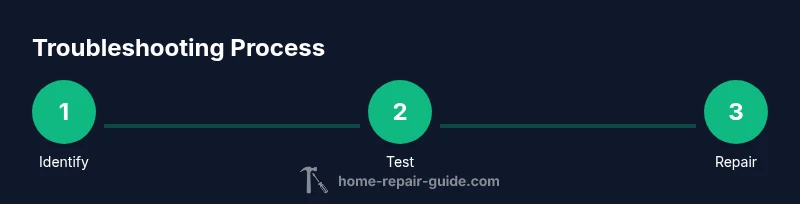
How to Fix the Issue: A Practical Step-by-Step Guide
Learn a proven, safety-first approach to diagnose and fix common home issues. This step-by-step guide covers planning, tools, safety, and practical tips from Home Repair Guide to help homeowners repair confidently.


How to fix the issue starts with a structured plan you can follow for most common home repairs. This guide outlines a repeatable process: assess the symptom, verify safety, collect the right tools, execute a controlled fix, test, and document results. By staying methodical, you reduce risk and improve long-term reliability, all while minimizing unnecessary costs.
Understanding the issue and how to fix the issue
Most household problems share a common pattern: symptoms, causes, and a path to repair. The phrase how to fix the issue points to a repeatable method: observe the symptom, verify assumptions, gather the right tools, apply a controlled fix, and confirm success. According to Home Repair Guide, starting with a clear definition of the problem and setting safety boundaries saves time and reduces risk. The Home Repair Guide team found that documenting symptoms before you touch any parts helps you stay focused and avoid chasing the wrong cause. In practice, begin by noting when the issue occurs, what you were doing at the time, and any warning signs like smoke, heat, unusual noises, or leaks. This baseline description becomes your reference as you test fixes and verify outcomes. By framing the issue this way, you create a testable hypothesis, not a guess, and you establish a repeatable workflow for future repairs. This approach keeps repairs consistent, minimizes unnecessary disassembly, and helps you decide whether the problem is a simple tune-up or something that needs professional input.
A practical diagnostic framework
Adopt a simple three-question framework: What changed? When does it happen? What has the most leverage to fix it? Gather information such as timing, conditions, and affected components. Use a process of elimination: check power and safety preconditions, then test individual subsystems one by one. This method reduces guesswork and helps you identify the most probable root cause. For electrical or plumbing issues, testing a single variable at a time and recording results yields the clearest evidence. Keep your notes organized so you can trace which test resulted in improvement and which did not. The framework works across many repairs and aligns with Home Repair Guide guidance to stay systematic rather than reactive.
Safety first: PPE and risk assessment
No repair is worth risking your safety. Before you touch anything, put on appropriate PPE: safety goggles, gloves, and closed-toe shoes. If you’ll be working near electrical circuits or hot components, switch off power at the breaker and verify with a voltage tester. Identify hazardous conditions such as exposed wiring, sharp edges, or moisture. Create a dry workspace, keep a clear exit path, and have a fire extinguisher within reach. If you’re unsure about what you’re handling, pause and seek guidance. The Home Repair Guide analysis highlights that many incidents occur when people skip safety steps or rush a fix. Your goal is to minimize risk while you gather data and prepare to test potential solutions.
Tools and materials you’ll need
Before you start, assemble a basic toolkit and the few items that uniquely fit your issue. A well-chosen set saves time and reduces errors during disassembly and reassembly. Essential items include a safety kit (gloves and goggles), a set of screwdrivers, an adjustable wrench, a voltage tester for electrical work, pliers, a utility knife, and a flashlight. For certain checks, a multimeter or a spare replacement part may be needed. Keep parts organized in labeled bags or containers, and document where each piece came from to ease reassembly. If you’re unsure what to bring, err on the side of simplicity: you can always acquire extra tools mid-project if necessary.
Step-by-step troubleshooting workflow (Part 1)
The first phase of troubleshooting focuses on isolating the issue and validating basic conditions. Identify the symptom and suspected causes: write down the exact behavior, when it happens, and what triggers it. This becomes your hypothesis. Pro tip: take photos of the area before you move anything. Secure the area and power down when needed: if there’s any risk of shock or fire, shut off power at the source and confirm with a tester. Warn others in the home about the work to reduce interruptions. Check safety and environmental conditions: ensure moisture levels, temperature, and ventilation won’t affect the repair; keep a dry workspace and avoid confined spaces if you’re uncertain.
Step-by-step troubleshooting workflow (Part 2)
Move to more targeted tests once you’ve validated basic conditions. Test one variable at a time, such as replacing a suspect component or reseating a connector. Document each result clearly—this creates a traceable path to the actual fix. If a fix is successful, proceed to secure and reassemble parts with proper torque and alignment. If nothing works, you’ve likely reached the limit of a simple repair and should consider professional guidance. The goal is to advance in clear, deliberate steps rather than heroic improvisation.
Replacing components vs patches: decision guide
When deciding between replacement and patching, weigh the component’s age, reliability, and safety. If a part shows visible wear, corrosion, or repeated failures, replacement is usually wiser. Patching can be appropriate for cosmetic issues or temporary stabilization, but it should be clearly documented and time-limited. Always verify compatibility and have backups ready. For critical systems, such as main electrical panels or gas lines, professional replacement is typically the safest route.
Post-fix testing and documentation
After applying a fix, re-test under normal operating conditions to confirm stability. Run the system through a full cycle or typical usage pattern and watch for any recurring signs of trouble. Document the results: note the exact test, the outcome, and the final checks performed. This record helps you diagnose future issues more quickly and provides a reference for future maintenance.
Common mistakes to avoid
Avoid rushing, skipping safety steps, and guessing parts or causes. Don’t ignore unusual sounds, smells, or heat—these can indicate deeper problems. Never work on live electrical circuits without proper PPE and testing. Mislabeling wires or misaligning components can create new problems; always double-check connections and torque settings.
Maintenance tips to prevent recurrence
Create a simple maintenance routine: inspect at regular intervals, keep a small tool kit handy, and replace worn parts before they fail. Keep notes of repairs and outcomes, so future fixes are faster and safer. By building a habit of methodical checks, you reduce the likelihood of unexpected breakdowns and improve overall reliability.
Tools & Materials
- Safety gear (gloves, goggles, closed-toe shoes)(Essential for all tasks)
- Flathead screwdriver(Use #2 or similar for most screws)
- Phillips screwdriver(Sizes #1-2 commonly needed)
- Adjustable wrench(Covers 6-19 mm fittings)
- Voltage tester(Verify circuits before touching)
- Pliers (needle-nose)(Grip small parts and wires)
- Utility knife(Cut material if needed)
- Multimeter(Advanced diagnostic tool)
Steps
Estimated time: 60-90 minutes
- 1
Identify the symptom and suspected causes
Document the exact behavior, timing, and triggers. Form a clear hypothesis about what is most likely failing. This focused approach reduces unnecessary disassembly and speeds up diagnosis.
Tip: Take photos before moving parts to preserve the original layout. - 2
Secure the area and power down when needed
Power down at the source when there’s risk of shock or fire. Verify with a tester and keep non-authorized people away from the workspace. This reduces the chance of accidents during the repair.
Tip: Lock the breaker or unplug devices to prevent accidental re-energizing. - 3
Check safety and environmental conditions
Ensure dryness, proper ventilation, and stable temperatures. A poor environment can affect repairs and safety. If moisture is present, pause and address it before proceeding.
Tip: Maintain a clean, well-lit workspace to avoid missteps. - 4
Test one variable at a time
Isolate potential causes by testing a single variable or component per trial. Record results methodically to build a evidence-based path to the fix.
Tip: Only change one factor per test to see its direct effect. - 5
Apply the chosen repair and secure components
Perform the repair with proper torque, alignment, and seating. Reassemble gradually, checking that nothing binds or misfits.
Tip: Tighten screws in a cross pattern to avoid warping. - 6
Test the result and clean up
Restore power, run a full test cycle, and verify stability under normal usage. Clean the work area and restore tools to their place for next time.
Tip: Document the outcome for future reference.
FAQ
What is the best general approach to fixing the issue?
Start with a clear definition of the symptom, verify safety, gather the right tools, and test one fix at a time. Document results to guide future repairs.
Start by defining the symptom, verify safety, and test one fix at a time. Keep notes to guide future repairs.
Can I diagnose the issue without specialized tools?
Many issues can be diagnosed with a basic toolkit and careful observation. For electrical work, a voltage tester is strongly recommended, and complex problems may require professional evaluation.
You can diagnose many issues with basic tools, but for electrical work, use a tester and consider a professional if uncertain.
Is it safe to attempt electrical repair myself?
Only if you have proper training and follow safety protocols. If in doubt, stop and consult a qualified electrician to avoid injury or fire risk.
Electrical work should only be done if you’re trained and follow safety rules; when unsure, call a pro.
When should I call a professional?
Call a professional if the issue involves gas, structural risk, high-voltage systems, or if your attempts don’t clearly isolate or solve the problem.
Call a professional if gas, structural risk, high voltage, or persistent failure is involved.
How do I determine if the fix is lasting?
Re-test the system under typical operating conditions for an extended period, and monitor for recurrence. Document whether the issue reappears after a defined usage window.
Test over a typical usage period and monitor for recurrence to confirm lasting results.
What if I can’t identify the root cause?
If unsure after thorough checks, step back, review notes, and seek professional assessment. A fresh diagnostic perspective can save time and prevent safety risk.
If you can’t identify the root cause, pause and get a professional evaluation.
Watch Video
Key Takeaways
- Plan before you act.
- Safety first saves time and nerves.
- Test one variable at a time for clarity.
- Document results for future repairs.