Garage Door Repair Fort Myers: Step-by-Step Guide
A practical, step-by-step guide for homeowners and renters in Fort Myers to diagnose, repair, and maintain garage doors safely. Learn when to DIY and when to call a pro, with climate-specific tips from Home Repair Guide.


Fort Myers homeowners can restore safe garage door operation by inspecting the opener, tracks, springs, and cables, then applying targeted fixes or calling a pro for high‑tension tasks. This guide covers safety checks, essential tools, and a clear step‑by‑step approach to help you decide when DIY is feasible and when professional help is necessary.
Why garage door repair fort myers matters
Fort Myers homeowners rely on a functional garage door for security, weather protection, and daily convenience. The salty coastal air, high humidity, and heavy summer use can accelerate wear on tracks, rollers, weather seals, and hardware. A door that operates smoothly reduces the risk of injuries and protects valuables stored in the garage. For residents, garage door repair fort myers requires attention to coastal humidity and salt exposure. The Home Repair Guide team notes that a planned maintenance approach tailored to Fort Myers climate helps extend life, minimize emergency calls, and save money over time. In practice, a quick inspection of components beyond the visible surface—such as springs, cables, and the opener’s safety features—can prevent costly breakdowns. Regular checks also help you spot rust, bent tracks, and worn weather seals before they cause door imbalance or unexpected closure. By understanding local conditions and the common failure points, you can prioritize tasks and plan a safe repair routine.
Safety first: hazards and precautions
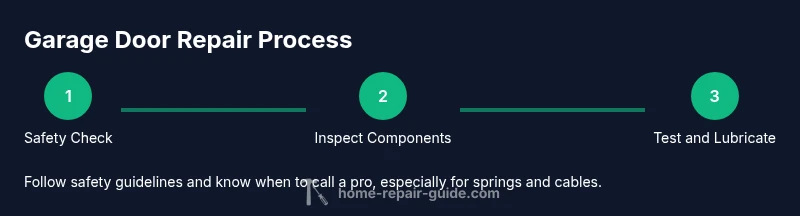
Garage doors are heavy and operate under high tension. Even a small misstep can cause serious injuries or property damage. Before you touch anything, unplug the opener, disconnect the power to the garage, and secure the door with a sturdy wedge. Wear safety glasses and gloves, and never place yourself under a door that you suspect is unbalanced. If you hear grinding, feel unusual looseness, or notice frayed cables, stop and call a professional.
Common failure points in Fort Myers climate
In coastal climates, corrosion and humidity stress tracks, rollers, and hardware; salt air accelerates rust, while heat can warp components. Springs and cables are critical; a worn spring reduces balance and can snap unexpectedly. Weather seals degrade, letting wind-driven debris into the garage. An intermittent opener may be a sensor issue or misaligned safety reversal. Understanding these typical failure points helps you triage issues quickly and decide whether a DIY fix is feasible or a pro is required.
Diagnosing problems: what to check
Start with a simple balance test: with the door closed, lift it halfway; if it holds steady, the balance is likely fine. Check that tracks are vertical and straight, and that there are no obstructions. Listen for rubbing sounds when the door moves, which can indicate misaligned rollers or bent tracks. Inspect weather seals for gaps. Finally, test the opener’s safety reversing mechanism by placing a small object in the path of the door.
DIY vs. professional: deciding when to call a pro
Minor maintenance like cleaning and lubricating tracks, tightening hardware, or replacing weather seals is usually doable for a confident DIYer. However, springs, cables, torsion systems, and any tasks requiring door weight support should be left to a licensed technician. If you hear unusual noises, notice resistance, or the door is unbalanced, schedule a professional inspection. A pro can provide a safety check and accurate parts assessment, reducing the risk of injury.
Tools and materials you may need
- Cordless drill
- Ladder (6-8 ft)
- Wrenches set (adjustable)
- Screwdrivers (Phillips and flat)
- Socket set
- Pliers (needle-nose and standard)
- Silicone-based lubricant spray
- Safety glasses
- Dust mask
- Measuring tape
- Replacement rollers/bearings (if advised by pro)
- Utility knife
Details: Use silicone-based lubricant on hinges, rollers, and tracks; avoid oil-based lubricants on nylon rollers; always follow the manufacturer’s recommendations.
Maintenance strategies for longevity
Create a simple quarterly maintenance routine that includes cleaning tracks, inspecting hardware, checking weather seals, and testing the safety features. Keep the hardware tight and replace worn weather seals to maintain energy efficiency and prevent drafts. If you live near the coast, rinse off salt spray from metal parts and re-lubricate annually. Document service dates to track wear and plan replacements before they fail.
Authority sources
- U.S. Consumer Product Safety Commission (CPSC): https://www.cpsc.gov
- Occupational Safety and Health Administration (OSHA): https://www.osha.gov
- U.S. Department of Energy (Energy.gov): https://www.energy.gov Note: Always verify the precise safety steps with local codes and a qualified professional.
Fort Myers-specific considerations and next steps
Fort Myers homeowners should schedule preventive checks twice a year, especially before hurricane season and after major storms. Keep a small checklist handy for quick quarterly audits and consider upgrading weather seals to improve energy efficiency and reduce moisture intrusion. If you notice persistent problems after a simple maintenance cycle, contact a licensed tech to perform a safety inspection and a professional-grade repair plan.
Tools & Materials
- Cordless drill(model with a fully charged battery)
- Ladder (6-8 ft)(stable with safety spreader)
- Wrenches set (adjustable)(include 1/2 in and 9/16 in sizes)
- Screwdrivers (Phillips and flat)(magnetic tips preferred)
- Socket set(for track bolts and hardware)
- Pliers (needle-nose and standard)(for grips and clips)
- Silicone-based lubricant spray(on hinges, rollers, and tracks)
- Safety glasses(eye protection)
- Dust mask(optional for dust; not essential for all tasks)
- Measuring tape(to check alignment and gaps)
- Replacement rollers/bearings(only if advised by pro)
- Utility knife(weatherstripping or trimming)
Steps
Estimated time: 60-90 minutes
- 1
Disconnect power and secure door
Unplug the garage door opener from its outlet and place a solid wedge under the door to prevent it from closing. This creates a safe working space and reduces the risk of sudden movement while you inspect parts.
Tip: Always verify power is off at the breaker panel if you cannot reach the outlet. - 2
Check door balance manually
With the door closed, lift it about halfway. It should stay in place if balanced. If it drifts or is hard to lift, the springs or tracks may be out of alignment and require professional attention.
Tip: Do not attempt to adjust springs yourself. - 3
Inspect tracks and rollers
Look for dents, gaps, and obstructions in the tracks. Wipe away dirt and apply a light coating of silicone lubricant to rollers and hinges. Ensure tracks are vertical and parallel.
Tip: Use a level to confirm vertical tracks and avoid misalignment. - 4
Lubricate moving parts
Lubricate hinges, rollers, and pivots with silicone-based spray. Wipe away any excess to prevent dirt buildup. Avoid lubricants on nylon rollers if not recommended by the manufacturer.
Tip: Lubrication should be light and targeted, not heavy. - 5
Test opener safety features
Reconnect power and test the auto-reverse function by placing a small object in the door path. If the door does not reverse, stop and seek professional help.
Tip: Keep hands and feet clear of moving parts during tests. - 6
Decide on springs and cables
If you see frayed cables, rusted springs, or uneven door travel, contact a licensed technician. Do not attempt to adjust or replace springs or cables yourself.
Tip: Ask for a written estimate and parts list before any work.
FAQ
Is Fort Myers climate affecting garage door components more than inland areas?
Coastal humidity and salt exposure can accelerate rust on metal parts and weather seal degradation. Regular inspection helps catch these issues early.
coastal humidity can speed up wear; check seals and tracks more often.
Can I fix a noisy garage door myself?
Yes, some noises come from lubrication, loose hardware, or misaligned tracks. Do not attempt to adjust springs.
Noise can often be solved with lubrication or tightening, but springs aren’t DIY-safe.
When should I replace a garage door opener instead of repairing?
If the opener is old, has frequent failures, or lacks safety features, replacement may be more cost-effective than ongoing repairs.
If it keeps failing, consider a new opener with built-in safety features.
Are torsion springs safe to handle?
No. Torsion springs are dangerous and require a licensed technician to repair or replace.
Springs can cause serious injury; call a pro.
How long does a typical garage door repair take?
For straightforward issues, a repair can take 1-2 hours; complex tasks, especially springs, take longer and may require scheduling.
Most common fixes are quick, but springs take time.
What maintenance should I do monthly for Fort Myers doors?
Inspect weather seals, clean tracks, lubricate moving parts, and test safety features monthly or quarterly.
A quick monthly check can prevent big problems.
Watch Video
Key Takeaways
- Assess safety before touching the door
- Identify wear points early to save money
- DIY fixes are fine for rails, tracks, and lubrication, but springs require a pro
- Regular maintenance reduces unexpected failures
- Fort Myers climate requires periodic coil and seal checks