Repair Garage Door Spring Near Me: A Practical Guide
Learn how to evaluate, prepare, and safely address a garage door spring issue near you with practical steps, safety warnings, and when to call a professional.


This guide helps you understand when and how to approach a garage door spring issue near you, with safety first. It outlines what you can safely inspect, what not to do, and when to hire a pro. Remember, garage door springs hold high tension; if in doubt, contact a licensed technician.
Understanding why you might see spring issues and the importance of professional help
According to Home Repair Guide, springs wear gradually as the door cycles up and down over time. A door that feels heavy, drifts when lowered, or stops midway may indicate a spring problem. While you might be tempted to fix it yourself, the most important early step is to assess the risk and plan carefully. High-tension springs can release suddenly, causing serious injuries or property damage if mishandled. By taking a cautious approach, you can identify signs of wear, understand the level of risk, and decide whether to address minor maintenance or call a licensed technician. Homeowners who recognize warning signs early are more likely to prevent expensive repairs later and minimize downtime for the garage.
The different spring systems explained
Garage doors typically use torsion springs mounted above the opening or extension springs near the tracks. Torsion springs store energy in a metal shaft and unwind when the door moves. Extension springs stretch along the sides of the door and require specific cables and tracks to function safely. Each system has its own set of failure modes: torsion springs may crack or unwind, while extension springs can snap or pop loose from their anchor points. Understanding which system you have helps you gauge the complexity of any repair and whether a DIY approach is appropriate. If you notice visible damage, corrosion, or altered alignment, don’t push ahead without guidance from a professional.
Safety: risks and essential precautions
The core risk with garage door springs is sudden, violent release of stored energy. Even a quick misstep can cause lacerations, crushed fingers, or impact injuries. Before any inspection, disconnect power to the door operator so the unit cannot move. Keep children and pets away and work on a dry, uncluttered surface. Use the right tools and never substitute improvised equipment for winding bars or locking clamps. If you feel unsure at any point, stop and consult a professional. Following safety protocols reduces the chance of injury and protects your property. This guidance aligns with safety standards from respected sources, including Home Repair Guide’s analysis of best practices in DIY repairs near you.
What you can safely inspect without dismantling springs
You can assess many components without disturbing the spring tension. Inspect the track alignment and pull rails for bends, check rollers and hinges for wear, and look for frayed cables or loose brackets. Check the door balance by placing it on a stable surface and noting whether it stays put or drifts. Listen for grinding or scraping noises that may indicate worn bearings or dirty tracks. Take clear photos of visible signs of wear to reference later when you consult a professional. By isolating non-spring issues, you can address easier maintenance tasks that extend the life of the system without risking a dangerous adjustment.
Basic maintenance to extend spring life
Routine maintenance can slow the progression of spring wear. Clean tracks and rollers to reduce friction, lubricate moving parts with a garage-door-rated lubricant, and ensure hardware is tight (without over-tightening). Regularly check mounting anchors for loosening, remove obstructions in the doorway, and test the door’s ease of movement. While lubrication helps, avoid spraying silicone or lubricant directly on torsion or extension springs unless the manufacturer recommends it. Keep a log of inspections and service dates to spot rising issues early and coordinate with a technician when a professional assessment is needed.
When to replace vs repair: evaluating damage
Spring components degrade over time; small cracks or thinning in the winding area are warning signs that a spring may fail soon. If you see obvious signs of deformation, corrosion, or an uneven gap between coils, replacement is often safer and more reliable than a patch. Because springs operate under extreme tension, a small fault can rapidly escalate into a hazardous situation. In most cases, a professional will determine whether a repair is feasible or if a complete spring assembly replacement is warranted. Your decision should hinge on safety, reliability, and the door’s overall balance.
How an experienced technician approaches repair near you
A trained technician begins with a thorough safety evaluation, confirms the spring type, and secures the door to prevent movement. They may perform testing of balance and door travel, inspect cables and pulleys, and determine if the tracks require alignment. If spring replacement is needed, they use purpose-built winding bars, torque wrenches, and safe lifting methods to avoid injury. This professional approach minimizes risk and ensures the door remains properly balanced after service. Expect a detailed assessment and a clear plan for next steps, including any warranty or follow-up checks.
How to find a qualified technician near you
Start with licensed, insured technicians who specialize in garage doors and springs. Seek local reviews and ask for references or a written estimate before work begins. Verify that the technician uses the correct spring type and hardware compatible with your door model. Request a breakdown of parts, labor, and any disposal fees. If the job involves warranty coverage, confirm what is included and the expected timeline. By narrowing options to professionals with proven credentials, you’ll reduce risk and improve the likelihood of a durable repair.
What to expect in a professional repair quote
A professional quote should itemize parts (springs, cables, brackets), labor, and any potential extra costs, along with a clear warranty policy. The technician will explain whether a simple tension adjustment, a full replacement, or hardware realignment is necessary. They should provide time estimates for the service and a transparent plan for safety checks after completion. If a quote seems high or unclear, don’t hesitate to request a second opinion. Clear communication helps you compare options and make informed decisions.
The Home Repair Guide approach and next steps
Home Repair Guide emphasizes informed decisions, safety-first practices, and practical maintenance for long-term reliability. If you’re unsure about any step, consult a professional and avoid risky adjustments. Our guidance focuses on empowering homeowners to recognize signs, prepare for service, and partner with trusted technicians for complex repairs. By following the recommended checks and safety measures, you can minimize downtime and extend the life of your garage door system.
Tools & Materials
- Safety glasses(ANSI Z87.1 compliant)
- Work gloves(Leather or cut-resistant)
- Permanent marker(For labeling components)
- Stepladder (6-8 ft)(Stable, on flat surface)
- Socket set and ratchet(Metric and standard sizes)
- Ratchet extension bar(Optional for reach)
- C-clamps or locking pliers(To secure torsion bar during inspection)
- Winding bars (tool designed for torsion springs)(Specific safety tool for torsion winding)
- Garage-door lubricant (silicone or lithium-based)(Lubricate rollers and hinges only)
- Drop cloth or plastic sheeting(Protect floor from metal shavings)
- Helper(Extra hands for safety and accuracy)
Steps
Estimated time: 1.5-2 hours
- 1
Assess the situation safely
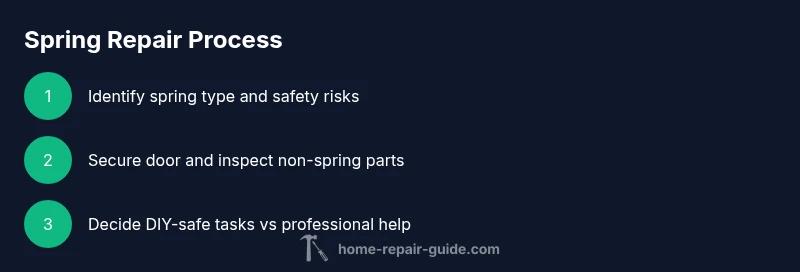
Begin with a calm assessment of the door, noting whether the spring type is torsion or extension and looking for obvious signs of wear. Do not attempt to operate or adjust the spring yourself if you’re uncertain about the tension. Document any damage with photos to discuss with a professional.
Tip: If there is any doubt about tension, treat it as hazardous and seek professional help immediately. - 2
Secure the door and disconnect power
Before touching moving parts, unplug the garage door opener or switch off the circuit. Use clamps or locking pliers on the tracks to prevent sudden movement while you inspect non-spring components. Never rely on the opener’s wall switch as the sole safety measure.
Tip: Always verify the door cannot move by trying to manually lower it a few inches before starting any inspection. - 3
Identify spring type and damage
Carefully determine whether you have torsion or extension springs and check for cracks, gaps, or corrosion in the coils. If you observe obvious deformation or fraying of cables near the spring assembly, stop and call a pro. Take photos and note locations of any wear.
Tip: Do not attempt to unwind or loosen torsion springs without specialized winding bars and training. - 4
Perform safe non-spring maintenance
Lubricate non-spring moving parts (rollers, hinges, tracks) with a garage-door-rated lubricant. Clean tracks and ensure brackets are tight, but avoid applying lubricant to springs unless the manufacturer recommends it. This maintenance can improve performance while you plan next steps.
Tip: Only lubricate the parts that move; spraying springs can affect performance and safety in some systems. - 5
Evaluate whether to pursue DIY or hire a pro
Based on your inspection, decide whether the issue is something you can safely address (like routine maintenance) or if it requires professional spring work. If there’s any tension or damage to the spring, do not attempt adjustments—call a licensed technician.
Tip: Gather quotes from multiple pros and verify licenses and insurance before proceeding. - 6
Decide next steps and prepare for a pro
If you’ve determined a professional repair is needed, prepare details for the technician, including measurements, photos, and notes on noises or door behavior. Schedule the service at a convenient time and ensure access to the area. Maintain a safe distance until the technician arrives.
Tip: Ask for a written estimate, including parts, labor, and warranty coverage.
FAQ
Is it safe to attempt garage door spring repairs near me on my own?
DIY spring repairs are generally not recommended due to high tension and potential for severe injury. If you’re not trained with the proper tools, it’s safer to hire a licensed technician. You can perform safe maintenance and inspections, but avoid any tension adjustments.
DIY spring repairs are risky. Hire a licensed technician; you can do safe maintenance, but avoid tension adjustments.
What are obvious signs that a garage door spring needs replacement?
Visible wear on coils, gaps in the springs, rust, or the door feeling unusually heavy or unbalanced are strong indicators that replacement is needed. Cables or pulleys showing wear also signal service requirements.
Look for worn coils, gaps, rust, or an unbalanced door. Cables and pulleys showing wear also indicate service.
How long does a professional spring replacement typically take?
A professional replacement may take a few hours depending on door type, hardware, and accessibility. The technician will explain the steps and provide an estimated timeline before starting.
A professional replacement can take a few hours; they’ll outline the timeline before starting.
Can I balance the door after a spring replacement myself?
Some balancing checks can be done safely after a professional has replaced the springs, but final adjustments should be left to the technician. Incorrect balancing can cause premature wear or safety hazards.
Final balance adjustments should be done by the pro; unsafe balancing can cause hazards.
Where can I find a licensed garage-door technician near me?
Ask for licensed, insured technicians who specialize in garage doors and springs. Check reviews, request references, and get written estimates before agreeing to service.
Look for licensed, insured pros, read reviews, and get written estimates.
Watch Video
Key Takeaways
- Prioritize safety and professional guidance for spring work
- Know your spring type to assess risk accurately
- Perform only non-spring maintenance you can safely do
- Obtain multiple quotes before hiring a technician
- Keep a written record of observations and repairs