What Size Service Cable for 200 Amp: A Practical Guide
A practical guide to sizing the service cable for a 200-amp electrical service, covering copper and aluminum options, calculation steps, voltage drop, and code considerations.


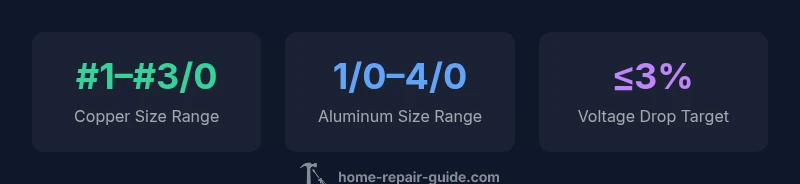
The typical service cable sizes for a 200-amp residential service vary by material: copper feeders commonly range from #1 AWG up to #3/0 AWG, while aluminum feeders range from 1/0 AWG to 4/0 AWG. Exact sizing depends on insulation rating, temperature rating, distance, and voltage drop; verify with NEC tables and a licensed electrician.
What size service cable for 200 amp: sizing basics
Sizing a service cable for a 200-amp panel is not about a single number; it depends on material, insulation type, temperature rating, run length, and voltage drop, among other factors. In residential work, two common conductor materials are copper and aluminum, each with its own ampacity and installation considerations. According to Home Repair Guide, the final size must comply with NEC rules and local amendments, and should be verified by a licensed electrician before any work begins. When you ask what size service cable for 200 amp, you should start by choosing the conductor material, then check amperage ratings at the temperature rating (60C, 75C, or 90C). Longer runs increase voltage drop, often requiring a larger conductor size to maintain performance and safety. Finally, plan for protective enclosures, proper bonding, grounding, and an inspection by the local authority having jurisdiction. This upfront sizing helps prevent nuisance trips, overheating, and future upgrades.
Copper vs aluminum: choosing the right conductor
Copper and aluminum differ in conductivity, cost, and ease of installation. Copper offers excellent conductivity and relatively small temperature rise under load, which can allow smaller physical sizes for the same ampacity, but at a higher material cost. Aluminum is lighter and typically cheaper per ampacity, which can translate into larger conductor sizes but lower upfront costs. When sizing for a 200-amp service, you’ll often see copper feeders in the range of copper sizes from #1 AWG to #3/0 AWG and aluminum feeders from 1/0 AWG to 4/0 AWG, depending on how the insulation is rated. The Home Repair Guide team notes that aluminum conductors require careful handling to prevent oxidation and corrosion at connections; torque values, anti-oxidant paste, and proper lugs matter. In many installations, aluminum SER cable or individual aluminum conductors are used. In any case, ensure the selected material is rated for the panel and service equipment, and use suitable termination devices. The choice should balance cost, reliability, and installation practicality.
How to determine the correct size: step-by-step approach
Follow these steps to determine the right size for a 200-amp service: 1) Assess the load: determine the expected maximum simultaneous demand at the service; 2) Choose the conductor material (copper or aluminum) based on budget and installation constraints; 3) Refer to NEC ampacity tables for the selected insulation temperature rating (60C/75C/90C) to identify minimum sizes; 4) Calculate voltage drop for the distance from the utility meter to the panel; 5) Account for all feeders and any future expansion plans; 6) Verify that the chosen size and insulation are permitted for your panel rating and local amendments; 7) Obtain permits and plan a professional installation with a licensed electrician. The calculations should be documented and kept with the service documentation for future reference. You may also use voltage drop calculators provided by reputable sources or utility companies. The goal is to achieve a safe, reliable service that minimizes nuisance trips and overheating while complying with code requirements.
Practical considerations: safety, permits, and code compliance
Upgrading to a 200-amp service is a substantial electrical project with significant safety implications. Always hire a licensed electrician or electrical contractor because incorrect sizing or connections can cause fire hazards or equipment damage. Ensure that the service disconnect rating, meter base, and panel are rated for the chosen conductor size and anticipated load. Check for local permitting requirements, inspection steps, and any energy-efficiency or rebate considerations. Keep in mind that long runs toward the home entrance can demand larger conductors to minimize voltage drop; situational factors such as tree clearance, routing constraints, and proximity to damp environments may also affect conductor choice. Finally, after installation, test all connections, confirm proper bonding and grounding, and schedule a post-installation inspection to verify code compliance. Adhering to these guidelines helps ensure a durable, safe electrical system that stands up to daily use and seasonal surges.
Conductor size ranges for 200 A residential service
| Conductor Type | Typical Ampacity Range | Common Copper Size | Common Aluminum Size |
|---|---|---|---|
| Residential feeder (200 A) | 200 A | #1 AWG – #3/0 AWG | 1/0 AWG – 4/0 AWG |
FAQ
What size wire is required for a 200 amp service?
Wire size for a 200-amp service depends on copper or aluminum, insulation, and run length. Typical copper sizes range from #1 AWG to #3/0 AWG, while aluminum sizes range from 1/0 AWG to 4/0 AWG. Always refer to NEC ampacity tables and consult a licensed electrician for final sizing.
For a 200-amp service, wire size depends on material and run length. Check NEC tables and hire a licensed electrician for final sizing.
Can I use smaller wire if the distance is short?
A short distance reduces voltage drop but does not guarantee a smaller size. You must still meet NEC ampacity rules for the chosen insulation and temperature rating. Distance matters, but safety and code compliance come first.
Short distances help with voltage drop, but you still must follow NEC ampacity rules.
Do temperature ratings affect wire size for a 200A service?
Yes. Wire ampacity is rated for temperature classes (60C, 75C, 90C). Choosing a higher temperature rating can allow a smaller conductor for the same ampacity, but you must verify with NEC tables and the panel's ratings.
Temperature rating changes how big the wire must be; always check NEC tables.
Is a permit required to upgrade to 200A?
Most jurisdictions require a permit for a 200-amp service upgrade. A licensed electrician will typically submit the permit, schedule inspections, and ensure compliance with local amendments and energy codes.
Yes, permits are usually required; a licensed electrician will handle the paperwork.
Can I mix copper and aluminum in a single service?
A mixed-metal service is generally discouraged because of galvanic corrosion and differing termination requirements. If used, transition joints and properly rated connectors must be installed by a qualified electrician.
Mixing metals is risky; use proper connectors and a licensed pro.
Where can I find the official sizing references?
Refer to the NEC ampacity tables corresponding to your insulation and temperature rating, plus local amendments. A licensed electrician can provide the exact table references and calculation methods for your area.
Check the NEC tables and local amendments with your electrician.
“Sizing a 200-amp service isn't one-size-fits-all; always calculate ampacity based on insulation, temperature rating, and distance.”
Key Takeaways
- Know material choice drives sizing (copper vs aluminum).
- Distance and voltage drop influence required conductor size.
- Always verify with NEC tables and a licensed electrician.
- Plan for future expansion and panel ratings.