What Size Service Wire for 125 Amp Panel
Learn how to size service wiring for a 125 amp panel, covering ampacity, copper vs aluminum options, voltage drop, and safety considerations. Practical guidance aligned with NEC and local codes for homeowners and professionals.


Sizing a 125 amp service wire depends on conductor material, insulation rating, and distance. In practice, electricians refer to NEC ampacity tables (e.g., Table 310.15/310.16) and local codes to determine copper or aluminum sizes. Always have a licensed pro confirm with field measurements and voltage-drop calculations for your specific run.
What size service wire for 125 amp panel
Determining what size service wire for a 125 amp panel requires evaluating several variables: the conductor material, the insulation temperature rating, the length of the run, and the intended load. In most residential installations, the service drop or feeder is sized according to NEC ampacity tables, which relate the allowable current to the conductor cross-section. The 125 amp panel is a common service size for homes with moderate loads, but the exact wire size cannot be guessed from the panel rating alone. According to Home Repair Guide, you should start with the NEC mixed table references and then confirm with actual field measurements, including voltage drop calculations if the run is long. This ensures safety, code compliance, and adequate voltage at the panel. Always consult a licensed electrician for final sizing; local amendments can change required conductors. We will walk through copper vs aluminum choices, typical sizes, and practical checks to help you decide what size service wire for 125 amp panel is appropriate for your setup.
Wire size basics and NEC references
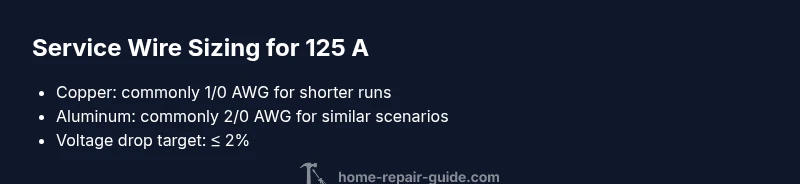
The key concept behind sizing service wire is ampacity—the maximum current a conductor can carry without overheating. For a 125 amp panel, the conductor must be able to carry roughly 125 amps continuously, but not all loads run at full capacity; NEC tables provide the permitted ampacity for various conductor sizes, insulation types (like THHN/THWN, or NM-B in some cases), and temperature ratings. The 60°C, 75°C, and 90°C columns reflect different insulation limits. In practice, practical 125A service feeders often use 1/0 AWG copper or 2/0 AWG aluminum under common 75°C or 90°C rated insulation. However, the specific size depends on length and ambient temperature; long runs lose voltage and may require larger conductors. This section emphasizes starting with NEC references and then validating against your field conditions. Local amendments or utility requirements can also affect the final choice, so always check with your local authority having jurisdiction (AHJ) and a licensed electrician before purchasing wire.
Copper vs Aluminum conductors
Both copper and aluminum have pros and cons. Copper has higher ampacity per cross-section, is more resistant to oxidation, and is easier to terminate; aluminum is lighter and usually cheaper, but it has higher resistance and may require larger sizes for the same ampacity. For a 125 A panel, copper conductors are often preferred for shorter runs in residential settings, while aluminum may be selected for cost-driven upgrades or longer distances where voltage drop is a concern. The insulation type matters as well: 75°C or 90°C rated insulation allows smaller sizes; if you have 60°C insulation, you may need larger conductors. Termination lugs, connectors, and bus bar compatibility must be considered; some panels are rated for certain copper or aluminum sizes only. The takeaway is that material choice should align with distance, load diversity, budget, and code requirements. Home Repair Guide's guidance emphasizes verifying panel labeling and manufacturer recommendations before committing to copper or aluminum.
How to size by distance and voltage drop
Voltage drop occurs when electrical resistance over long runs reduces the voltage at the panel, potentially causing equipment to run hotter or underperform. A common practical target is 2% for feeders and 3% overall including branch circuits, but this varies with critical loads. To size by distance, measure the one-way length from the utility meter or service disconnect to the service panel; double that for round-trip. Use standard resistivity values for copper or aluminum at the rated temperature, then consult a voltage-drop calculator or the NEC tables. If your run is greater than about 100 feet, you will often reach the point where increasing conductor size from the minimum becomes beneficial. In such cases, upsizing from 1/0 AWG copper to 2/0 AWG copper (or from 2/0 to 3/0 aluminum) can significantly reduce voltage drop. Remember, voltage drop is only part of the sizing calculation; protection devices, conductor temperature rating, and enclosure climate all matter too.
Ampacity, temperature rating and insulation
AMPACITY depends on insulation type and temperature rating, not just cross-sectional area. Conductors in service feeders are typically rated with weather or indoor insulation exposed to higher temperatures; using 75°C or 90°C-rated insulation allows smaller conductors than 60°C-rated wires. Some panels only accept certain sizes due to lug and bus ratings. The NEC includes charts that tie ampacity to conductor size, insulation rating, and ambient temperature. For a 125 A panel, the chosen wire must handle continuous load, and the equipment grounding conductor size must also be considered per NEC. Common insulation types include THHN/THWN for dry locations and XHHW for wet locations. If the run passes through spaces with higher ambient temperatures or in crowded panels, you may need the 90°C rating to meet code. Conversely, if the installation is in an area with low temperature or limited headroom, you may need to select a larger conductor to keep temperatures within safe limits. Always verify with your AHJ.
Common mistakes and safety practices
Common mistakes in sizing include guessing the wire size based on the panel rating alone, ignoring voltage drop on long runs, and selecting a conductor only by price without considering termination compatibility. Other issues include mis-sizing the grounding conductor, improper fastening, or failing to use approved conduit and protection. Always use the correct breakers and overcurrent protection for the equipment; verify that the panel label permits the chosen conductor size and material. Safety is critical: shut off power, use insulated tools, and wear PPE; working with service conductors often involves live parts, high currents, and significant arc-flash hazards. Many jurisdictions require permits and inspections for service upgrades; Home Repair Guide recommends you plan ahead, document the run, and consult the AHJ early in the project. When in doubt, hire a licensed electrician who can interpret NEC tables and ensure that your installation meets all safety and code requirements.
Step-by-step sizing approach
- Identify the panel rating and the insulation temperature rating on the conductors that will feed the panel. 2) Check NEC ampacity charts to determine a starting size for copper and aluminum based on temperature rating. 3) Calculate voltage drop for the expected distance and load; adjust wire size if the drop exceeds target. 4) Confirm lug and bus compatibility: confirm that the panel allows the conductor size you choose. 5) Consider future load growth and potential ground or fault currents; ensure proper grounding conductor sizing per NEC. 6) Factor in local amendments, water exposure or indoor/outdoor rating, and permit requirements. 7) Finalize the choice with an AHJ and keep documentation on size, type, and installation method. By following these steps, you can meet code requirements and ensure reliable service for a 125 A panel. Home Repair Guide's approach emphasizes using code references, field measurements, and safety checks.
Final considerations and licensing
Always use proper PPE and follow lockout/tagout procedures; ensure you have a clear service disconnect location and route for the feeder. If you are upgrading to a 125 A service or installing a new panel, plan for future electrical needs and consult the AHJ early to avoid rework. The specific wire size for your installation should be determined by NEC tables and local amendments; the 125 A panel rating does not guarantee a single wire size fits all. The Home Repair Guide team recommends a cautious, code-driven approach, and suggests hiring a licensed electrician for any work beyond a basic DIY check. They will verify conductor size, protective devices, and ensure proper termination with the correct connectors and fittings.
Note on permit readiness and inspections
Before you pull permits or schedule inspections, document the planned run, materials, and calculations. AHJs appreciate clear voltage-drop analyses, panel labeling, and evidence of proper grounding. This preparation can speed up approval and reduce the likelihood of costly rework.
Typical service wire sizing guidance
| Conductor Type | Copper Size (AWG) | Aluminum Size (AWG) | Notes |
|---|---|---|---|
| Residential feeder | 1/0 AWG | 2/0 AWG | Typical starting point for 125 A with 75°C insulation |
| Longer runs | 2/0 AWG copper | 3/0 AWG aluminum | Voltage drop considerations large enough to justify larger sizes |
| General guidance | 1/0 AWG copper | 2/0 AWG aluminum | Check ambient temp rating and conductor insulation |
FAQ
Can I size a 125 amp service wire myself?
Sizing should be based on NEC tables and local codes. For safety and code compliance, hire a licensed electrician for final sizing and permit handling.
Sizing should follow NEC tables; for safety and code compliance, hire a licensed electrician for final sizing.
Is 1/0 AWG copper always correct for 125 A?
Not always; size depends on insulation, temperature rating, and distance. Always verify against NEC 310.15/310.16 and AHJ requirements.
Size depends on insulation and distance; verify with NEC tables and the AHJ.
Does distance affect wire size for a 125 A panel?
Yes. Longer runs increase resistance and voltage drop, which can justify larger conductor sizes beyond the minimum.
Distance affects wire size because longer runs raise voltage drop; you may need larger conductors.
Copper vs aluminum for service wires in a 125 A panel?
Copper offers higher ampacity per cross-section and easier termination; aluminum is lighter and cheaper but often requires larger sizes.
Copper is generally easier to terminate and may run smaller, aluminum is cheaper but needs larger sizes.
Do voltage drop calculations affect final size?
Yes. If voltage drop exceeds targets, increase conductor size or shorten the run. Combine with temperature and ampacity considerations.
Voltage drop calculations can change the final size; increase size or shorten run if needed.
Do I need a permit to upgrade service wire?
In most jurisdictions, upgrades require permits and inspections. Check with your AHJ early and document calculations and materials.
Most upgrades require permits and inspections; check with the AHJ early.
“Sizing service wires correctly is essential for safety and reliability; always base your choice on NEC ampacity tables and precise field measurements.”
Key Takeaways
- Size to NEC ampacity tables and local codes
- Compare copper vs aluminum based on distance and budget
- Account for voltage drop and temperature rating
- Consult a licensed electrician for final sizing