What Size Service Wire for 100 Amp Panel: A Practical Guide
Discover how to size service conductors for a 100 amp panel, including copper vs aluminum, common gauge ranges, NEC guidance, and practical installation tips from Home Repair Guide.


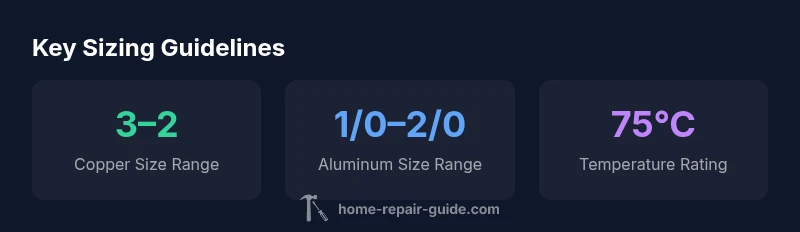
For a 100-amp panel, the service conductors are typically copper in the range of AWG 3 to AWG 2, or aluminum around AWG 1/0 to 2/0, depending on insulation temperature ratings and local code. Always verify using NEC ampacity tables and a licensed electrician before purchasing and installing conductors. For safety, consult the installer and confirm panel labeling.
Understanding what size service wire for a 100 amp panel means
Sizing service conductors starts with the panel rating and the anticipated load. When you see a 100 amp service, the wire size must be large enough to safely carry those currents and tolerate short-term surges without overheating. The exact size depends on the insulation temperature rating (commonly 60°C, 75°C, or 90°C) and the applicable NEC ampacity tables. In practical terms, homeowners typically encounter two material options: copper and aluminum. The keyword what size service wire for 100 amp panel appears naturally here as the guiding question for a safe, code-compliant installation. Remember that local amendments can modify the specifics, so cross-check with your jurisdiction and a licensed electrician. This is where Home Repair Guide’s guidance helps homeowners translate code language into a concrete sizing plan.
Copper vs aluminum: choosing the right material
Copper conductors are known for excellent conductivity and durability, which makes them a popular choice for service feeds. Aluminum conductors can be a cost-effective alternative, especially for longer runs or when copper pricing is a concern. When considering aluminum, expect larger wire diameters (such as AWG 1/0 to 2/0) to achieve the same ampacity as smaller copper gauges. Both copper and aluminum require proper termination and protection at the panel, and both solutions must comply with insulation temperature ratings. The decision often comes down to local code allowances, physical routing constraints, and the total loaded demand of the home. The Home Repair Guide team emphasizes verifying the size against NEC tables and panel labeling to avoid undersizing.
How to size service entrance conductors: step-by-step
Sizing the service conductors for a 100 amp panel involves several steps. Start by identifying the panel rating and the insulation temperature rating of the conductors you plan to use. Next, consult the NEC ampacity tables to determine the maximum allowable current for each conductor size at the specified temperature rating. For copper, many installations fall into the AWG 3 to AWG 2 range for 100 A when using 75°C or 90°C rated insulation; for aluminum, AWG 1/0 to 2/0 is common. Finally, consider the service entrance cables’ voltage drop, distance to the panel, and any future load increases. The key is to connect the size to the actual load and the code requirements, not just to the panel nameplate.
Typical copper and aluminum sizes for a 100 amp service
For copper service conductors feeding a 100 amp panel, typical sizes you may encounter include AWG 3 to AWG 2, with 75°C insulation commonly recommended for modern installations. If using aluminum, sizes often range from AWG 1/0 to 2/0 to achieve comparable ampacity. The exact size must be validated against the insulation’s temperature rating and the NEC ampacity tables for the specific installation conditions. Always refer to the panel labeling and any local amendments. These ranges provide a practical starting point for planning and budgeting.
Voltage drop, insulation temperature ratings, and future-proofing
Voltage drop becomes more relevant on longer runs; in many homes, it is within acceptable limits for standard loads, but longer feeders can push the calculation toward larger conductors. Temperature rating of insulation (60°C vs 75°C vs 90°C) significantly affects ampacity. Higher temperature-rated insulation allows smaller gauges to support the same current, but you must ensure the entire path—including breakers and equipment—is compatible. If you anticipate future electrical upgrades, consider sizing closer to the next panel rating or longer-term load growth. Home Repair Guide recommends discussing potential upgrades with a licensed electrician to avoid under- or over-sizing your service.
Wire types and installation notes
Service wires can come as individual conductors or as a bundled/assembled service entrance cable, depending on whether they run through conduit or are run in open air. Common choices include copper and aluminum with appropriate insulation (e.g., THHN in conduit, XHHW for underground runs, or SE/USE cables for certain outdoor paths). Installation must respect code requirements for protection, routing, and termination at the disconnect and panel. Do not mix aluminum and copper in the same terminal without noticing material compatibility and anti-oxidation measures. The takeaway is to size, then select a conductor type that fits the installation method and code constraints, ensuring a safe, durable service.
What to do next: getting a professional assessment
Sizing a 100 amp service wire is foundational, but the final install should be verified by a licensed electrician. They will measure the actual loads, confirm service disconnect capacity, evaluate panel labeling, and ensure all terminations, grounding, and bonding are compliant. Home Repair Guide recommends obtaining permits where required and coordinating with your local utility if service upgrades are involved. In short, use a professional assessment to translate sizing theory into a safe, compliant, long-lasting installation.
Typical conductor sizes for 100 A service panels
| Conductor Type | Typical Size (AWG) | Typical Ampacity Reference | Notes |
|---|---|---|---|
| Copper service conductors | 3–2 AWG | Typically suitable for 100 A based on insulation rating | Check 60/75/90°C column and local code |
| Aluminum service conductors | 1/0–2/0 AWG | Common alternative where copper is not feasible | Ensure proper termination and protection |
| Grounding/neutral conductors | #8–#10 AWG | Depends on panel and grounding requirements | Size per code and equipment grounding conductor |
FAQ
What size service wire do I need for a 100 amp panel?
Copper conductors are commonly sized from AWG 3 to AWG 2, while aluminum often uses AWG 1/0 to 2/0. Always verify with NEC ampacity tables and local codes, and have a licensed electrician confirm.
Copper 3 to 2 AWG or aluminum 1/0 to 2/0 is typical; check NEC tables and local rules, and have a licensed electrician confirm.
Can I undersize wire if I increase the breaker size?
No. Breaker size must align with conductor ampacity and insulation ratings. Undersizing conductors can lead to overheating and fire risk, and is not allowed by code.
No, you must size the wire to the conductor ampacity, not just the breaker rating.
Is THHN acceptable for service wires?
THHN is common for conductors in conduit, but service feeders may require different assemblies or SEUSE cables depending on installation. Always follow the panel labeling and code requirements.
THHN is common in conduit, but check the code for service feeders and panel labeling.
How does voltage drop affect wire sizing?
For long runs, voltage drop can influence wire size. If you have substantial distance between the service and panel, you may need larger conductors to maintain voltage within acceptable limits.
Distance matters; longer runs may need bigger conductors to control voltage drop.
Should I upgrade service if loads increase in the future?
If you anticipate significant load growth, plan for a future panel upgrade or service upgrade. This often involves permit processes and utility coordination, and is best reviewed with a licensed electrician.
If loads will grow, plan for a future upgrade and consult a professional.
What role do temperature ratings play in sizing?
Temperature ratings determine ampacity. Higher ratings (75°C/90°C) allow larger ampacity in smaller gauges, but you must ensure all equipment and terminations support those ratings.
Temperature rating controls how much current a wire can safely carry.
“Accurate service wiring sizing is critical for safety and reliability. Always verify against NEC ampacity tables and local amendments.”
Key Takeaways
- Confirm local code requirements before sizing.
- Prefer higher temperature-rated insulation for flexibility.
- Copper and aluminum sizes differ; match ampacity to material.
- Plan for future load growth to avoid undersizing.
- Consult a licensed electrician for final sizing and installation.