How to Disable Repair State on iPhone
Learn legitimate steps to address an iPhone repair state, verify ownership, and work with Apple to restore normal device status, while protecting data and warranty.


To address a repair state on an iPhone, you generally cannot disable it yourself. Instead, work with Apple or an authorized service provider to verify ownership, eligibility, and the repair details. This guide shows how to document ownership, contact support, schedule service, and follow official steps to restore normal device status while protecting data and warranty.
What 'Repair State' Means on iPhone
According to Home Repair Guide, understanding the term 'repair state' on an iPhone helps homeowners know what to expect when a device is flagged for service. The repair state is not a setting you can flip off in Settings; rather, it's a status flagged by Apple or an authorized service provider to indicate the device requires inspection, parts, or reconfiguration to restore proper function. This status is part of the official repair workflow and is designed to protect the device, your data, and warranty rights. In 2026, service teams emphasize transparency: you should receive clear communication about why the device is flagged, what steps are needed, and how long the process might take. The goal is to restore the device to a reliable, secure state without compromising ownership, privacy, or device integrity.
Why Your iPhone Might Report a Repair State
There are several scenarios that can trigger a repair state on an iPhone. When a device arrives at an Apple Store or an authorized service provider for repair, technicians assign a repair-state flag to track the workflow. Non-original parts or software incompatibilities can contribute to a repair state, as can reconditioning after water exposure or battery replacements. The repair state also surfaces when Apple needs to verify ownership or confirm eligibility for service, especially on devices still under warranty or covered by AppleCare. The purpose of this status is not punitive; it is a signal to technicians to follow official procedures, ensure data protection, and confirm that repairs are performed under authorized guidelines.
Official Path to Resolve a Repair State
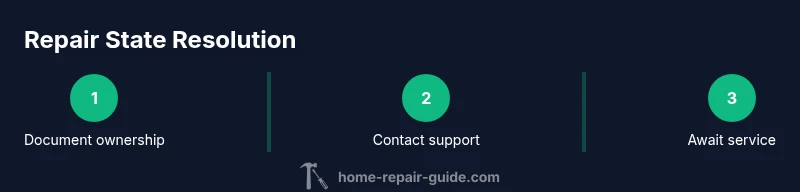
To resolve a repair state, you must work through official channels. The process begins with preparing documentation of ownership, purchase details, and the device serial number. Then contact Apple Support or visit an Apple Authorized Service Provider to discuss the issue, present proof of purchase, and describe the repair history. Expect to answer questions about where and when you purchased the device, and whether any third-party parts were used. Apple may require you to back up data and erase or reset the device only if asked during service. In most cases, the repair state will be reviewed by a technician, and the device will be authenticated against the original ownership information. If the repair requires repair parts, you may be asked to leave the device for a period; Apple will return it once the service is complete. The entire process aims to be transparent, compliant, and protective of your rights.
Documentation and Proof You'll Need
Before you contact support, gather the essential documents and information. Collect proof of ownership (original receipt or invoice), the device’s serial number and IMEI, your Apple ID email, and any prior repair receipts. Prepare a concise description of the fault, when it started, and what steps you already tried. If you purchased device protection or AppleCare, have the policy number handy. Keeping this information organized speeds up the verification process and reduces back-and-forth.
Steps to Contact Apple Support and Schedule Service
Begin by visiting the official Apple Support website or using the Apple Support app to initiate a repair-state inquiry. Choose your device model, describe the issue, and request a repair evaluation. If you prefer, call Apple Support to speak with a technician who can guide you through the next steps. You will likely be asked to log in with your Apple ID and provide ownership proofs. Schedule an appointment at an Apple Store or an Authorized Service Provider if required. Follow any instructions you receive precisely, especially around data backup and privacy.
What Happens During the Repair Process
During repair-state resolution, an authorized technician will verify ownership, run diagnostics, and determine whether a repair is required. You may be asked to provide additional details or authorize data handling for during-service diagnostics. If parts are needed, expect a short downtime while the device is assessed and repaired. Reputable service centers adhere to data-protection practices, ensure your information remains secure, and restore the device to its normal operating state once the work is complete. At the end of the process, you should receive a summary of what was done and any changes to the device status.
Data Privacy and Backups Before Service
Prioritize backups before handing your device over for repair. Use iCloud or iTunes/Finder to back up your data, photos, messages, and app data. Disable Find My iPhone only if a technician instructs you to do so within the official workflow and you know your credentials. Ensure you have your Apple ID and password accessible, because you may need to sign back in after service. Backups protect against data loss and allow a smoother restoration after repairs.
Common Mistakes to Avoid
Avoid attempting to bypass the repair state with non-official tools or third-party parts. Do not ignore verification requests or share unrelated personal information. Do not attempt to service the device yourself or use non-authorized repair shops. These actions can void warranty, compromise data security, or make troubleshooting more difficult for technicians.
Aftercare: Verifying Restoration to Normal Status
After service completion, verify that the repair state has been cleared and the device functions normally. Check essential features like calling, messaging, camera, and battery life. Ensure the device remains linked to your Apple ID and that activation, if required, is successful. Request any warranty or service documentation and confirm that the device is eligible for future repairs without penalty. If issues persist, contact Apple Support promptly and reference the service ticket.
Tools & Materials
- Proof of ownership(Original purchase receipt or invoice with device serial number)
- Device identifiers(Serial number and IMEI/MEID)
- Apple ID credentials(Email and password for account verification)
- Backup device(iCloud or local backup ready before service)
- Authorized service appointment(Schedule at Apple Store or Authorized Service Provider if needed)
Steps
Estimated time: Total time: 2-14 days depending on service center and part availability
- 1
Prepare documentation
Gather proof of ownership, device identifiers, and any prior repair receipts. Prepare a brief fault description and a timeline of events. This helps streamline the verification process.
Tip: Keep all documents in a single folder or digital folder for quick access. - 2
Back up your data
Back up your iPhone data to iCloud or a computer. This protects your information in case the device needs to be reset during service.
Tip: Verify the backup after completion to ensure you can restore your content. - 3
Initiate official support
Visit the official Apple Support site or app to start a repair-state inquiry. Provide device details and a concise description of the issue.
Tip: Use the app for quicker scheduling if available. - 4
Provide ownership verification
Be ready to share proof of purchase and ownership. This step authenticates your device and makes repair processing smooth.
Tip: Do not share sensitive credentials; rely on official channels only. - 5
Schedule service if required
If advised, book an appointment at an Apple Store or Authorized Service Provider. Arrange for in-person diagnostics if needed.
Tip: Ask about expected turnaround times and any fees before committing. - 6
Follow post-service steps
After service, confirm that the repair state is cleared and that the device operates normally. Keep service receipts for warranty purposes.
Tip: Test essential features and sign in to your Apple ID to ensure full access.
FAQ
What is an iPhone repair state?
An iPhone repair state is a service flag used by Apple or an authorized provider to indicate the device needs inspection or repair steps. It is not a user-accessible setting.
A repair state is a service flag used by Apple or an authorized provider to indicate the device needs inspection.
Can I disable the repair state myself?
There is no supported user toggle to disable a repair state. You must work through Apple Support or an authorized service provider to resolve the status.
There isn’t a user toggle to disable a repair state; you should work with Apple Support to resolve it.
What documents do I need to resolve a repair state?
Prepare proof of ownership, device serial number, IMEI, and any prior repair receipts. Have your Apple ID ready for verification.
You'll need proof of ownership and device details; have your Apple ID handy.
How long does it take to resolve a repair state?
Times vary by center and issue. Typical resolution can span from a few days to a couple of weeks depending on parts and verification.
Resolution times vary, usually from a few days to a couple of weeks.
Is my data safe during repair state resolution?
Reputable service centers protect your data. Backing up beforehand reduces risk of loss if any step requires device handling.
Data safety is prioritized; back up before service.
Where can I get official help?
Reach out to Apple Support or an Apple Authorized Service Provider for legitimate, official guidance and service options.
Contact Apple Support or an authorized service provider for official help.
Watch Video
Key Takeaways
- Verify ownership with Apple before service
- Prepare proof of purchase and device details
- Back up data to protect information
- Use official channels to maintain warranty
- Expect variable repair timelines