How to Check for Repairs on iPhone
Learn how to verify iPhone repairs, spot non-original parts, and test essential functions. This practical guide covers repair history, official diagnostics, and safe checks for homeowners and renters.


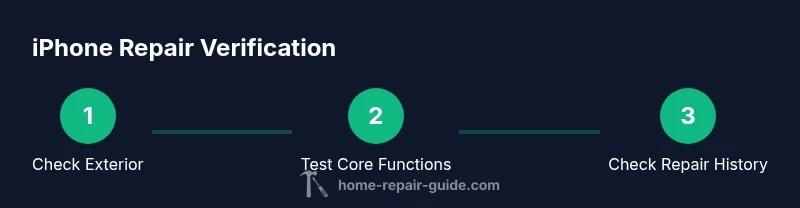
If you're trying to determine how to check for repairs on iphone, this guide provides a practical, non-destructive method to verify service history, detect non-original parts, and confirm critical functions. Start with a backup, inspect exterior clues, and run official diagnostics to protect your data and ensure device reliability. This quick answer mirrors the depth of the full tutorial for a solid start.
Why verify repairs on iphone
Understanding how to check for repairs on iphone helps protect your data and ensure device reliability. When a phone has undergone service, especially with third-party parts, issues can appear in battery performance, touch responsiveness, camera quality, and sensor accuracy. The goal is not to condemn every repair but to identify potential red flags and decide whether the device remains fit for your needs. According to Home Repair Guide, verifying repair history is an important step in maintaining device integrity and safety. This article walks homeowners and renters through safe, non-destructive checks that don’t require you to disassemble the phone. You’ll learn how to assess visible cues, test core functions, and interpret receipts and records from service providers. The approach focuses on practicality, low risk, and documentation so you can make informed decisions about continued use, resale value, or further service. By the end, you’ll have a clear picture of whether repairs were performed professionally and with original components where it matters most.
What you should know before inspecting a device
Before you begin, back up all data to iCloud or your computer. Ensure the device is secure and unlocked, and avoid sharing credentials with strangers or untrusted repair shops. Have access to the original purchase receipt or service records if possible. Be mindful of privacy and data sensitivity—limit what you disclose and consider performing checks on a device you own rather than someone else’s phone. This upfront preparation reduces risk and helps you interpret diagnostic results accurately. If you’re reading this guide, you’re likely trying to verify repair history without voiding warranties or triggering unnecessary panic. The steps below are designed to be non-destructive and respectful of user data while giving you a clear baseline of device health.
Exterior indicators of recent repairs you can spot
Start with a careful visual inspection of the chassis, screen, and housing. Look for uneven gaps between the display and frame, inconsistent screw patterns, or fresh adhesive around the screen. Scratches or paint blemishes near ports can indicate reassembly. Check for mismatched components (e.g., bezel color, camera housing) and inspect the back glass for cracks that suggest a replacement. If you notice any of these external cues, document them with photos, as they can be useful when discussing findings with a technician or seller. Remember, some repairs are subtle, and appearance alone isn’t proof of non-original parts, but it’s a meaningful first signal.
Functional checks you can perform without tools
Power on the device and test key functions: touch responsiveness across the screen, brightness consistency, and auto-lock behavior. Open a few apps to gauge performance and ensure there’s no unusual lag. Test the camera by taking photos and recording video in both front and rear lenses, and verify microphone and speaker output with a quick audio recording and playback. Use the device in varying lighting to confirm Face ID or Touch ID works consistently, and check the proximity sensor by bringing the phone near your face during calls or when covering the screen. Battery health can be observed in Settings > Battery > Battery Health if available, and you should note any rapid depletion or unusual heat during tasks.
Diagnosing repair history with official sources
There isn’t a single consumer tool that reveals every repair detail, but you can assemble a reliable picture from official sources. Check Settings > General > About to confirm model, serial number, and software version. Use Apple’s support resources or an authorized service provider to verify whether the device is under AppleCare and whether repairs were recorded in Apple’s system. If you have receipts or repair documentation, compare part numbers (e.g., screen assembly, battery) with the device’s actual components. For a deeper check, visit an Apple Store or authorized service center to request a diagnostic report that outlines hardware status and any replacements. Keep in mind privacy considerations and avoid sharing sensitive data with unverified shops.
Based on Home Repair Guide research, many devices with non-original parts show subtle inconsistencies in performance and sensor behavior. This section helps you assemble evidence from both the device itself and official records to support your conclusions.
Understanding parts authenticity and safety
Authentic Apple parts are designed and tested to meet strict standards. Replacements with third-party components can sometimes degrade sensor accuracy, battery life, or touch response. Apple and authorized service providers maintain part-level records and warranties on repairs. If you notice calibration issues (Face ID failing, camera autofocus problems, or irregular touch response) after a repair, consider requesting a second opinion from an authorized technician and ask for the exact part numbers used in the repair. Keep in mind that some third-party parts may be compatible but not ideal for long-term reliability, and manufacturers may deny warranty coverage for such modifications.
When to seek professional help
If you detect multiple inconsistencies or suspect non-original parts, it’s prudent to seek professional assessment. An authorized service provider can perform thorough diagnostics, verify part authenticity, and provide a formal repair history. If you recently purchased a used iPhone, request the device’s full repair history before finalizing the deal. For warranty preservation, rely on official channels and avoid unverified repair shops that may claim to offer “third-party parts” without proper documentation. This prudent step protects your data, device longevity, and resale value.
Best practices for future protection
To minimize risk going forward, keep a detailed maintenance log of any service conversations, receipts, and part replacements. Always request original or certified parts when possible and confirm serial numbers match the device’s configuration. Regularly monitor battery health, screen responsiveness, and camera performance so you can catch issues early. Finally, purchase devices from reputable sources with visible repair histories and clear documentation to simplify any future verification.
Quick-start DIY checklist for evaluating a used iPhone
- Back up data before inspections.
- Review the purchase record and any repair receipts.
- Inspect exterior panels, screen gaps, and adhesives.
- Test touch, Face ID/Touch ID, cameras, and speakers.
- Compare battery health with expectations and prior usage.
- Seek official diagnostics if concerns persist.
- Document all findings with photos and notes for reference.
Tools & Materials
- Good lighting(Bright, neutral white light; avoid shadows or colored lighting)
- Clean microfiber cloth(Wipe screen clean before inspection)
- Access to device and Apple ID credentials(Standby for enabling backups and settings checks)
- Phone stand or holder(Keeps the device stable during inspection)
- Documentation of repairs or previous service(Receipts or service notes help verify history)
- Magnifying glass or loupe (optional)(Helpful for close visual checks of small parts)
Steps
Estimated time: 60-90 minutes
- 1
Prepare the device and data
Back up all data to iCloud or a computer, and unlock the device for testing. Ensure you have legitimate access to the device and its owner’s consent if it isn’t yours. This creates a safe baseline and prevents data loss during checks.
Tip: Backup first to avoid loss if you need to restore after tests. - 2
Inspect exterior for repair clues
Examine the display gap, seams, screws, and housing for uniformity. Look for fresh adhesive, misaligned edges, or paint inconsistencies that could indicate non-original parts or reassembly.
Tip: Document any anomalies with photos from multiple angles. - 3
Test core display and touch
Power on the device and run through touch responsiveness across the entire screen, scrolling, and multi-touch gestures. Check for unresponsive areas and dead zones that may suggest a screen replacement issue.
Tip: Move your finger slowly to reveal subtle glitches that fast swipes might miss. - 4
Check cameras and microphones
Capture sample photos and video with both front and rear cameras. Play back the clips and verify audio capture. Any lens misalignment or muffled sound can indicate compromised components.
Tip: Take photos in varied lighting to reveal color or exposure discrepancies. - 5
Evaluate biometrics and sensors
Test Face ID or Touch ID across multiple attempts and lighting conditions. Observe proximity sensor behavior when holding the phone near your face during calls. Inconsistent results may signal sensor or calibration issues.
Tip: If biometrics fail repeatedly, document and escalate to an authorized provider. - 6
Review battery health and charging
If available, check Battery Health in Settings. Note any rapid drain or overheating during light usage. Compare current health with device age and prior performance if known.
Tip: Consider a dedicated battery diagnostic from an authorized service if issues arise. - 7
Verify repair history and parts
Cross-check serial numbers, receipts, and part numbers against the device’s records. Look for consistency between the device model and the advertised or documented parts.
Tip: Ask for part numbers used in the repair and confirm authenticity with the provider. - 8
Document findings for future decisions
Create a concise report with photos, test results, and receipts. This helps you discuss next steps with a technician or seller and supports any warranty discussions.
Tip: Keep a digital folder with all documents for easy reference. - 9
Decide on next steps
If issues persist or parts seem non-original, seek an authorized service evaluation or consider replacement. Prioritize safety and data integrity when planning repairs.
Tip: When in doubt, opt for official diagnostics to protect warranty and resale value.
FAQ
How can I tell if my iPhone screen was replaced with a non-original part?
External signs such as gaps, adhesive residues, or mismatched colors can suggest a screen replacement. Cross-reference part numbers with receipts and, if in doubt, request an official diagnostic from Apple or an authorized service provider.
Look for gaps, mismatches, or adhesive marks around the screen, then verify with receipts or an official diagnostic.
Can I verify whether the battery has been replaced?
Battery replacement history may be indicated on receipts and within Settings when available. For definitive confirmation, obtain a diagnostic from a licensed technician or Apple Support.
Check receipts and, if needed, get an official diagnostic from Apple Support to confirm battery work.
Is it safe to inspect my iPhone for repairs myself?
Yes, perform non-destructive checks like exterior inspection and feature testing. Do not disassemble the device or apply force to internal components.
You can safely inspect externally and test features; avoid opening the device yourself.
What warranty implications come with non-original parts?
Third-party parts can affect warranty coverage. Check with the manufacturer or an authorized service provider to confirm whether the repair is covered.
Non-original parts may affect warranty; confirm with the provider before proceeding.
How do I check if repairs were performed by Apple or an authorized service provider?
Review service receipts, check device registration on Apple’s support site, and contact Apple Support or an authorized service center for confirmation.
Look at receipts and use Apple Support to verify official service.
Will software updates reveal hardware repairs?
Software updates won’t expose every hardware repair, but unusual behavior after an update can indicate underlying hardware issues or calibration problems.
Software updates won’t list repairs, but new issues after updates can hint at hardware problems.
Watch Video
Key Takeaways
- Back up data before inspections.
- Look for exterior cues and part authenticity.
- Rely on official sources for repair history.
- Document findings and seek authorized service if needed.