Car Electric Repair Near Me: A Practical Guide to Local Auto Electrical Pros
Discover reliable car electric repair near me services with transparent diagnostics, fair pricing, and clear timelines. Learn how to evaluate shops, ask the right questions, and avoid costly misdiagnoses.


If you’re searching for car electric repair near me, start by locating ASE-certified shops close to you that offer transparent diagnostics, a written estimate, and a clear warranty. Look for recent customer reviews, ask about diagnostic fees, and compare at least two quotes before authorizing any work. Home Repair Guide recommends verifying credentials and demanding a detailed, itemized plan to avoid surprise costs.
Finding car electric repair near me
When you search for car electric repair near me, you’re looking for technicians who can diagnose and fix complex automotive electrical systems with accuracy and transparency. The right shop will combine technical expertise with clear communication, so you receive a trustworthy diagnostic and written plan. According to Home Repair Guide, start by filtering for nearby shops that list ASE or manufacturer certifications, offer transparent diagnostic fees, and show pass/fail criteria for electrical tests. In addition to proximity, consider the shop’s ability to handle modern vehicle electronics, from battery management to CAN bus networks. A local expert who can explain the problem in plain terms will save you time and money, especially when emotions run high around a sudden electrical fault.
Common car electrical problems you’ll encounter
Electrical issues span a wide range of faults. Common symptoms include hard-to-diagnose battery drain, startup delays, dashboard lights that flicker, or intermittent power loss while driving. The causes may lie in the battery, alternator, wiring harness, fuses, or control modules. Corroded terminals, damaged sensors, or a faulty ground can create cascading faults that mimic more serious problems. A thorough inspection should include battery and alternator tests, grounding checks, fuse box review, and a scan for stored trouble codes. Real-world repairs often combine a diagnostic bundle with targeted component testing to avoid unnecessary replacements.
How diagnostics work and what to expect
Before any repair, expect a diagnostic phase that identifies the root cause with data-driven tests. Shops may use OBD-II scanners, multimeters, and electrical harness probes to check continuity and resistance. A clean, step-by-step process helps—starting with symptom reproduction, then component-level checks, and finally a test drive or live data monitoring. The goal is to determine whether the issue is a battery/alternator problem, a faulty sensor, a wiring fault, or a control module fault. Expect a written report that includes test results, recommended repairs, and a transparent cost estimate before any parts are ordered.
How to vet and choose a technician
Choosing the right technician reduces risk and cost. Look for ASE-certified mechanics or technicians with manufacturer-specific training relevant to your vehicle. Ask for a detailed written diagnostic plan and a breakdown of labor and parts costs. Request warranty terms on parts and labor, and verify that the shop uses approved parts and updated software. Check recent customer reviews, request proof of licensing where required, and confirm whether a digital vehicle health report will be provided after service. A good shop will offer a no-surprise quote and a clear timeline.
Understanding cost, timing, and scheduling realities
Costs for car electrical repairs vary by the fault and vehicle make. Diagnostic fees are common, but many shops credit that fee toward the repair if you proceed. Labor times depend on the diagnosis complexity and parts availability. While some faults are quick fixes, others require extensive testing or harness replacement. To avoid sticker shock, request an itemized estimate that separates diagnostic charges, parts, and labor, along with a realistic timeline. Ask about after-service support, such as free rechecks or warranty coverage for the repair.
DIY vs professional: when to avoid fixes yourself
Cable and airbag circuits, high-voltage systems in hybrids, or modern CAN bus networks demand professional handling. Attempting DIY electrical repairs can result in personal injury, unintended power loss, or deeper system faults. If you’re not fully equipped to safely disconnect power, read vehicle service manuals, and use proper PPE only as a last resort. For most owners, professional diagnostics and repair are the safest path, especially when dealing with sensitive modules and safety-critical components.
Preventive maintenance to extend electrical life
Proactive steps save money and stress. Regular battery cleaning and terminal tightening prevent slow drains. Keep connectors dry and corrosion-free, and ensure proper charging system operation with periodic alternator tests. Protect wiring from heat and wear by routing and securing harnesses as per the manufacturer’s guidelines. Schedule periodic inspections, especially before extreme weather seasons, to catch developing faults early and keep the electrical system reliable.
Common car electrical repairs with rough time and cost ranges
| Repair Type | Estimated Time (range) | Typical Cost Range |
|---|---|---|
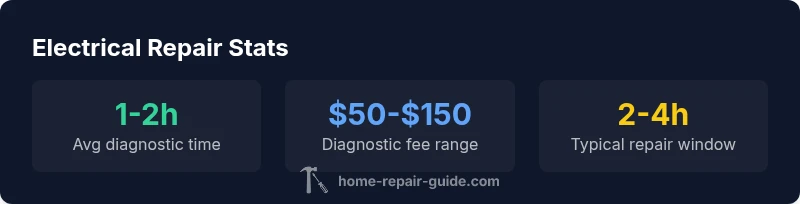
| Diagnostic assessment | 1-2 hours | 50-150 |
| Alternator repair/replacement | 2-4 hours | 250-750 |
| Battery replacement | 0.5-2 hours | 100-300 |
| Wiring harness repair | 2-6 hours | 150-600 |
FAQ
What qualifies a shop as reliable for car electrical repair near me?
Look for ASE-certified technicians or manufacturer-trained staff, a transparent diagnostic process, and warranties on parts and labor. Check recent reviews and request a written diagnostic plan before any work begins.
Choose shops with certified technicians, a clear diagnostic process, and written warranties before starting work.
How long does a typical electrical diagnostic take?
Most diagnostics take 1-2 hours, depending on the complexity and data availability. The vendor should provide a time estimate in the initial quote.
Most diagnostics take one to two hours; ask for a time estimate in the quote.
Do I have to pay a diagnostic fee?
Many shops charge a diagnostic fee, but some apply it toward the repair cost if you proceed with the recommended repair. Confirm this in writing.
Yes, diagnostic fees are common, but some shops credit them back if you repair with them.
Will repair work affect my vehicle warranty?
Qualified technicians using approved parts and procedures should not void your warranty. Keep all documentation and ensure the work aligns with the vehicle manufacturer’s guidelines.
Warranties are generally preserved when repairs follow manufacturer guidelines and are done by qualified techs.
Can I perform any car electrical repairs myself?
Some basic maintenance is safe, but high-voltage systems and CAN bus diagnostics require professional equipment and training to avoid injury or further damage.
Avoid DIY on high-voltage or integrated electronics; leave it to trained technicians.
How can I locate a trustworthy shop near me?
Use ASE certifications, look for local independents with good reviews, and compare a minimum of two written quotes. Verify warranty terms and parts sources.
Look for certified technicians, solid reviews, and written quotes before booking.
“A well-documented diagnostic plan saves time and money by pinpointing the exact fault before any parts are replaced.”
Key Takeaways
- Start local, verify credentials, and get a written estimate.
- Expect a diagnostic phase before any parts are replaced.
- Ask about warranties on parts and labor upfront.
- Prioritize shops with clear, itemized quotes and transparent timelines.