Repair Whirlpool Refrigerator: A Practical Step-by-Step Guide
Learn a practical, safety-first method to diagnose and repair a Whirlpool refrigerator. This step-by-step guide covers common symptoms, essential tools, and when to repair or replace, with guidance from Home Repair Guide.


You're about to learn a step-by-step approach to diagnose and repair whirlpool refrigerator safely. This quick guide outlines what to check, the essential safety precautions, and the tools you'll need before you start. You'll follow a logical diagnostic flow to identify the root cause—thermostat, seals, ice maker, or compressor—and decide whether a repair is feasible or a replacement is wiser.
Understanding Whirlpool Refrigerator Basics
According to Home Repair Guide, understanding the core components of a Whirlpool refrigerator helps you diagnose issues quickly. A typical Whirlpool unit has a refrigerator compartment, a freezer compartment, evaporator coils, a condenser coil, a compressor, a fan, and a defrost system. When something goes wrong, symptoms like not cooling, excessive frost, or a leaking door seal point to different culprits. Knowing the typical failure points helps you determine if you should attempt to repair whirlpool refrigerator or call a pro. This section explains the common subsystems and how they work together to maintain proper temperature.
Common Symptoms and What They Mean
Whirlpool refrigerators show a mix of subtle and obvious symptoms. If the unit is warm inside while the freezer is cold, the compressor or defrost timer may be failing. Frost buildup on the evaporator can indicate a defrost issue or a faulty defrost heater. Leaking doors or gaskets often point to worn seals that let in warm air. The Home Repair Guide analysis shows that thermostat and sealing problems are among the most frequent culprits. By recognizing patterns, you can narrow down the root cause before starting a repair whirlpool refrigerator project.
Safety First: Working with Refrigeration
Refrigeration systems involve electrical components and, in some models, refrigerant. Always unplug the unit before opening access panels or testing circuits. Wear safety gear, use insulated tools, and keep liquids away from electrical parts. If you smell refrigerant or see oil around the compressor, stop and contact a pro. The Home Repair Guide team emphasizes safety as the foundation of any repair whirlpool refrigerator effort.
Diagnostic Checklist: Where to Start
Use a systematic approach to diagnose the issue. Start with power: confirm the outlet is live and the unit is receiving power. Then check temperature settings and doors seals. Inspect condenser coils for dust and debris. Listen for the evaporator and condenser fans running when the compressor is on. Record readings and compare them to Whirlpool spec ranges in the manual. This checklist helps set a clear path before you attempt a repair whirlpool refrigerator.
Common Whirlpool-Specific Fixes (temperature, ice maker, dispenser)
For temperature issues, calibrate the thermostat if needed and verify the door seals. Clean or replace clogged condenser coils to improve airflow. For ice maker problems, check the water line, filter, and ice-maker assembly. A jammed ice mold or misaligned bin can reduce ice production. If the dispenser is slow or not working, examine the door switch and solenoid. In many cases, these fixes are straightforward and cost-efficient when you perform them carefully.
When to Replace vs Repair
Not every fault is worth repairing. If the compressor is weak, the evaporator leaks, or the refrigerant system shows signs of a leak, replacement may be more economical. Consider the age of the unit, repair costs, and available parts for Whirlpool models. A professional assessment can help you decide whether to repair whirlpool refrigerator components or invest in a new unit.
Tools You’ll Need for Whirlpool Repairs
Having the right tools saves time and reduces the risk of damaging parts. A basic kit should include a multimeter, a set of screwdrivers (Phillips and flat-head), nut drivers, needle-nose pliers, a flashlight, a thermometer, and towels to manage condensation. Keep a camera or notes to document wiring when you disconnect components. Always use safety gear and follow the steps in your model's manual.
Maintenance and Preventive Care for Whirlpool Refrigerators
Regular maintenance can extend the life of your appliance. Clean condenser coils every few months, check door gaskets for wear, and replace the water filter as recommended by Whirlpool. Keep the area around the unit clear to improve airflow and efficiency. Schedule a simple defrost as needed and monitor temperatures to catch issues early, reducing the need to repair whirlpool refrigerator in the future.
Troubleshooting Flow: Quick Reference
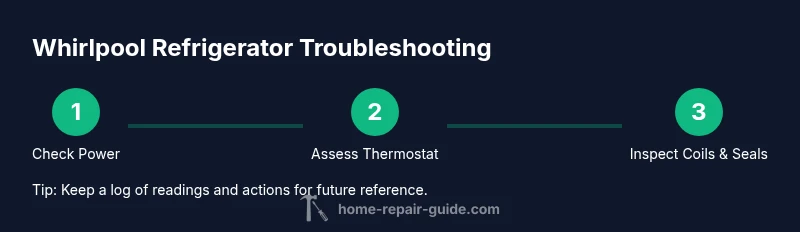
Use this high-level flow to guide your investigation. Start with power and temperature settings, then inspect the door seals and coils. If issues persist, assess the ice-maker and water line, followed by the fan operation. If nothing resolves the symptom, it’s time to consult a professional for an in-depth diagnosis or parts replacement.
Tools & Materials
- Safety gear (gloves, goggles)(Protect eyes from sharp edges and refrigerant exposure)
- Multimeter(Test voltages and continuity; unplug before testing)
- Screwdrivers set (Phillips and flat)(Assorted sizes for internal panels)
- Nut drivers and socket set(For access panels and fasteners)
- Needle-nose pliers(Manipulate wires and clamps carefully)
- LED flashlight(Inspect coils, fans, and wiring in dark corners)
- Digital refrigerator thermometer(Verify actual temperatures in fridge and freezer)
- Soap solution or leak detector(Check for air leaks around connections (do not refrigerant test))
- Owner's manual or model-specific guide(Have model-specific specs handy)
Steps
Estimated time: 60-120 minutes
- 1
Power down and gain access
Unplug the refrigerator and remove any rear access panel or service cover. This ensures your safety while you inspect electrical components and fans. Keep track of removed screws and their locations.
Tip: Label cables with tape before disconnecting to simplify reassembly. - 2
Check power and basic settings
Confirm the outlet is live using a multimeter or a known-working appliance. Verify the thermostat setting is appropriate and note any deviations from the owner's manual.
Tip: Document the current setting before adjusting so you can revert if needed. - 3
Inspect door seals and gaskets
Examine gaskets for cracks, tears, or compression loss. A poor seal allows warm air to enter, causing temperature fluctuations and frost in some cases.
Tip: Run a simple dollar-bill test: insert a bill at the door and see if it pulls out with resistance. - 4
Test the compressor and start components
With power off, locate the compressor and any start relay. Use the multimeter to test resistance within spec ranges; consult the manual for exact values. If readings are abnormal, replacement parts may be needed.
Tip: Take photos of wiring before removal to ensure accurate reconnection. - 5
Inspect condenser coils and fans
Check for dust buildup on condenser coils and verify that the condenser and evaporator fans run when the compressor is on. Clean coils gently with a brush or vacuum.
Tip: Always unplug again before cleaning and wear eye protection during brushing. - 6
Check water line and ice-maker (if applicable)
Inspect the water line for kinks or leaks and ensure the ice-maker is properly aligned. Replace a clogged filter and verify water flow to the ice maker.
Tip: If you hear odd noises, isolate the ice-maker and test the unit without it for comparison. - 7
Test and reassemble
Reconnect any panels, restore power, and monitor temperatures for several hours. If temperatures stabilize, you’ve identified a root cause; otherwise re-open the unit to re-check the suspected component.
Tip: Keep a log of readings to guide future maintenance.
FAQ
Is it safe to attempt a Whirlpool refrigerator repair yourself?
DIY repair can be safe for simple checks, but avoid refrigerant work or high-voltage tests if you’re not trained. Always unplug the unit and wear protective gear.
DIY repairs can be safe for basic checks, but avoid refrigerant work or high-voltage tests if you’re not trained. Always unplug the unit and wear protective gear.
What are the most common symptoms of a failing thermostat on a Whirlpool unit?
Symptoms include inconsistent temperatures, frequent cycling, and frost buildup. Calibrating or replacing the thermostat often resolves these issues.
Common thermostat problems show up as inconsistent temps, frequent cycling, or frost buildup. Calibration or replacement often fixes it.
Can a faulty ice maker be fixed, or should I replace the whole appliance?
Many ice maker problems are repairable, such as line blockages or jammed molds. If core components like the compressor or sealed system fail, replacement may be more economical.
Many ice maker issues can be repaired, like line blockages. If the compressor or sealed system fails, replacement might be wiser.
How long does a typical Whirlpool fridge repair take?
A straightforward diagnostic and minor parts replacement can take a couple of hours. More complex issues may require a service visit and longer turnaround.
A simple fix can take a few hours; more complex problems might need a service visit and more time.
Should I attempt compressor work or refrigerant handling myself?
No. Compressor work and refrigerant handling require licensed technicians due to safety and environmental regulations.
No—compressor work and refrigerant handling should be done by a licensed tech.
Watch Video
Key Takeaways
- Power down before inspecting any components.
- Check thermostat, seals, and ice maker as common culprits.
- Use a multimeter and model references to diagnose safely.
- Do not attempt refrigerant repairs; contact a pro when needed.
- Follow the Home Repair Guide guidance to ensure safe, durable results.