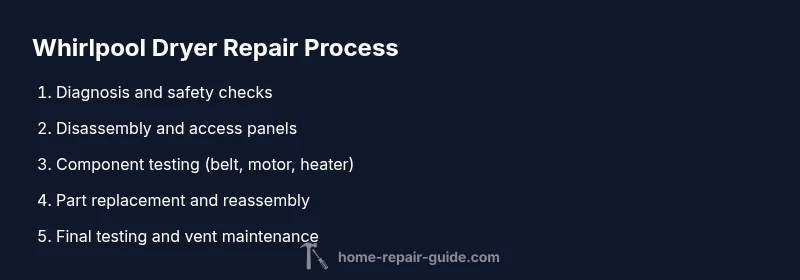
Repair Whirlpool Dryer: A Practical Step-by-Step Guide
Learn to diagnose and repair a Whirlpool dryer with a safety-first, methodical approach. This guide covers common symptoms, diagnostic steps, parts replacement, and post-repair testing to restore performance without costly service calls.


Goal: Diagnose and repair a Whirlpool dryer safely and effectively. You’ll test electrical circuits, inspect the drive belt and drum components, check the heating system, and replace common worn parts when you have confidence. This quick-start answer outlines safe steps to get your dryer functioning again and help you decide when to call a pro.
Understanding Whirlpool Dryer Symptoms
Whirlpool dryers fail in several common ways, and identifying the exact symptom guides the fix. If the drum won’t rotate, heat is absent, or you hear unusual noises, you’re likely looking at a mechanical, electrical, or airflow issue rather than a total power failure. Start by documenting when the symptom occurs, which cycles are affected, and whether any error codes flash on the control panel. In many homes, the root cause is a simple belt wear, a clogged vent, or a faulty door switch. The repair whirlpool dryer often begins with the easiest checks before moving to more involved tests. Remember: safety first. Unplug the unit before inspection, and wear gloves when handling moving parts. According to Home Repair Guide, a methodical approach reduces downtime and helps homeowners stay within budget.
Safety First: Unplug, Discharge, and Prepare
Before touching internal components, unplug the dryer and shut off the circuit if possible. If you have a gas dryer, disable the gas supply as well. Let the unit cool completely. Gather tools and spare parts, work in a well-lit area, and keep a friend nearby in case you need assistance. Follow all warning labels and avoid touching wiring or capacitors with wet hands. This habit protects you from shocks, burns, and unintended belt movement during disassembly. If you’re unsure about any step, pause and consult a professional.
Essential Tools and Replacement Parts
A typical whirlpool dryer repair uses basic hand tools and a few standard parts. Assemble a screwdriver set (Phillips and flathead), a nut driver, pliers, a multimeter, and a flashlight. Keep screws in a labeled container to stay organized. Parts you might need include a replacement belt, a thermal fuse, or a heating element depending on the fault. Not every repair requires all parts, but having these on hand speeds diagnosis. If you plan to service multiple brands, consider a compact toolkit to cover variations in fastener sizes across models.
Diagnostic Flow: Inspect Core Systems in Logical Order
A robust diagnostic flow helps isolate failures without guessing. Start with the drum motor and belt to see if the drum spins freely by hand when unplugged. Then verify the door switch and control signals using a multimeter. Check for blown fuses or tripped breakers if there’s no power at all. For heat-related issues, test the heating element for continuity and inspect the thermal fuse. Finally, inspect the vent path for blockages that can mimic electrical faults. Document each finding so you can decide whether to replace a component or reassemble. A methodical approach keeps the repair whirlpool dryer grounded in reality.
Belt and Drum Basics: When to Replace
A worn or broken drive belt is a frequent cause of a drum that won’t turn. If you see cracks, fraying, or glazing on the belt, replace it. After removing the back panel, route the belt around the motor pulley and drum pulley. Replacing a belt is straightforward but requires removing the drum to avoid belt pinching. A new belt should sit snugly with no slack, and you should rotate the drum by hand to confirm smooth operation before reassembly. If the drum still won’t rotate, inspect the idler pulley for wear. Many spin and noise issues are resolved with belt or pulley adjustments.
Heating System and Temperature Control
Heater elements and thermostats govern heat in Whirlpool dryers. A faulty heating element may produce no heat even if the motor runs. Use a multimeter to test element resistance according to the model’s service manual. If you find an open circuit, replace the element. The thermal fuse is a safety device that can blow and stop heat; testing requires disassembly and careful inspection. If the fuse is open, replacing it is common, but you should also check ventilation to prevent repeat failures. After any heating repair, run a test cycle on a low or medium heat setting to confirm stable operation and safe temperatures.
Venting, Lint, and Airflow: The Silent Performance Killer
A clogged vent or lint trap dramatically reduces drying efficiency and can cause overheating. Clean the lint screen after every cycle and inspect the vent hose for kinks or damage. Use a vent brush or vacuum attachment to remove lint along the duct, and ensure the outside vent flap opens freely. Proper airflow reduces energy use and extends the life of the heating element and motor. While working on venting, inspect door seals for wear and replace as needed to maintain efficiency. This low-cost fix yields noticeable improvements in Whirlpool dryer performance.
Reassembly, Testing, and First-Run Safety Checks
With components inspected or replaced, reassemble in the reverse order of disassembly. Reconnect wires carefully, tighten fasteners, and check that the drum spins smoothly by hand before plugging in. Run a test cycle with a familiar load on low heat to observe performance and heat cycle timing. Listen for unusual noises and watch for error flashes. If the dryer runs quietly and dries evenly, you’ve achieved a safe, functional repair. If problems persist, reassess the diagnostic results or seek professional help.
When to Call a Professional and What to Expect
If you’re uncomfortable with electrical testing, smell burning insulation, or a fault persists after replacing common parts, professional service is wise. A licensed technician can perform a full electrical safety check, verify code compliance, and replace complex components with correct parts. They can diagnose intermittent faults more quickly using professional instruments. DIY fixes save money, but improper repairs can create hazards or void warranties. Set clear expectations and only attempt steps within your comfort zone.
Tools & Materials
- Screwdriver set (Phillips and flathead)(Phillips #2 and flathead for panel screws)
- Nut driver set(Assorted sizes to fit cabinet hardware)
- Pliers (needle-nose)(Grip wires and pull connectors safely)
- Multimeter(Check continuity and voltage safely)
- Flashlight(Inspect dark interior areas)
- Replacement drive belt(Needed if belt shows wear or cracks)
- Thermal fuse or heating element(Only if diagnosed as faulty)
- Vent cleaning brush(Remove lint from ducts)
- Work gloves(Protect hands during disassembly)
Steps
Estimated time: 60-90 minutes
- 1
Power down and unplug the dryer
Unplug the dryer and, if applicable, shut off the gas supply. Allow the unit to cool completely and remove loose clothing or jewelry. This prevents shocks and avoids belt movement while you work.
Tip: Keep a voltage tester nearby to verify power is fully off before touching wiring. - 2
Access the internal components
Remove any front or back panels as specified in the model manual. Label connectors as you disconnect any wires, and place fasteners in a labeled container to avoid misplacement. This gives you clear visibility to belts, drums, and heating components.
Tip: Take photos during disassembly to aid reassembly. - 3
Test door switch and basic electronics
With panels removed, test the door switch continuity using the multimeter. Check for loose connections or damaged harnesses. A faulty door switch commonly prevents the dryer from starting or running properly.
Tip: If you hear a click but no continuity, replace the switch and retest. - 4
Inspect drive belt and pulleys
Inspect the belt for cracks, fraying, or glazing. If worn, replace the belt and check the motor and idler pulleys for wear or sticking. After belt replacement, rotate the drum by hand to confirm smooth operation.
Tip: Rotate the drum slowly to ensure the belt tracks correctly without slipping. - 5
Check heating circuit and thermal fuse
Test the heating element for continuity and inspect the thermal fuse. If there is an open circuit or the fuse is blown, replace the component and re-test heating. Ensure ventilation paths are clear to prevent repeated failures.
Tip: Always verify the vent is clear before concluding the fault is electrical. - 6
Reassemble and run a test cycle
Reconnect any wiring carefully, reseal panels, and tighten screws. Plug in the unit and run a test cycle with a small load on low heat. Observe temperatures, listen for abnormal sounds, and confirm even drying.
Tip: Do not run the dryer unattended on first test; stay nearby to monitor for issues.
FAQ
What are the first signs that my Whirlpool dryer needs repair?
Common signs include no heat, drum not turning, unusual noises, or excessive drying times. Document when and how the symptom occurs to guide diagnosis and avoid unnecessary parts replacement.
Look for no heat, a drum that won't turn, odd noises, or long drying times. Note when it happens to guide your next step.
Is it safe to repair a dryer by myself?
DIY repairs are feasible for simple faults, but always prioritize safety. Unplug the unit, avoid touching live wiring, and consult the manual or a professional if uncertain.
DIY repairs can be safe for simple issues, but unplug and follow the manual. If unsure, call a pro.
Can I fix a broken drive belt myself?
Yes, replacing a worn belt is a common, doable task with basic tools. Ensure the drum rotates freely after reassembly and avoid pinching the belt during installation.
Replacing a worn belt is typically straightforward if you follow the steps and check the drum rotation afterward.
How do I know if the heating element is bad?
Test the element for continuity with a multimeter. An open circuit usually means replacement is necessary, but also inspect ventilation to prevent repeat failures.
Check heating element continuity; if open, replace it and inspect the vent for blockages.
How long does a typical Whirlpool dryer repair take?
Most repairs take about one to two hours, depending on the fault and parts availability. More complex issues, like module faults, may require professional help.
Most repairs take about an hour or two, depending on the fault and parts.
When should I replace the vent in a Whirlpool dryer?
Replace or clean the vent if you notice longer dry times, excessive lint, or visible obstructions. Regular vent maintenance improves performance and safety.
If you notice long drying times or lint buildup, clean or replace the vent.
Watch Video
Key Takeaways
- Identify symptoms before disassembly.
- Prioritize safety and organization during repair.
- Start with belts, vents, and door switches as common causes.
- Test heating and airflow only after basic mechanical checks.
- Know when to call a pro to avoid hazards.