Repair or Replace Garage Door: A Practical Guide
Learn how to decide whether to repair or replace your garage door with a data-driven, homeowner-focused guide covering costs, safety, durability, and long-term value.


To decide quickly, repair if the damage is minor, the door still operates safely, and the repair cost is well below replacement. If the door is old, structurally compromised, or multiple major components fail, replacement often provides better long-term value and reliability. According to Home Repair Guide, longevity and safety should drive the choice.
The core question: repair vs replace
Choosing between repairing a garage door and replacing it is not just about patching a hinge or swapping a spring. It’s a decision that affects safety, energy efficiency, security, and long-term costs. Homeowners who start with a clear framework tend to make faster, less risky choices. In practice, most conversations hinge on three factors: the door’s current condition, the expected remaining life, and the total cost of ownership over time. The Home Repair Guide analysis shows that a well-maintained door can survive several near-term repairs, whereas persistent issues or aging components shorten the door’s useful life and increase the likelihood of future outages. The aim is to minimize downtime, maximize safety, and protect the home’s value. This section lays out a practical approach to weigh those elements, so you can align the choice with your budget and goals while avoiding unnecessary upgrades.
Assessing structural integrity and safety
Garage doors are heavy, spring-loaded systems with multiple moving parts. The indicators of repair-worthy issues versus replacement-ready problems matter — and they aren’t always obvious at a glance. Look for: sagging sections, cracked panels, rust on springs, frayed cables, worn tracks, and persistent sensor or opener malfunctions. If any part is bent, cracked, or shows signs of corrosion, repair may be risky or only a short-term fix. Misalignment can cause binding, which is not only annoying but potentially dangerous. A professional should inspect torsion springs, cables, rollers, and the track geometry because an undetected issue there can lead to sudden door failure. This block will help you distinguish minor maintenance from structural failure that warrants replacement.
Cost considerations: upfront vs long-term
Cost is the most tangible factor for most homeowners. A repair tends to cost far less upfront than a full door replacement, especially for cosmetic fixes like weatherstripping, rollers, or minor spring work. Replacement carries a larger initial outlay—especially if you choose insulated, high-performance doors with premium materials. However, a new door can reduce energy bills, improve security, and lower maintenance needs for years. Make a simple comparison: if repair costs accumulate to a level approaching replacement within a few years, replacement often wins in value and reliability. Home Repair Guide’s analysis cautions against chasing a temporary fix that masks underlying wear.
Material and insulation choices
Door materials influence durability, maintenance, and energy performance. Steel and aluminum doors are common for their durability and low maintenance, while wood offers aesthetics but can require more upkeep. Insulated cores (polystyrene, polyurethane) improve thermal performance and reduce heat loss in extreme climates. If your current door has little insulation, replacing with a higher-R-value model can yield meaningful savings on heating and cooling over time. Evaluate the climate, the door’s alignment with your home’s insulation strategy, and whether a retrofit kit could improve efficiency without a full replacement.
Aesthetics, curb appeal, and home value
Beyond function, a door is a major visual element of your home. If you’re planning to sell or simply want a refreshed look, a new door can dramatically boost curb appeal and perceived value. However, a repair that restores the surface, alignment, and weather sealing can sometimes deliver a near-new look without the expense of a full replacement. Weigh how much the door’s appearance contributes to your property value and whether an upgrade aligns with your broader remodeling plans.
Timeline, installation disruption, and warranties
Repairs typically require shorter timelines and less disruption than full-door installation. A minor spring or roller repair can be completed in a few hours, while a full panel replacement or new door installation may span a day or two and require some temporary driveway or garage access adjustment. Warranties differ: repair parts may include limited warranties, while a new door often comes with a longer, more comprehensive warranty on the door shell and hardware. Understanding these details helps you plan for downtime and future service.
Safety and insurance implications
Safety should drive the decision. A damaged door with compromised springs or cables presents a higher risk of sudden failure. Insurance coverage can be influenced by the door’s age, the materials used, and whether the replacement improves security and weather resistance. Always verify that any replacement door includes modern safety features, such as automatic reversal on obstructions and strong, tamper-resistant hardware. This section helps you weigh safety standards against cost considerations so you don’t trade safety for a temporary savings.
DIY vs professional path: is it for you?
Garage doors involve heavy components and high-tension springs. DIY work on essential parts can be dangerous if you lack proper tools and training. Minor maintenance, like weatherstripping and cable lubrication, is accessible to capable homeowners with caution. Any work involving torsion springs, tracks, or structural components should be performed by a licensed technician. This distinction helps you avoid injuries and ensure the repair or replacement is done to code and with appropriate safety features in place.
How to get accurate quotes and compare options
Start with a clear list of symptoms and the door’s age, then gather at least three quotes from qualified contractors. Ask for the same scope of work to compare apples-to-apples: parts included, labor charges, permits, disposal fees, removal of the old door, and a realistic timeline. Require written estimates, warranties, and proof of licensing and insurance. A transparent, standardized quote makes it easier to assess whether repair or replacement is the more cost-effective path over the next five to ten years.
Step-by-step decision framework you can reuse
- Document current issues and door age. 2) Estimate repair costs vs replacement costs with a few quotes. 3) Add energy, security, and maintenance savings into the calculation. 4) Consider home value and curb appeal. 5) Decide with a conservative bias toward safety and reliability. This framework turns a potentially overwhelming choice into a structured plan you can trust.
Maintenance habits to extend life and reduce costs
Regular lubrication of moving parts, annual safety checks, and prompt weather sealing help preserve door function. Tighten hardware, clear tracks of debris, and adjust balance. Periodic inspection of cables and springs by a pro can catch wear early. These habits can push repair timelines further apart and preserve the door’s performance, delaying replacement while maintaining security and efficiency.
Case scenarios: quick decision guides based on common situations
- Scenario A: The door is 8 years old with a single failed spring. A professional repair is likely the best option to avoid unnecessary replacement. - Scenario B: The door is 22 years old, panels are deteriorating, and insulation has degraded, with frequent malfunctions. Replacement becomes the practical choice for reliability and energy savings. These scenarios illustrate how age, damage, and performance shape the decision.
Comparison
| Feature | Repair Approach | Replace Garage Door |
|---|---|---|
| Initial Cost | $200-$1200 (parts/labor for specific fixes) | $1200-$4500 (new door + installation) |
| Long-term Cost | Lower if issues are isolated and don’t recur | Higher upfront but often lower maintenance over time |
| Energy/Insulation | Limited impact unless insulation is part of the fix | Significant potential savings with insulated, modern doors |
| Safety Features | Depends on repair scope; may fix safety issues | New doors include updated safety standards and sensors |
| Aesthetics/Value | Keeps existing look; minimal disruption | Improves curb appeal and market value |
| Timeline/Disruption | Usually same-day or a few hours | Longer installation process; possible temporary removal |
| Warranty | Limited warranty on parts/services | Comprehensive door warranty on shell and hardware |
| Best For | Minor, isolated issues; budget-conscious repairs | Aging doors; frequent failures; value of new technology |
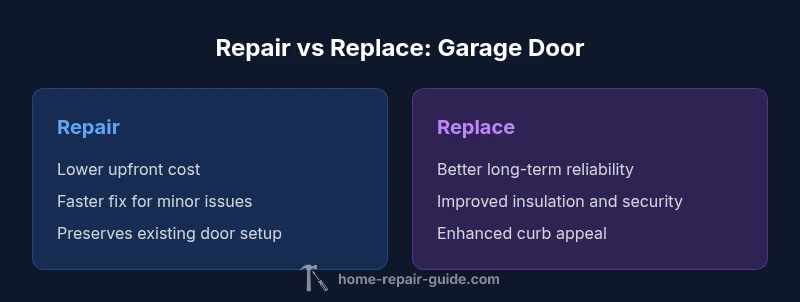
Upsides
- Lower upfront cost for minor repairs
- Preserves existing door setup and opening
- Quicker turnaround for simple fixes
- Can extend life with targeted maintenance
Disadvantages
- Recurring issues may outpace repair savings
- Repair may not address underlying wear
- Older doors may still be unsafe or energy-inefficient
- Long-term value may favor replacement in some cases
Replacement often wins for aging or repeatedly failing doors; repair is best for minor, isolated faults.
If the door is old or unreliable, replacement provides safety and efficiency gains. For intermittent, small-scale issues, repair preserves value and minimizes upfront costs. Use the decision framework to confirm which path offers the best long-term balance of cost, safety, and performance.
FAQ
When should I replace my garage door instead of repairing it?
If the door is aging beyond its expected life, shows repeated failures, or lacks energy efficiency, replacement often provides better reliability and value. If issues are isolated and repairable at a reasonable cost, a fix can be more economical.
If the door keeps failing and is old, replacement is usually smarter. For isolated problems, repair is often best.
Can I replace just the panels or the opener instead of the whole door?
In some cases, panel replacements or upgrading the opener can remedy defects without a full door swap. However, extensive wear or compromised structure may still require a full replacement to restore safety and insulation.
Panel or opener upgrades can help, but extensive wear might still need a full door swap.
How long does a garage door repair typically take?
Most common repairs take a few hours, depending on parts availability and the complexity of the issue. Major overhauls or panel replacements may require a day for complete installation.
Most repairs are completed in a few hours; major replacements may take a day.
Is a new door worth the investment for energy efficiency?
Yes, modern insulated doors can reduce heating and cooling costs, especially in climate zones with extreme temperatures. The savings depend on insulation quality and the door’s overall performance.
Yes. A well-insulated door often saves more on energy bills over time.
Should I hire a professional or attempt DIY?
For safety and code compliance, hire a licensed professional for torsion springs, cables, and structural work. Minor maintenance and sealing can be DIY with proper precautions.
For safety, hire a pro for the big parts; DIY is fine for simple tasks.
Key Takeaways
- Assess door age and damage before choosing.
- Compare repair costs against replacement over 5–10 years.
- New doors can boost energy efficiency and curb appeal.
- Get multiple quotes and verify licenses.