Repair Garage Door Opener Near Me: A Practical Guide
Find trusted, nearby garage door opener repair professionals, understand safety basics, compare quotes, and follow a clear, step-by-step process to get your opener working again. Learn with Home Repair Guide for dependable, durable fixes.


By following this guide, you will locate a reliable garage door opener repair near you, verify safety, compare qualified technicians, and schedule service confidently. Start by ensuring power is cut to the unit, identify the symptoms, and prepare questions to ask pros about safety features, labor, and warranty. Additionally, learn how to document issues for faster diagnosis and how to compare service quotes without sacrificing quality.
How a garage door opener works: a quick refresher
A typical garage door opener is a motor-driven system that powers a trolley or chain/belt mechanism to raise and lower the door. Key components include the motor, drive mechanism (chain, belt, or screw), limit switches that stop movement, safety sensors that detect obstructions, and the wall control or remote. Understanding these parts helps you identify whether the issue is electrical, mechanical, or a sensor/alignment problem. Keep in mind that modern openers rely on safety features to stop the door if an obstacle is detected, so a false click or misalignment can prevent normal operation. Regular inspection of tracks, rollers, and mounts also supports safe, smooth function.
Signs your opener needs repair
Symptoms can range from the opener not responding to the door moving slowly, reversing unexpectedly, or making unusual noises. If the door only moves when you pull the emergency release, there may be a balance or safety issue beyond the opener’s electronics. Misaligned safety sensors can prevent the door from closing fully, while damaged tracks or worn gears can cause grinding noises. In any case, a persistent abnormal behavior usually indicates the need for professional diagnosis.
How to find a repair garage door opener near me
Start with a local search and verify licenses where required by your state or municipality. Read recent reviews from neighbors and check whether the technician provides a clear written estimate, warranty, and safety assurances. Ask for proof of insurance and references. Compare quotes not just on price, but on response time, scope of work, and what parts and labor cover. For complex issues such as broken springs, the technician should refer you to a qualified pro; do not attempt spring work yourself.
Questions to ask before hiring a technician
Use a checklist to interview candidates. Key questions include: Are you licensed and insured? Do you provide a written estimate with a warranty? What is the expected timeline and what parts might be needed? Do you test safety features after work and provide a post-service checklist? Are there any potential safety concerns I should know about, such as the risk of handling springs? What maintenance can extend the opener’s life?
What happens during a typical service visit
A technician will diagnose the problem by testing power, sensors, and mechanism alignment. They will check the door balance without forcing it, inspect tracks and rollers, and verify the remote and wall control operation. If a part is worn, they will replace it and re-test the entire system, including safety features. You should receive a written estimate before any work begins, with clear details on labor, parts, and warranty terms.
Safety first: what you should never attempt
Do not try to adjust torsion springs, which are under high tension and can cause severe injury if mishandled. Do not bypass safety devices or remove the safety sensor covers to test the door. If you’re unsure about any step, pause and contact a licensed professional. Always disconnect power before any inspection to avoid electric shock or spinning components.
Safe DIY checks you can perform
You can inspect visible tracks, rollers, and mounts for obstructions and wear. Lubricate moving parts with a light lubricant designed for garage doors, especially on rollers and hinges. Ensure the door is balanced by pulling on the door manually after disconnecting from the opener. If it drops rapidly or sticks, stop and call a pro. Keep pets and kids away from the work area while testing.
Costs and budgeting: what to expect
Repair costs vary by issue, parts, and labor. A diagnostic visit may have a separate fee, with parts and labor billed after the problem is identified. Ask for a written estimate and a warranty on parts and labor. If multiple issues surface, request a bundled quote to avoid unexpected expenses. Compare quotes from at least two qualified technicians to ensure you’re getting fair value.
How to verify repair quality and warranty
Ask for a detailed warranty on parts and labor, and confirm whether the warranty covers future failures due to the same issue. Request a recap of what was repaired and what maintenance steps you should perform to keep the opener running smoothly. After the service, test every function—remote, wall control, safety sensors, and auto-reverse—to confirm everything works as intended.
Maintenance after repair: a simple ongoing plan
Create a short maintenance routine: test auto-reverse weekly, lubricate moving parts every 6–12 months, align sensors if blinking indicators appear, and inspect tracks for debris or damage. Keep the door balanced by performing a manual check after disengaging from the opener. Regular care reduces the risk of repeated breakdowns and extends the system’s life.
When to replace the opener vs repair
If the motor is inefficient, the gears are worn beyond economical repair, or the opener is outdated and lacks key safety features, replacement may be the better option. A newer model can improve reliability, energy efficiency, and remote accessibility. In deciding, compare long-term costs, security features, and available warranties, rather than chasing a quick fix.
Quick-start safety and readiness checklist
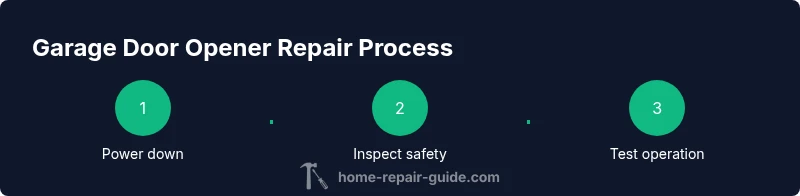
Before you begin any inspection, power down the unit. Have a clear workspace, unplugged power, and a stable ladder. Keep a flashlight handy and wear safety glasses. Document symptoms to share with a pro, so you get a faster diagnosis and accurate quote.
Tools & Materials
- Safety goggles(Impact-resistant; protect eyes from debris)
- Work gloves(Grip and protect hands)
- Adjustable wrench(For bolts on tracks/rollers)
- Screwdrivers (Phillips and flat)(For mounting screws and sensors)
- Pliers (needle-nose)(Grip and manipulate small components)
- Multimeter or voltage tester(Check electrical connections safely)
- Lubricant suitable for garage doors(Light spray for tracks/hinges)
- Step ladder (6-8 ft)(Stable and level; secure footing)
- Torch/flashlight(Inspect dark tracks or sensors)
- Rags or shop towels(Clean surfaces before reassembly)
- Owner’s manual or model documentation(Compare parts and safety features)
Steps
Estimated time: 90-120 minutes
- 1
Power down the opener
Unplug the opener or switch off the circuit breaker to eliminate the risk of electric shock and moving parts. This is the essential first step before any inspection or adjustment.
Tip: If you have a surge protector, remove it before working on the unit. - 2
Inspect for jams or obstructions
Manually check the door along the tracks for any physical obstruction, binding, or misaligned rollers. Remove debris carefully and ensure the door moves smoothly by hand after disengaging the opener.
Tip: Never force a stuck door; forced movement can bend tracks or damage springs. - 3
Test the safety sensors
Align the photoelectric sensors on the lower track ends. A misalignment or dirty lens can prevent the door from closing. Clean the lenses and re-align as needed.
Tip: If the indicator light blinks, check wiring or replace the sensor if needed. - 4
Check door balance without the opener
Disconnect the door from the opener using the release cord and manually lift the door. It should rise smoothly and stay in place at about mid-height. If it falls or rises with effort, it needs professional balance work.
Tip: If you feel the door drop quickly, call a pro immediately. - 5
Test wall control and remote
Reconnect power and test the wall control and remote. They should respond promptly and pair reliably. If not, check batteries and the receiver on the unit.
Tip: Resync the remote per the model instructions to avoid interference. - 6
Inspect tracks, rollers, and mounts
Look for bends, loose bolts, or worn rollers. Tighten mounting screws and replace damaged rollers if needed. Ensure tracks are clean and free from obstructions.
Tip: Use a level to ensure tracks are perfectly vertical for proper operation. - 7
Lubricate moving parts
Apply a light garage-door-specific lubricant to hinges, rollers, and the track threshold where metal rubs, avoiding the motor gear itself. Wipe away excess to prevent dirt buildup.
Tip: Lubrication frequency depends on climate; more often in dusty environments. - 8
Test operation and safety again
Plug the unit back in and perform a full cycle test: open, close, and re-check auto-reverse. Confirm that the door stops and reverses on contact as required by safety.
Tip: If the door won’t reverse or stops unexpectedly, shut down and call a pro. - 9
Document issues and plan next steps
Record any persistent trouble, especially sounds, delays, or sensor failures. Use this information to request an accurate quote and plan follow-up maintenance.
Tip: Keep your notes paired with any photos or videos for the technician.
FAQ
Is it safe to repair a garage door opener by myself?
Only for minor, non-spring issues and when power is disconnected. Do not attempt spring adjustments or any job involving high tension. For safety, consult a licensed technician for complex repairs.
Self-repair is only safe for simple fixes, with power disconnected; avoid springs and high-tension parts. Consult a pro for complex issues.
What licenses or credentials should I look for?
Look for an active license if required in your area and proof of liability insurance. Request references and a written estimate, including warranty terms. Verify they have experience with your door model.
Check for a valid license where required and insurance. Ask for references and a written estimate with warranty terms.
Can a misaligned sensor keep the door from closing?
Yes. Misaligned or dirty safety sensors can prevent the door from closing or cause it to reverse unexpectedly. Clean and realign as needed, or call a pro if problems persist.
Sensors misalignment can stop closing. Clean, realign, or call a pro if needed.
How long does a typical repair take?
Most standard repairs take a few hours, depending on the issue and parts required. A diagnostic visit may be separate, with labor and parts quoted after the assessment.
Most repairs take a few hours; diagnostics may be billed separately.
Should I replace the opener or just repair it?
If the motor is inefficient, parts are costly, or the opener lacks current safety features, replacement might be more cost-effective long-term. Compare total projected costs and warranties.
If performance is poor or it lacks safety features, replacement could be wiser after weighing long-term costs.
What maintenance can extend opener life?
Regular lubrication, sensor alignment checks, tightening hardware, and periodic balance tests help extend the life of your opener. Schedule annual checks or after major weather changes.
Lubricate moving parts, check sensors, and confirm balance yearly.
Watch Video
Key Takeaways
- Identify safety first and power down before any work.
- Ask about licenses, warranties, and written estimates.
- Distinguish between DIY-safe tasks and risky spring work.
- Test sensors, balance, and controls after any repair.
- Maintain a simple, ongoing maintenance plan for longevity.